
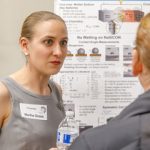
Postdoc Technical Showcase
Sandia’s Albuquerque campus hosted its 2019 Postdoctoral Technical Showcase at the National Museum of Nuclear Science and History in December. The annual event brings together early-career postdoctoral scientists and engineers with Labs’ leaders and decision-makers for a technical poster competition and mentor awards.

Identify, track, capture
Sandia robotics experts are working on a way to intercept enemy unmanned aircraft systems midflight. They recently completed a successful test using a swarm of four unmanned aircraft systems to intercept a flying target, using a net to trap it in air like an insect caught in a web and safely lower it to the ground.
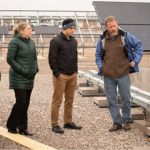
SunPower partnership sparks new solar module
Representatives from SunPower Corp., a leading U.S. solar manufacturer and global competitor, recently visited the New Mexico Regional Test Center, co-located with Sandia’s Photovoltaic Systems Evaluation Laboratory, to inspect their company’s experimental PV system.
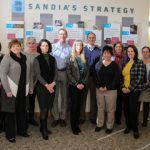
Does strategy matter?
Over the past three years, Sandia developed a strategic direction made up of seven priorities to guide the Labs for the next 20 years. Each priority has a team behind it, working to implement the strategy. The teams have brought these priorities to life and achieved significant accomplishments in each of the seven areas.
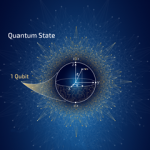
Quantum Information Edge
The Quantum Information Edge, a nationwide alliance of national laboratories and universities, has launched to maintain U.S. leadership in next-generation information technology and advance the frontiers of quantum computing systems, which have the potential to make calculations that are far beyond the reach of today’s computers.
Power plants get watered down
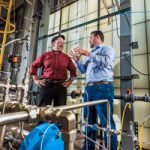
Electricity production is one of the industries that uses the most water in the country each day. Sandia researchers are helping the largest power plant in the U.S. identify the most efficient and cost-effective strategies to reduce water use. They have developed a first-of-its-kind comprehensive system dynamics analysis that can show power plants which wet cooling systems can save them money.

Internships fuel research for Puerto Rico engineering students
The NNSA-sponsored Consortium for Integrating Energy Systems in Engineering and Science Education internship program connects engineering students from five Hispanic-serving institutions, including UPRM, with research at Sandia and the National Energy Technology Laboratory in Morgantown, West Virginia.
Building a medical-isotope producing reactor
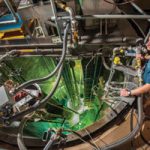
Eden Radioisotopes LLC, a New Mexico company, secured funding this year and located 240 acres of land in the southeastern corner of the state to build a small reactor that exclusively will produce medical isotopes. The concept was developed and licensed by Sandia, and the effort, in partnership with Eden, earned a regional Excellence in Technology Transfer Award from the Federal Laboratory Consortium.
R&D 100
The venerable R&D 100 contest, slightly more than 50 years old, has a new owner, and the competition continues. Competing in an international pool of universities, corporations and government labs, Sandia inventions captured four R&D 100 Awards this year, as well as two environmental and one business award.

Using big data to solve big New Mexico problems
Community Involvement kicked off this fiscal year’s Community Engagement Speakers Series with a talk by NM Appleseed Executive Director and Founder Jennifer Ramo. NM Appleseed is a nonpartisan organization dedicated to ending poverty through systemic solutions to complex issues like hunger, education and homelessness.