
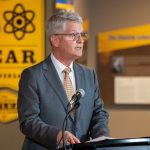
Sandia selected for $3.38M to advance nuclear fuel research
The DOE funding will support new analytical tools to evaluate safety, safeguards and production challenges for next-generation reactor fuels.

New testbed simulates deep well conditions just below the surface
How do you test tools designed to use thousands of feet below the surface without drilling down? MANTIS is a 1,000-foot testbed that replicates typical well conditions for geothermal energy, geologic storage, and oil and gas applications.
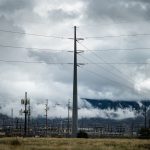
Resilient energy systems secure the nation’s future
The Resilient Energy Systems Mission Campaign protects the grid and increases resilience of the U.S. electrical energy system.
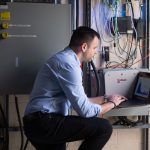
Fighting AI with AI to keep the lights on
A Sandia team has developed a system that uses generative AI and large language models to detect and locate cyber-physical threats to the electrical grid.
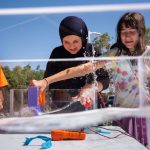
Wave energy makes a splash at Explora camp
Engineers showed students how to make wave energy converters during summer camp.

Sandia selected to lead six Genesis Mission projects, partner on 17 others
The Genesis Mission is a national effort to accelerate scientific discovery by combining artificial intelligence, high-performance computing and advanced research capabilities.
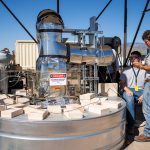
The perfect match: sunlight and coffee
Sandia partners with Michael Thomas Coffee to capture solar energy to roast coffee beans, applying science used to solve complex national challenges to practical innovations for American industry.

Virtual SIWEED game brings wave energy concepts to life
Experts at Sandia have created an interactive, online game that introduces wave energy concepts to learners at all levels.

As data-center demand grows, Sandia advances AI controls to keep voltage steady in real time
A Sandia team is working to support a resilient grid with AI-driven controls that can respond in real time to fluctuations in electricity demand and supply.

Sandia recreates flightlike heat to support NASA’s Dragonfly mission to Titan
At Sandia’s National Solar Thermal Test Facility, engineers helped NASA qualify Dragonfly’s heat shield thermal protection system and expanded a capability that supports the nuclear deterrence mission.