
Internships fuel research for Puerto Rico engineering students
The NNSA-sponsored Consortium for Integrating Energy Systems in Engineering and Science Education internship program connects engineering students from five Hispanic-serving institutions, including UPRM, with research at Sandia and the National Energy Technology Laboratory in Morgantown, West Virginia.
‘I do have a place’
Sherralyn Sneezer is one of four students who interned at Sandia this summer through the DOE Indian Energy Internship Program. As we observe Native American Heritage Month this November, the Lab News spoke with Sherry about her experience at Sandia and her plans for the future.
R&D 100
The venerable R&D 100 contest, slightly more than 50 years old, has a new owner, and the competition continues. Competing in an international pool of universities, corporations and government labs, Sandia inventions captured four R&D 100 Awards this year, as well as two environmental and one business award.
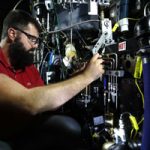
Fuel property put to the test at Sandia’s CRF
Researchers at Sandia’s Combustion Research Facility are working to understand the fundamentals of phi-sensitivity, a key fuel property that represents how the autoignition reactivity of the fuel varies with the fuel/air equivalence ratio. This will help increase the efficiency and facilitate the development of practical low-temperature gasoline combustion engines.
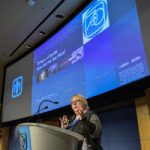
Labs historian Rebecca Ullrich presents 70 years of Sandia
As part Sandia’s 70th anniversary celebration, Labs employees were treated to an insightful, humorous and engaging presentation, “70 years of Sandia: How did we get here?” by Sandia historian Rebecca Ullrich. During the presentation, Rebecca described the Labs’ path from its beginnings as part of Los Alamos National Laboratory to the launch of Sandia Corporation and the Albuquerque campus to the expansion of the Labs to its current state.
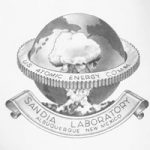
Exceptional service in the national interest
Two dates are well known to Sandians: the day President Harry Truman wrote a letter calling for “exceptional service in the national interest” and the day Sandia (previously Z Division) separated from its parent, Los Alamos National Laboratory, and became the entity we know it as today.
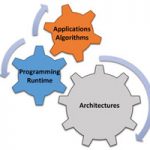
AI center to combine hardware, software for practical gains
Sandia and Pacific Northwest national laboratories and the Georgia Institute of Technology in Atlanta are launching a research center that combines hardware and software design and development to improve artificial intelligence technologies that will ultimately benefit the public.
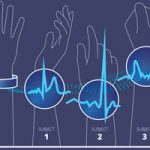
Security in a heartbeat
Sandia is collaborating with a New Mexico small business to test and develop a biometric security system based on the human heartbeat. Sandia signed an agreement with Albuquerque-based Aquila Inc. to develop and test a wearable prototype that can stream in real time an identifying signature based on the electrical activity of a person’s heart.
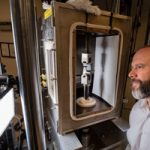
Engineering success through predicting failure
Around the world, materials scientists and engineers are trying different ways to predict fractures in ductile metals, but it’s not clear which approach is most accurate. To compare the different methods, Sandia researchers have presented three voluntary challenges to their colleagues: Given the same basic information about the shape, composition and loading of a metal part, could they predict how it would eventually fracture?
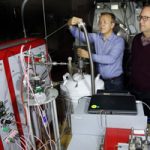
Lowering the bar for hydrogen-powered technology
The Hydrogen Materials Advanced Research Consortium, or HyMARC, a multilab collaboration co-led by Sandia, is developing two types of hydrogen storage materials to meet challenging energy density targets set forth by DOE. The newly expanded collaboration is using the most promising strategies to optimize the materials for future use in vehicles.