
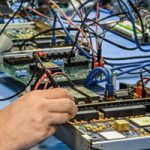
Armoring satellites to survive, operate through attacks
Researchers at Sandia launched a seven-year mission campaign this month to develop the science, technology and architecture needed for autonomous satellite protection systems. The campaign, called STARCS, will fund dozens of Laboratory Directed Research and Development projects.
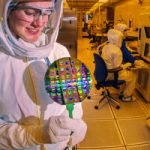
MESA fabs get an upgrade
Sandia has completed phase one of an anticipated three-year upgrade at its plant responsible for making integrated circuits, similar to computer chips. The facility is now fully compatible with industry-standard, 8-inch silicon wafers — thin, round starting materials used for making chips.
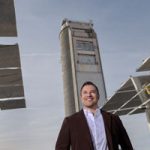
Hispanics and STEM education at Sandia
The population of Hispanics/Latinos in the U.S. is expected to grow by approximately 40% by 2045, although only approximately 14.4% have bachelor’s degrees or higher and 7% are employed in STEM industries. Presently at Sandia, Hispanics and other minorities make up a significant 34% of the overall workforce. That number is expected to increase, thus promoting diversity at our sites.
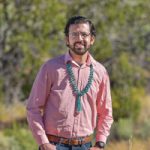
American Indian Science and Engineering Society recognizes early-career Sandian
Geoscience engineer Dylan Moriarty has been named the 2019 Most Promising Engineer or Scientist by the American Indian Science and Engineering Society. The award is given to an American Indian, Alaska Native, Native Hawaiian, Pacific Islander, First Nations or other indigenous person of North America with less than five years of work experience since his or her last degree.
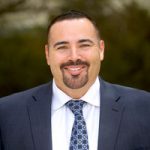
National Hispanic science and engineering organization honors two Sandians
Materials scientist Nic Argibay and ES&H senior manager Rafael Gonzalez were honored at the 31st annual Hispanic Engineer National Achievement Awards Conference by Great Minds in STEM. Nic received a Most Promising Scientist or Engineer award and Rafael received a Luminary award during the conference in late September.
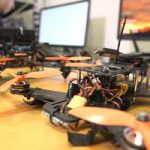
Autonomy New Mexico interns build drones to test hypersonic tech
Sandia is developing autonomy and artificial intelligence for flight systems soaring at more than 3,800 mph. The technologies to get there will initially be tested on drones that shuffle around at about 5 mph.
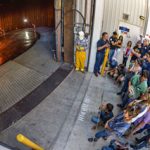
Record-breaking crowds attend Sandia’s New Mexico Family Day
Family and friends walked the usually restricted streets of Sandia’s Albuquerque campus during the Sept. 7 Family Day event, to show support for their loved ones and see where they work. The long tradition of Family Day is an opportunity to show friends and loved ones some of the interconnected teamwork and facilities they don't usually get to see.
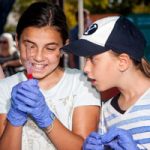
California site celebrates Family Day
More than 2,000 people spread out across Sandia’s California campus for Family Day on Sept. 14, getting a glimpse of the exceptional work done in the national interest by Sandia researchers and professionals from all over the world.
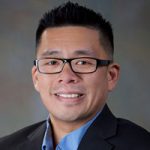
Asian American conference selects Sandian ‘most promising engineer’
Sandia researcher Stanley Chou recently was selected one of three most promising engineers of the year at the 2019 Asian American Engineer of the Year conference in Dallas.

Q&A with Truman Fellows Thomas Hardin and Josh Rackers
Since 2004, Harry S. Truman Fellows in National Security Science and Engineering have come to Sandia each year to pursue high-risk, high-reward ideas that support the Labs’ national security mission. This year, Sandia welcomes 2020 fellows Thomas Hardin and Josh Rackers, who began their three-year postdoctoral appointments this month.