
Challenge
Additive, or 3D manufacturing enables the use of advanced geometries and materials, but design technologies have not kept pace. Sandia National Laboratories developed Plato software to accelerate the engineering development process. The software empowers engineers to quickly change component geometry to meet design specifications. It simulates and optimizes multiple engineering facets such as thermal and mechanical before a physical prototype is developed. This reduces development time and cost.
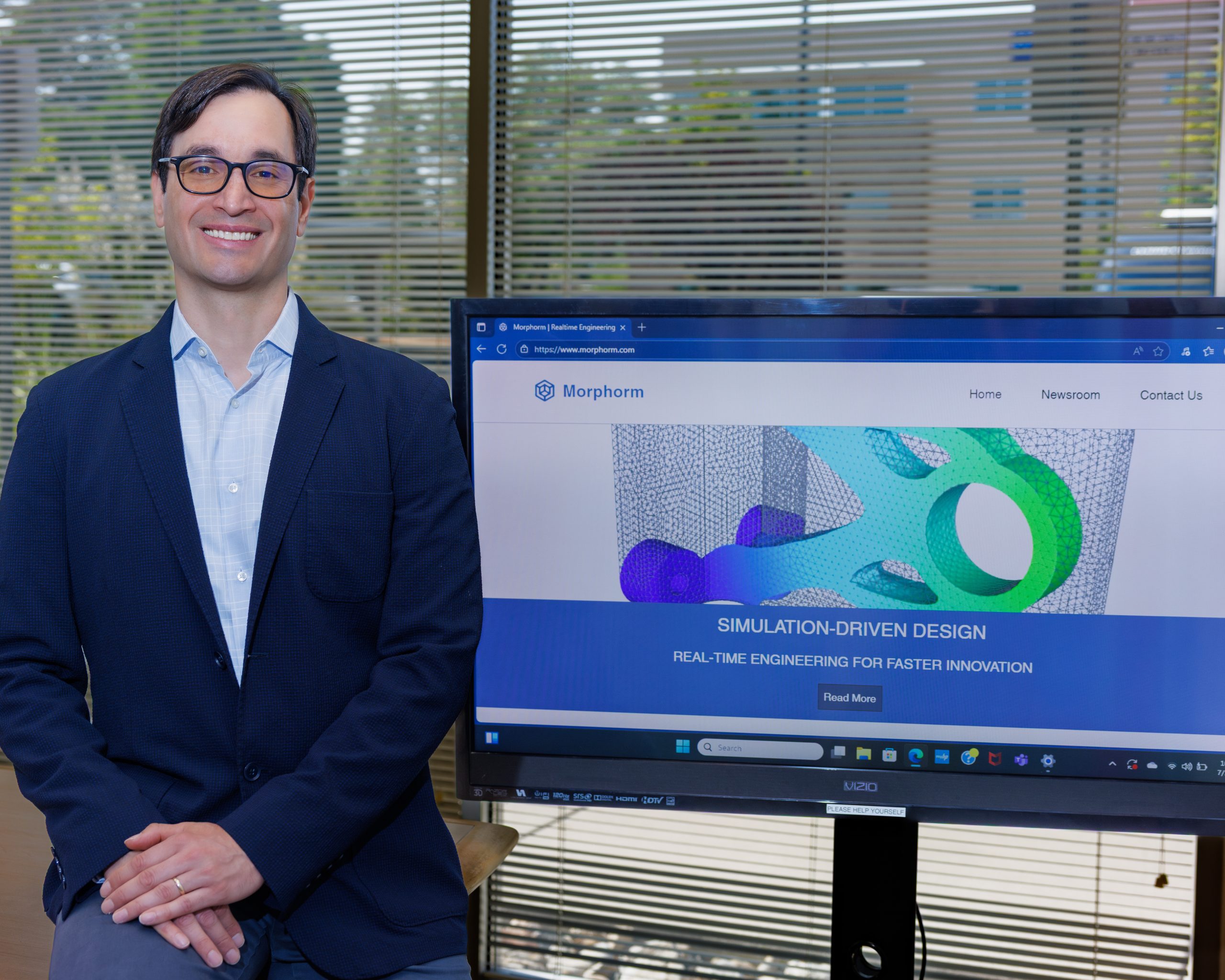
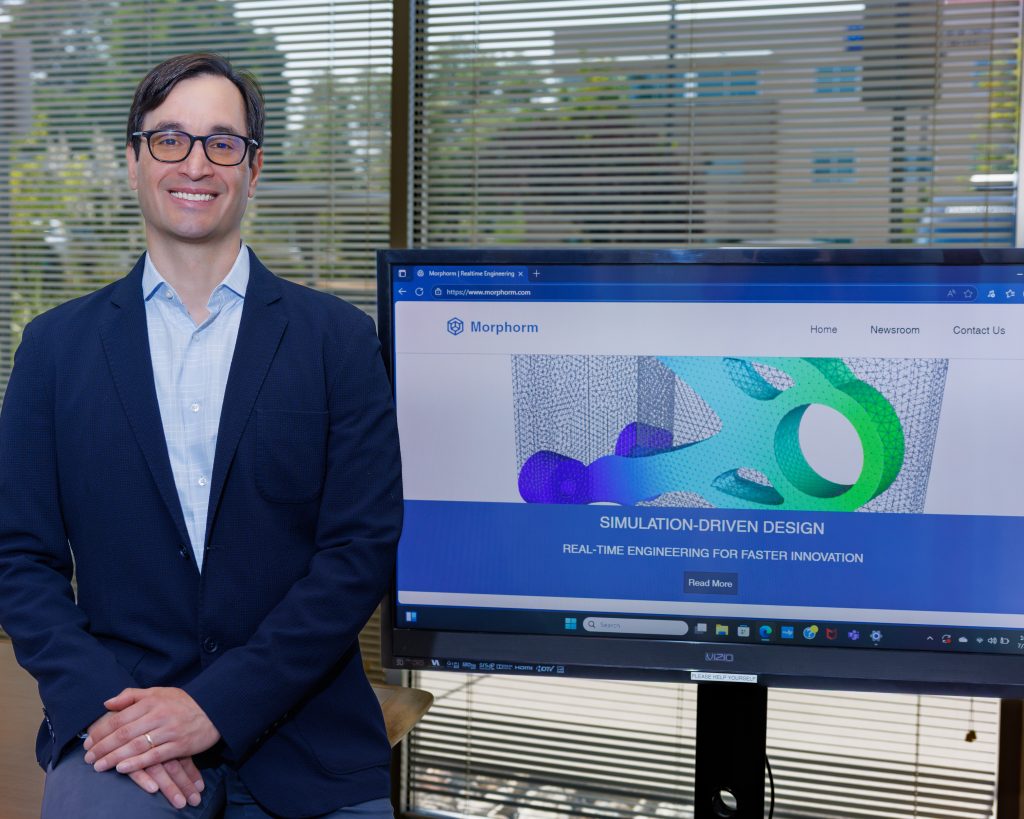
“Partnership with Sandia lets us collaborate with world-class experts, accelerating the growth of our company while helping us bring the fruits of the Labs’ R&D investment to the commercial world.”
Miguel Aguilo
Founder & CEO
Morphorm LLC
Collaboration
Miguel Aguilo was a Sandia computer scientist who helped develop Plato and worked on mission-related national defense projects using the software. He took part in the Defense Advanced Research Project Agency’s Transformative Design, or TRADES, program, which aimed to advance the foundational mathematics and computational tools required to generate and better manage the enormous complexity of design. As he met and worked with partners in the TRADES program, he recognized the significant demand for software like Plato across government and industry.
Solution
Despite the risks, Aguilo was motivated to start his company, Morphorm, because he was passionate about seeing Plato used to solve problems in industry, whether at a defense contractor or other commercial manufacturer. Although the Sandia-developed Plato software is open source, so freely available, its complexity presents a significant learning curve. Aguilo understood that few companies or agencies had an expert like himself or Plato Co-developer and Sandia Researcher Josh Robbins on staff. He felt he could be the bridge between the Labs and industry for this technology.
Morphorm, an engineering simulation and optimization software company, is currently creating software based on Plato. It is first focusing on semiconductor applications, which include solar panels and computer chips. As the Department of Energy seeks to extend the lifespan of solar panels from 30 to 50 years, engineers must improve degradation rates by optimizing critical design parameters such as cell material, size, and metallization layout. This means solar manufacturers need simulation software that can optimize all these factors, such as what Morphorm is creating. Computer chips, which, like solar cells, use semiconductor materials, have similar design simulation software requirements and are continually being updated with the latest technology.
Impact
Aguilo and his company partnered with Sandia and Robbins through the TRGR Technology Readiness Initiative. Morphorm expects to release a trial version of its software by the end of 2026, ahead of its original estimate.