
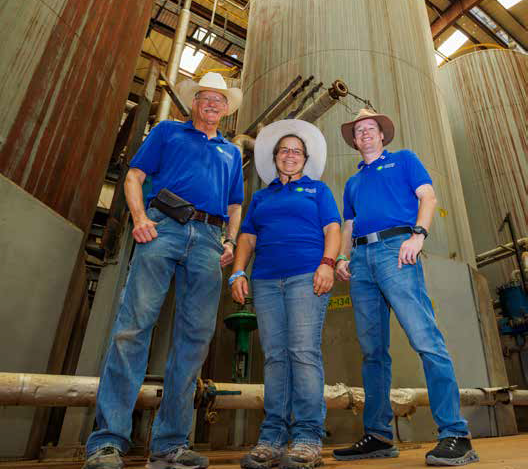
Tucumcari Bio-Energy is a leader in sustainable energy and agricultural solutions. Tucumcari uses an abandoned ethanol plant and an anaerobic digestion process to convert cow manure into valuable outputs including methane and plant nutrients. Agricultural waste like livestock manure is an attractive feedstock for biofuel production because it is abundant and energy dense, but, when processed, it can leave behind a lot of unutilized material.
“Cracking lignin is the key to unlocking the full potential of agricultural biomass; it allows us to convert what was once considered a barrier to energy production into a pathway for more renewable fuels.“
Robert Hockaday
President
Tucumcari Bio-Energy Inc.
A TRGR Project with Sandia National Laboratories focused on extracting more biofuel to improve the economic viability of the process. Using an oxidative post-treatment method, Sandia Scientist Daniella Martinez worked with Tucumcari to improve feedstock utilization and recover untapped biomethane. Biolignin makes up the majority of available biomass, but it’s structurally complex and difficult to break down. Lignin-rich material treated with the Sandia method produced four times as much methane on average compared to untreated material.
As a result of these successful experiments, the TRL of the process moved from 5 to 6, and manure as well as a variety of other typically resistant materials comprising agricultural and forest waste can be used to create more biofuel. This makes the process more flexible and economical. With fuel and fertilizer being expensive inputs used in agriculture worldwide, more efficient techniques for producing them while reducing the volume of energy-rich material going to waste are needed.
A Sandia Laboratory Directed Research and Development project is being used to continue the research and do further techno-economic evaluation. Results are also being published in a scientific journal.