
Challenge
Bacterial and fungal infections greatly increase the cost of treating patients. They also cost lives. Current testing methods are slow and laborious, meaning that patients might not be given the best antibiotic or antifungal medicine to treat their condition for days. While waiting, their condition may worsen and their time in the hospital can increase. To improve patient outcomes and decrease healthcare costs, the testing process needs to be sped up.
Collaboration
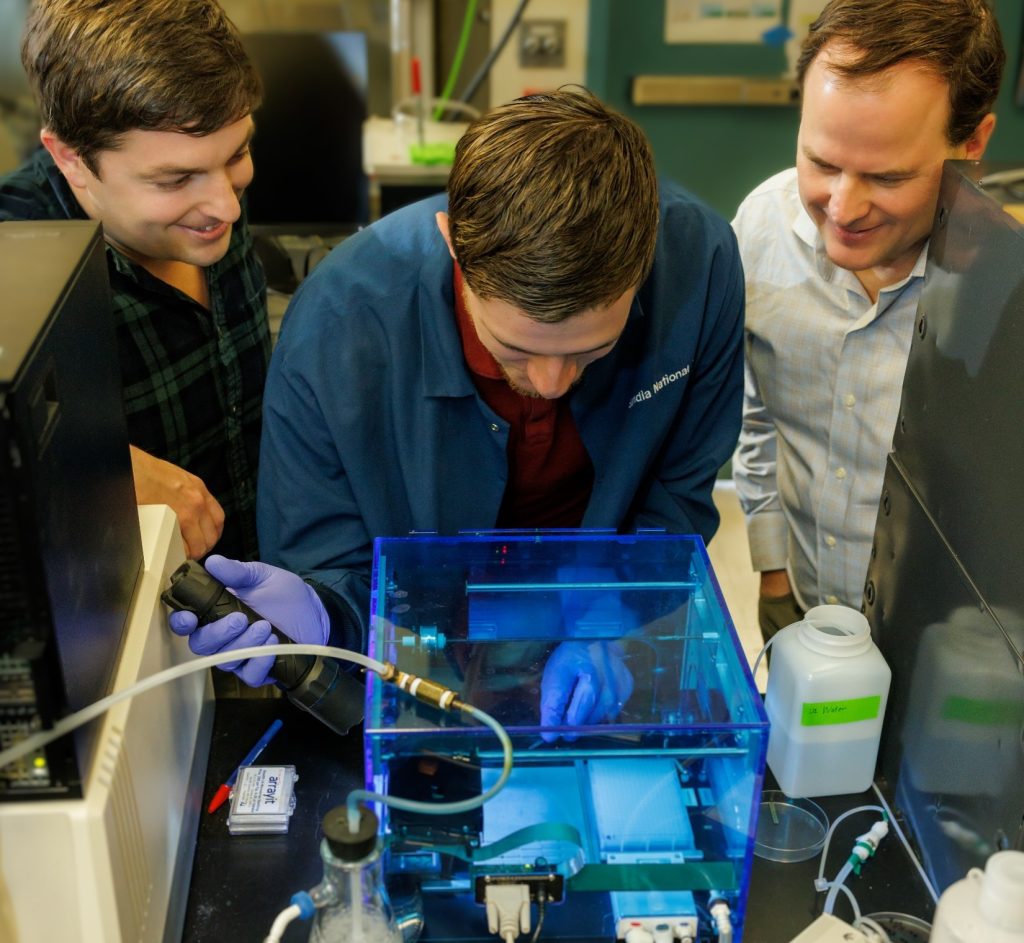
Sandia National Laboratories and Resonantia Diagnostics are collaborating on the development of an end-to-end rapid bacterial and fungal identification and antimicrobial susceptibility testing platform leveraging two pieces of acoustic technology. The partners began working together with a FedTech project in 2020 focused on Sandia’s micro acoustic lysis (mALS) technology. Now, through a CRADA, they are combining mALS with a Sandia-developed acoustic-based susceptibility sensor to create a complete testing instrument.
Resonantia is consulting with its scientific advisory board, including a clinical microbiologist and infectious disease doctor, to ensure that the testing system being developed will meet the needs of doctors who treat bacterial and fungal infections.
“Working with Sandia we have the ability to access a tremendous amount of resources and world-class talent on an as-needed basis; something that would be prohibitively expensive if we tried to go at it alone.“
Matt Jones
CEO
Resonantia Diagnostics, Inc.
Solution
The combination of two technologies into one platform creates an end-to-end system with the ability to first identify the infection, and then determine how best to treat it.
mALS technology is 3 times more effective and 97% faster than comparable methods at gaining access to genetic content. After identification, the susceptibility assay leverages the acoustic sensor to determine what treatment the infection will be susceptible to and what concentration is needed. The acoustic-based sensors measure the mechanical and electrical changes in the bacteria or fungi, discovering the impact of antibiotics at the cellular level. They are 48 times faster than traditional methods.
An instrument with a touchscreen and various test cartridges is being developed. It may first be used at hospitals and labs, and later, smaller versions might be used at doctor’s offices. The new testing platform is able to get results much faster than existing systems, in part because mALS rapidly releases viable DNA or proteins without chemicals that must be removed later.
Impact
Originally developed for Sandia’s national security mission, now the technologies can be used to improve patient outcomes in general medical settings. With this testing platform, targeted therapies, such as the most appropriate antibiotic or antifungal, can be prescribed faster, decreasing patients’ time in the hospital, cutting healthcare costs, and saving lives.