
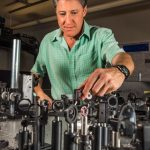
Sandia light mixer makes 11 colors at once
Sandia scientists have developed a new light-mixing metamaterial that can be used in many applications, from creating a multi-color laser pointer to discovering hidden archeological sites in dense forests to detecting signs of extraterrestrial life in the air to increasing communications speed and capacity via fiber-optic networks.
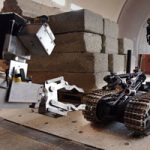
Robot rivals rally to rope in rewards at rodeo
Last week, Sandia hosted the 12th annual Western National Robot Rodeo, a week-long, 11-event competition where eight civilian and military bomb squads from around the region solved challenging, simulated scenarios.

Fireproofing your home
Imagine having to wear a fireproof mask all day, every day, in your own home and never being able to take it off — no matter how suffocating it feels. That’s what it’s like for people who risk being fired if they acknowledge their sexual orientation at work.

Young women encouraged to blaze their own trails at Sandia’s Math and Science Awards
More than 30 students recently visited Sandia California to attend the 27th annual Sandia Math and Science Awards, a flagship program of the Sandia Women’s Connection.

DA talks tough on metro crime
Bernalillo County District Attorney Raúl Torrez gave a Sandia audience some sobering facts about crime in the Albuquerque metro area at the inaugural session of the Community Engagement Speaker Series.

DOE to deploy Arm-based supercomputer prototype at Sandia
Arm microprocessors have been used in numerous applications from vehicle computers to cell phones, but until recently, have not been practical for use in high-performance computing. Astra — one of the first supercomputers to use Arm processors in a large-scale high-performance computing platform — is expected to be deployed at Sandia later this summer.
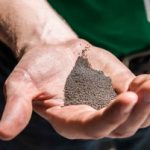
Raising the heat to lower the cost of solar energy
Sandia will receive $10.5 million from DOE to research and design a cheaper and more efficient solar energy system. The work focuses on refining a specific type of utility-scale solar energy technology, called concentrating solar power, which is appealing because it can supply renewable energy — even when the sun is not shining — without using batteries for storage.
Riding bacterium to the bank
What does jet fuel have in common with pantyhose and plastic soda bottles? They’re all products currently derived from petroleum. Sandia scientists have demonstrated a new technology based on bioengineered bacteria that could make it economically feasible to produce all three from renewable plant sources.

DOE visit highlights Sandia energy work with Indian groups
Sandia recently hosted visitors from the DOE Indian Country Energy and Infrastructure Working Group. During the visit, ICEIWG members, DOE officials and intergovernmental and contracted partners learned about Sandia’s unique role in energy research.
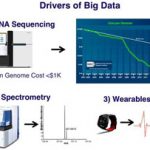
Predicting disease with big data
The monthly Bay Area Strategic Engagement Seminars (BASES) series in California has been, by all accounts, a home run. The series gives staff a chance to learn from leaders in key Sandia-related fields, and most recently brought Stanford University Genetics Chair Michael Snyder to campus.