

Sandia Gives Campaign October 8-26, 2018
The Sandia Gives Campaign is the Labs’ annual opportunity to come together and act with the common goal of helping our communities through the United Way. During this year’s Sandia Gives campaign, donors can continue to designate funds for any of the community collaborative efforts, including the Family Advocacy Center, Mission: Graduate and Mission: Families.
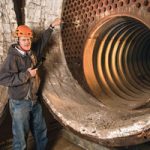
Small-business recycling ventures propelled by Sandia engineering
Through New Mexico Small Business Assistance (NMSBA), Sandia is solving technical challenges for Tucumcari Bio-Energy and, in a separate project, helping a cohort of companies led by PJ Woodlands to figure out how to market new composite materials made from forest slash.
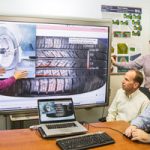
Business partnerships, technology transfer earn Sandia four regional awards
Sandia has won four regional awards from the Federal Laboratory Consortium for its work to develop and commercialize innovative technologies. The annual FLC awards program recognizes federal laboratories and their industry partners for outstanding technology transfer achievements.
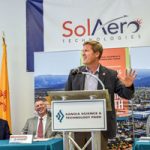
Sandia Science & Technology Park celebrates 20 years, announces positive economic impact
The Sandia Science & Technology Park, home to 26 buildings, 47 companies and organizations and more than 2,050 jobs, celebrated its 20th anniversary last week and highlighted the park’s economic impact through 2017.

Progress toward plugging an antibiotic pump
Each year in the U.S., at least 23,000 people die from infections caused by antibiotic-resistant bacteria. Using computer modeling, researchers from Sandia and the University of Illinois at Urbana-Champaign are helping to develop the means to prevent some of those deaths.
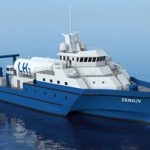
Diesel doesn’t float this boat
Marine research could soon be possible without the risk of polluting either the air or the ocean, thanks to a new hydrogen fuel cell ship design and feasibility study led by Sandia. Hydrogen fuel cells have existed for decades, but the feasibility of a hydrogen-powered research vessel has never been studied or proven. Until now.
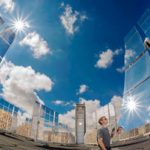
Cooking composites in the sun
Sandia’s solar tower is helping to assess how extreme temperature changes affect materials. The tests for the Air Force take advantage of the ability of Sandia’s National Solar Thermal Test Facility to simulate a very rapid increase in temperature followed by an equally rapid decrease.
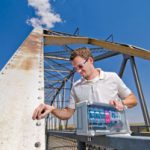
Smarter, safer bridges with Sandia sensors
Sandia and UK-based Structural Monitoring Systems PLC have been working together for 15 years to create transportation systems that can send a signal when they're damaged. They've outfitted a U.S. bridge with a network of sensors that will alert maintenance engineers when they detect a crack large enough to require repair.
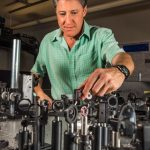
Sandia light mixer makes 11 colors at once
Sandia scientists have developed a new light-mixing metamaterial that can be used in many applications, from creating a multi-color laser pointer to discovering hidden archeological sites in dense forests to detecting signs of extraterrestrial life in the air to increasing communications speed and capacity via fiber-optic networks.

DA talks tough on metro crime
Bernalillo County District Attorney Raúl Torrez gave a Sandia audience some sobering facts about crime in the Albuquerque metro area at the inaugural session of the Community Engagement Speaker Series.