
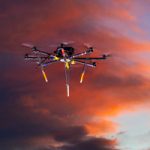
Future hypersonics could be artificially intelligent
A test launch for a hypersonic weapon — a long-range missile that flies a mile per second and faster — takes weeks of planning, and it's uncertain how useful test systems will be against urgent, mobile or evolving threats. But Sandia's hypersonics developers think artificial intelligence and autonomy could slash these weeks to minutes for deployed systems.
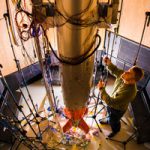
B61-12 team reaches milestones in nuclear deterrence mission
Sandia’s B61-12 nuclear weapons team has accomplished several milestones, including the gravity bomb’s final design review and the first production completion of several components for the life extension program. Sandia and LANL presented the B61-12 design for final review to an independent peer-review panel of 12 military and civilian experts last fall.
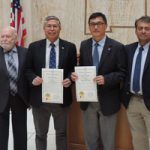
NM Legislature honors Sandia serial innovators
Stan Atcitty and Hongyou Fan have received recognition from the New Mexico Legislature for their distinguished achievements as serial innovators.
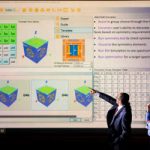
Mirage software automates design of optical metamaterials
Sandia software developers have created the first inverse-design software for optical metamaterials. The new software lets users design science-fiction-like materials with the same efficiency that architects use when they draft building plans.
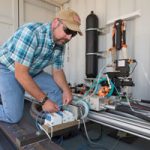
New lab offers mobile testing for devices that turn ocean waves into electricity
A new Labs facility — the Sandia Wave Energy Power Take-Off (SWEPT) Lab — offers mobile, specialized testing for systems that produce power from wave energy. Marine and hydrokinetic technologies convert the energy of waves, tides and river and ocean currents into electricity, creating the potential to provide millions with locally sourced, renewable and reliable energy.
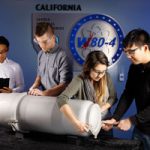
W80-4 Life Extension Program achieves major milestone
The W80-4 Life Extension Program achieved a major milestone last month when the joint DOE and Department of Defense Nuclear Weapons Council approved the program to enter Phase 6.3, development engineering. The approval follows multiple briefings by the W80-4 leadership team to program stakeholders at NNSA headquarters and the Pentagon.
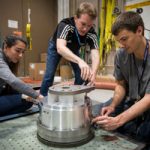
Process modernization
Modernizing the nuclear deterrent also means modernizing the weapon development process. To this end, Sandia and the Kansas City National Security Campus have established the New Product Introduction initiative. By integrating lessons learned from past weapons programs and industry best practices into the existing process, NPI can help enhance the security, reliability and performance of the nation’s nuclear deterrent.
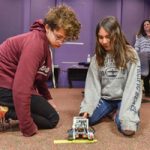
‘MANOS’ needs a hand
Many of us can thank a teacher or mentor who early in our lives ignited in us a passion for our current professions. Sandia’s Manos — or “hands-on” — program is looking for the next generation of Sandia volunteer mentors to provide that spark for science, technology, engineering and math in local middle school students.
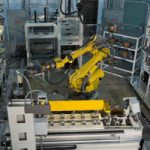
Robotics system demilitarizes 700,000 Army submunitions
More than 700,000 Multiple Launch Rocket System submunitions have been demilitarized since the Army started using an automated, nine-robot system conceptualized, built and programmed by Sandia engineers.
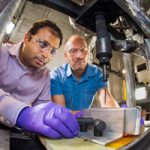
Extreme fast-charging batteries
A key roadblock to widespread use of long-range electric vehicles — the longer time needed for a complete recharge compared to a gas station fill-up — may soon be overcome, thanks to DOE support for extreme fast-charging battery research. Fueled by a $1.5 million award from DOE’s Vehicle Technology Office, Sandia and the University of Michigan have teamed up to develop engineered battery materials that can be charged in less than 10 minutes.