
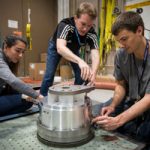
Process modernization
Modernizing the nuclear deterrent also means modernizing the weapon development process. To this end, Sandia and the Kansas City National Security Campus have established the New Product Introduction initiative. By integrating lessons learned from past weapons programs and industry best practices into the existing process, NPI can help enhance the security, reliability and performance of the nation’s nuclear deterrent.
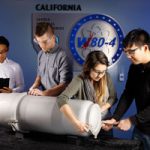
W80-4 Life Extension Program achieves major milestone
The W80-4 Life Extension Program achieved a major milestone last month when the joint DOE and Department of Defense Nuclear Weapons Council approved the program to enter Phase 6.3, development engineering. The approval follows multiple briefings by the W80-4 leadership team to program stakeholders at NNSA headquarters and the Pentagon.

Flying from the glass
Bird strikes against windows are an all-too-familiar sound. To birds, the transparent glass looks like open space, and between 500 million and 1 billion birds die each year trying to fly through closed windows. Sandia is solving this problem at one of its high-strike buildings, where ecology program staff partnered with facilities staff to place adhesives featuring a dot pattern on the building's windows.
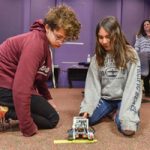
‘MANOS’ needs a hand
Many of us can thank a teacher or mentor who early in our lives ignited in us a passion for our current professions. Sandia’s Manos — or “hands-on” — program is looking for the next generation of Sandia volunteer mentors to provide that spark for science, technology, engineering and math in local middle school students.
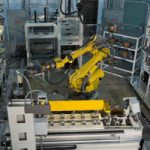
Robotics system demilitarizes 700,000 Army submunitions
More than 700,000 Multiple Launch Rocket System submunitions have been demilitarized since the Army started using an automated, nine-robot system conceptualized, built and programmed by Sandia engineers.
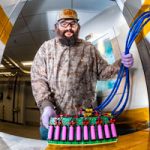
Power to spare: New Battery Test Facility boosts work of power sources team, with big benefits for customers
When Sandia tests the performance of high-capacity energy storage devices, the power sources group frequently would hit obstacles that reduced efficiencies and stretched out schedules. Those obstacles have now been removed with the construction of a 7,500 square-foot Battery Test Facility that enables the team to assemble and test batteries more efficiently for customers to validate whether they perform up to expectations.
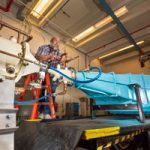
‘Friendly’ EMP improves survival for electronics
An EMP emitted by a nuclear weapon exploded high above the U.S. could disable the electronic circuits of many devices vital to military defense and modern living. Fortunately, military equipment is designed to be immune to various levels of EMP, and the validity of those designs has been tested and improved by a “friendly” EMP generator at Sandia.
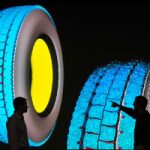
CRADA boom spurs innovation, collaboration with Sandia Labs
Sandia signed 42 CRADAs in fiscal year 2018, more Cooperative Research and Development Agreements than in any previous year this century, sparking dozens of new collaborations and potential technological innovations. A CRADA is an agreement between a government agency and a nonfederal entity to work together on research and development.
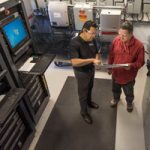
CRADA enables resilient microgrid research between Sandia, Emera Technologies
Sandia and Emera Technologies have signed an 18-month Cooperative Research and Development Agreement to work on microgrids, small-scale versions of interconnected electric grids that locally manage energy storage and resources such as solar, wind and thermal systems, and which may connect to a larger host grid.

Majority rules when looking for earthquakes, explosions
Finding the ideal settings for each sensor in a network to detect seismic activity can be a painstaking and manual process. Sandia researchers are working to change that. They have developed an algorithm that automatically adjusts seismic activity detection levels for each network sensor, tuning out everyday vibrations such as traffic or footsteps to better detect earthquakes and explosions.