
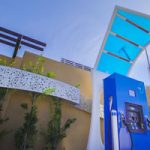
Some like it cryogenic
Sandia helped design the first generation of fueling stations for hydrogen-powered cars to be as safe as conventional gas stations. Now, a Sandia team is working to do the same for the next generation of hydrogen stations.
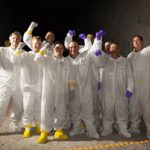
Keeping perspective during a long recovery
Sean Dunagan knows firsthand how to bring a major project back online after a three-year shutdown. Following the February 2014 events that closed the Waste Isolation Pilot Plant in Carlsbad, New Mexico, he was the senior WIPP recovery manager at DOE. Now back in Sandia’s employ, Sean manages special projects and remote site support for the Labs’ Carlsbad office.
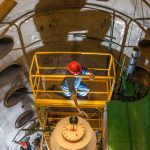
Dry casks take the heat
Sandia researchers have built a scaled test assembly that mimics a dry cask storage container for spent nuclear fuel to study how fuel temperatures change during storage and how the fuel’s peak temperatures affect the integrity of the metal cladding surrounding the spent fuel.
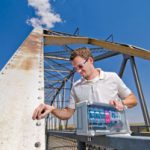
Smarter, safer bridges with Sandia sensors
Sandia and UK-based Structural Monitoring Systems PLC have been working together for 15 years to create transportation systems that can send a signal when they're damaged. They've outfitted a U.S. bridge with a network of sensors that will alert maintenance engineers when they detect a crack large enough to require repair.
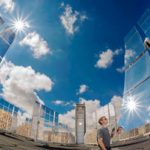
Cooking composites in the sun
Sandia’s solar tower is helping to assess how extreme temperature changes affect materials. The tests for the Air Force take advantage of the ability of Sandia’s National Solar Thermal Test Facility to simulate a very rapid increase in temperature followed by an equally rapid decrease.
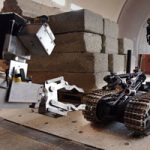
Robot rivals rally to rope in rewards at rodeo
Last week, Sandia hosted the 12th annual Western National Robot Rodeo, a week-long, 11-event competition where eight civilian and military bomb squads from around the region solved challenging, simulated scenarios.

International corrosion society elects first Sandia fellow
Sandia materials scientist David Enos has been elected as a fellow of NACE International, the chief professional society for corrosion engineering. The first Sandian to receive the honor, David was chosen for his significant contributions to corrosion science and engineering for protecting materials in complex environments.
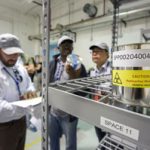
40th anniversary International Training Course
This spring marked the 40th anniversary of the International Training Course on the physical protection of nuclear material and nuclear facilities. This year's session provided training on international best practices for physical protection of nuclear material and nuclear facilities to 50 participants from 38 countries, as well as two observers from Taiwan.

How microgrids could boost resilience in New Orleans
In a year-long project, researchers at Sandia and Los Alamos national laboratories teamed up with the city of New Orleans to analyze ways to increase community resilience and improve the availability of critical lifeline services during and after severe weather.
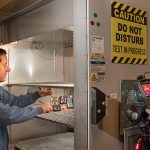
Can you take the heat?
Nothing quite compares to the diverse environments in which Sandia’s nuclear weapons systems and components must survive. Testing these components and ensuring their reliability in the harshest environments is the job of the people and tools at the non-destructive environmental testing lab.