
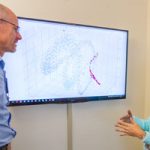
‘Research Club’ enhances research culture and capabilities
Sandia Fellow Kathy Simonson has started a "Research Club" to help Sandia researchers better prepare Laboratory Directed Research and Development ideas and proposals. Having reviewed hundreds of research proposals during her career, Kathy noticed many of the same issues kept cropping up in weaker proposals, which gave her the idea.
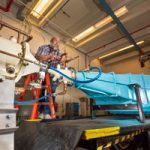
‘Friendly’ EMP improves survival for electronics
An EMP emitted by a nuclear weapon exploded high above the U.S. could disable the electronic circuits of many devices vital to military defense and modern living. Fortunately, military equipment is designed to be immune to various levels of EMP, and the validity of those designs has been tested and improved by a “friendly” EMP generator at Sandia.
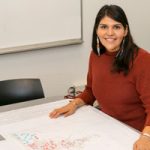
My story: Positive energy, opportunities highlight Native American Heritage Month
In honor of National Native American Heritage Month, Sandian Rachael Gutierrez shares her story of childhood visits to her relatives on the Yomba Shoshone Reservation in central Nevada. Rachael chose to study urban planning out of a desire to improve reservation life and encourage people to connect with their cultures, which led her to Sandia.
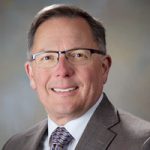
Larry Luna elected American Society of Mechanical Engineers fellow
Sandia engineer Larry Luna has been elected a fellow of the American Society of Mechanical Engineers for significant achievements during more than 30 years of service and leadership. ASME fellows constitute about 3.5 percent of the organization’s more than 95,000 members. Larry was specifically recognized “for his contributions to the national security of the United States,” according to ASME.
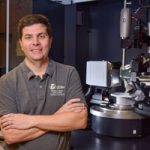
2018 HENAAC Luminary Mark Rodriguez
Sandia materials scientist Mark Rodriguez has been presented with the Luminary Award at this year's Great Minds in STEM Hispanic Engineer National Achievement Awards Conference. Luminary honorees are professionals in science, technology, engineering and mathematics who initiate, collaborate and lead key programs and research and make significant contributions to the Hispanic technical community as leaders and role models.
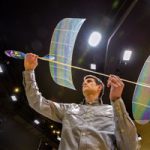
Rubber-powered world champ
Sandian Brett Sanborn holds two world records for F1D models of indoor rubber-powered aircraft, fragile lightweight flyers with the fuselage, tail boom, wing, stabilizer and rudder constructed from balsa wood and reinforced in different places with boron fibers.
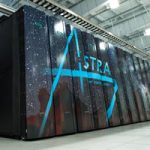
Astra supercomputer at Sandia Labs is fastest Arm-based machine on TOP500 list
Sandia’s Astra is the world’s fastest Arm-based supercomputer according to the just released TOP500 list, the supercomputer industry’s standard. With a speed of 1.529 petaflops, Astra placed 203rd on a ranking of top computers announced at SC18, the International Conference for High Performance Computing, Networking, Storage, and Analysis, in Dallas.
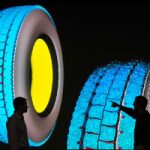
CRADA boom spurs innovation, collaboration with Sandia Labs
Sandia signed 42 CRADAs in fiscal year 2018, more Cooperative Research and Development Agreements than in any previous year this century, sparking dozens of new collaborations and potential technological innovations. A CRADA is an agreement between a government agency and a nonfederal entity to work together on research and development.
CRADA enables resilient microgrid research between Sandia, Emera Technologies
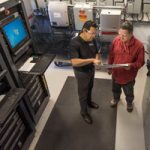
Sandia and Emera Technologies have signed an 18-month Cooperative Research and Development Agreement to work on microgrids, small-scale versions of interconnected electric grids that locally manage energy storage and resources such as solar, wind and thermal systems, and which may connect to a larger host grid.
Responders provide technical expertise in case of nuclear weapons accidents
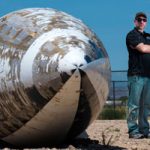
The Accident Response Group provides technical expertise in assessing and safely resolving nuclear weapons accidents or "broken arrows." ARG brings together diverse experts from Sandia and other national labs, each with its own area of expertise. As the nuclear engineering lab, Sandia's focus is on the whole weapon.