
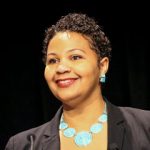
Dr. King’s vision still inspires hope
UNM law professor Sonia Gipson Rankin was invited to speak at Sandia’s MLK 2020 Celebration and Day of Reflection at the Steve Schiff Auditorium on Jan. 20. Rankin, a researcher and recognized expert on laws and their impacts on America’s black communities, gave her presentation, “Arcing Toward Justice: Dr. King’s 2020 vision,” at the event.
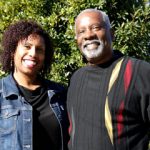
Legacy of learning, leading
Marvin Kelley spent 32 years of his career as a materials scientist, business specialist and technologist at Sandia/California. Now his daughter, Krystal Kelley, is building her own legacy at the Livermore campus.
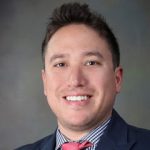
Four Sandia scientists elected AIAA associate fellows
Sandia scientists Jacqueline Chen, Tucker Lavin, Humberto Silva III and Justin Smith have been elected associate fellows of the American Institute of Aeronautics and Astronautics. To be selected as an associate fellow, an AIAA senior member must be in good standing, with at least 12 years’ professional experience, and be recommended by a minimum of three other associate fellows.
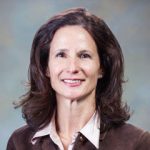
A material benefit to society
Sandia senior scientist Tina Nenoff, a perennial inventor of advanced materials, has been elected fellow of the American Association for the Advancement of Science. Tina was bestowed the honor by her peers “for outstanding accomplishments in nanoporous materials and technology through research and group effort leadership, particularly in ion and gas separations for energy and environmental applications.”
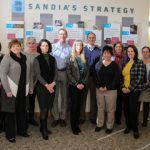
Does strategy matter?
Over the past three years, Sandia developed a strategic direction made up of seven priorities to guide the Labs for the next 20 years. Each priority has a team behind it, working to implement the strategy. The teams have brought these priorities to life and achieved significant accomplishments in each of the seven areas.
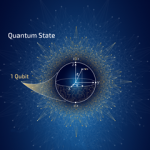
Quantum Information Edge
The Quantum Information Edge, a nationwide alliance of national laboratories and universities, has launched to maintain U.S. leadership in next-generation information technology and advance the frontiers of quantum computing systems, which have the potential to make calculations that are far beyond the reach of today’s computers.
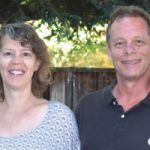
DNA science reveals hidden family connection
Sandia scientist Don Bender got the surprise of his life when he took a commercial DNA test last year and learned that he had a sister. Don and his sister met and learned that they had many similarities, including both earning science degrees from MIT.
Sandia teaches undergrads a lesson or two about cybersecurity
Hundreds of cybersecurity professionals and college students gathered around the country Nov. 16 for a day of cyber wargames. The event, DOE’s roughly annual CyberForce Competition, was created to teach and inspire the next generation of cybersecurity professionals by giving them an opportunity to apply their skills against realistic problems. In its second year as host, Sandia worked with 10 teams in this year's event.
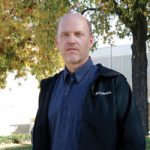
Tracy Vogler named APS Fellow
Tracy Vogler has been elected Fellow of the American Physical Society by the organization’s Topical Group on Shock Compression of Condensed Matter. He was recognized for “landmark contributions to the basic understanding of shock propagation in metals, ceramics and granular materials; for sustained service to the APS Topical Group on Shock Compression of Condensed Matter; and for leadership in the science community.”
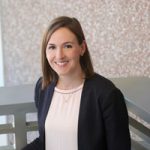
Two Sandians honored at annual SWE awards
Sandia scientists Blythe Clark and Karen Devine were honored at the 2019 Society of Women Engineers awards ceremony in Anaheim, California. The annual event recognizes “the successes of individuals who enhance the engineering profession and advocate for women in engineering through contributions to industry, education and the community.”