
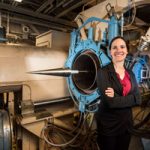
High-speed experiments improve hypersonic flight predictions
When traveling at five times the speed of sound or faster, the tiniest bit of turbulence is more than a bump in the road, said Katya Casper, the Sandia aerospace engineer who, for the first time, characterized the vibrational effect of the pressure field beneath one of these tiny hypersonic turbulent spots.

Sandia leader recognized for STEM mentoring
Amy Halloran, senior manager in renewable energy, was recently honored with the annual Women in Technology award by the New Mexico Technology Council. The council gives the award annually to outstanding women making a difference in STEM fields in the state. Amy was recognized specifically for her work mentoring numerous professional women who work in STEM fields in program management.
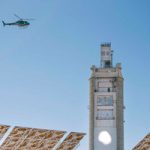
Testing solar irradiance
Last year, Sandia’s National Solar Thermal Test Facility brought in a helicopter to collect data on the strength and direction of light reflected from the concentrating solar power field at the solar tower.

Sandia, NMSU ink research deal
Sandia signed an MOU with New Mexico State University on April 10 that outlines how the institutions intend to collaborate for the next decade. The agreement seeks to foster research in areas of national security, including water, energy and critical infrastructure.

Sandia aerospace engineer to head national institute
Members of the American Institute of Aeronautics and Astronautics elected Basil Hassan, a senior manager and engineering program deputy, as the group’s next president. The AIAA represents more than 30,000 individual and 95 corporate members from the aeronautics and space community. Basil will begin a yearlong stint as president-elect of the institute in May, and then serve a two-year term as president starting in May 2020.
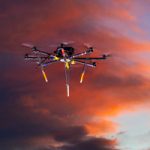
Future hypersonics could be artificially intelligent
A test launch for a hypersonic weapon — a long-range missile that flies a mile per second and faster — takes weeks of planning, and it's uncertain how useful test systems will be against urgent, mobile or evolving threats. But Sandia's hypersonics developers think artificial intelligence and autonomy could slash these weeks to minutes for deployed systems.
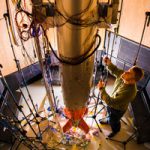
B61-12 team reaches milestones in nuclear deterrence mission
Sandia’s B61-12 nuclear weapons team has accomplished several milestones, including the gravity bomb’s final design review and the first production completion of several components for the life extension program. Sandia and LANL presented the B61-12 design for final review to an independent peer-review panel of 12 military and civilian experts last fall.
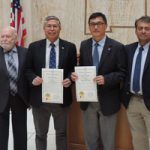
NM Legislature honors Sandia serial innovators
Stan Atcitty and Hongyou Fan have received recognition from the New Mexico Legislature for their distinguished achievements as serial innovators.
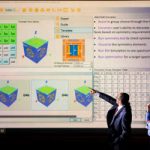
Mirage software automates design of optical metamaterials
Sandia software developers have created the first inverse-design software for optical metamaterials. The new software lets users design science-fiction-like materials with the same efficiency that architects use when they draft building plans.
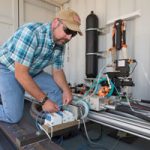
New lab offers mobile testing for devices that turn ocean waves into electricity
A new Labs facility — the Sandia Wave Energy Power Take-Off (SWEPT) Lab — offers mobile, specialized testing for systems that produce power from wave energy. Marine and hydrokinetic technologies convert the energy of waves, tides and river and ocean currents into electricity, creating the potential to provide millions with locally sourced, renewable and reliable energy.