
Sandia takes home six 2020 R&D 100 Awards
Sandia researchers have earned six R&D 100 Awards this year — three as sole winners and three with partner organizations — bringing the Labs’ total to 140 awards since 1976.

Safeguarding biological data
A partnership between Sandia and the Boston firm BioBright LLC to improve the security of synthetic biology equipment has become more relevant after the U.S. and others issued warnings that hackers were using the COVID-19 pandemic to increase their activities.
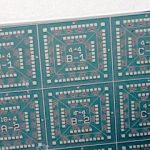
Material found in house paint may spur technology revolution
The development of a new method to make non-volatile computer memory may have unlocked a problem that has been holding back machine learning and has the potential to revolutionize technologies like voice recognition, image processing and autonomous driving.

Bonano and Rivas earn HENAAC recognition
Tito Bonano and Ang Rivas have been honored for their achievements and leadership at the 32nd annual Hispanic Engineer National Achievement Awards virtual conference in September.
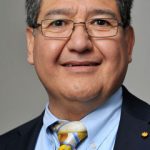
Herrera appointed to national quantum computing advisory committee
Sandia Fellow Gil Herrera has been appointed to the newly established U.S. National Quantum Initiative Advisory Committee, charged with advising the nation’s highest offices on matters concerning quantum information science.
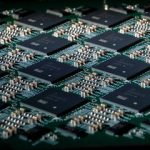
50 million artificial neurons to facilitate machine-learning research
Fifty million artificial neurons were delivered from Intel Corp. to Sandia in September. The neurons will be assembled to advance a relatively new kind of computing, neuromorphic, based on the principles of the human brain.

Cyber programs engage future workforce
The growing demand for cybersecurity professionals around the globe puts a premium on those in the industry and makes cybersecurity a critical skills area at Sandia. GET SCET and Tracer FIRE are two Sandia programs that have been put in place to help grow the number of talented individuals available to enter the cybersecurity pipeline.
NM companies may receive up to $150K in technical assistance
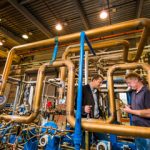
Eligible New Mexico companies have submitted statements of intent to work with scientists and engineers at Sandia or Los Alamos national laboratories through the Technology Readiness Gross Receipts Tax Credit Initiative. The new program allows selected companies to receive up to $150,000 in direct technical assistance per year for prototyping, proof-of-concept, field demonstrations, technical validation, testing and development or other activities.
Sandia joins national center for quantum computing research
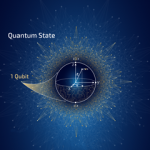
Sandia will serve as the leading partner in one of five national research centers for quantum information science established by DOE in August. The Quantum Systems Accelerator is a multi-disciplinary team comprising dozens of researchers from 15 labs and universities.
Marshaling resources to fight COVID-19
As Sandia and the nation came to terms with a new, socially distanced reality, researchers within the Labs’ Integrated Security Solutions Division were working to understand the biology of the novel coronavirus, learn how the human body responds to infection by SARS CoV-2 and model how COVID-19 spreads in a population.