
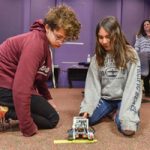
‘MANOS’ needs a hand
Many of us can thank a teacher or mentor who early in our lives ignited in us a passion for our current professions. Sandia’s Manos — or “hands-on” — program is looking for the next generation of Sandia volunteer mentors to provide that spark for science, technology, engineering and math in local middle school students.
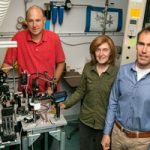
Cracking the code to soot formation
The longstanding mystery of soot formation, which combustion scientists have been trying to explain for decades, appears finally solved, thanks to research led by Sandia.
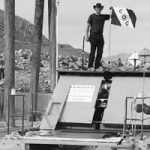
Detecting quark nuggets, a candidate for extreme ball lightning and dark matter
Thirteen years ago, Chief Technology Officer and Vice President of Science and Technology Pace VanDevender retired from Sandia to become an 18th-century style “gentleman physicist.” He wanted to understand two mysteries before he died: puzzling electromagnetic signals observed on the Los Alamos-Sandia FORTE satellite and extreme ball lightning.
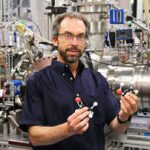
Researchers discover new source of formic acid over Pacific, Indian oceans
Insights from experiments at Sandia designed to push chemical systems far from equilibrium have led an international group of researchers to discover a new major source of formic acid over the Pacific and Indian oceans.
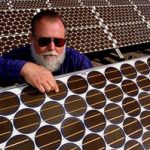
The amazing growth of renewable energy from solar cells: A lesson for how we fund research?
Since 2004, the rate at which solar cell power is installed has doubled every 22 months and is now in excess of 0.1 terawatts per year. Research driving some of this expansion began right here at Sandia more than 40 years ago.
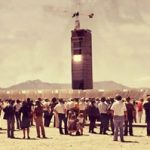
Sandia to celebrate 40 years of solar power research
In 1978, Sandia began a unique program of research on concentrating solar power at the newly constructed National Solar Thermal Test Facility. Forty years later, the facility is still the only one of its kind in the United States. Sandia will celebrate the solar tower’s 40th anniversary on July 31.
International corrosion society elects first Sandia fellow
Sandia materials scientist David Enos has been elected as a fellow of NACE International, the chief professional society for corrosion engineering. The first Sandian to receive the honor, David was chosen for his significant contributions to corrosion science and engineering for protecting materials in complex environments.
First wind blade from a 3-D printed mold, energy-saving nanoparticles earn Sandia national FLC awards
Sandia’s energy-saving nanomaterial window films and first wind turbine blades made from a 3-D printed mold earn national honors from the Federal Laboratory Consortium
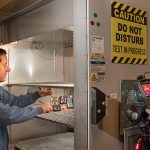
Can you take the heat?
Nothing quite compares to the diverse environments in which Sandia’s nuclear weapons systems and components must survive. Testing these components and ensuring their reliability in the harshest environments is the job of the people and tools at the non-destructive environmental testing lab.
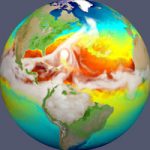
Exascale
The Energy Exascale Earth System Model, or E3SM, is an earth modeling system developed by eight DOE labs and several universities working under the aegis of DOE's Office of Science. It is expected to have one of the finest resolutions ever achieved by supercomputers simulating aspects of the planet’s climate.