

STAR fellows 2019
Family Day memories are captured in photos from past events.

Family Day memories
Family Day memories are captured in photos from past events.

March 28, 1969: Sandia Labs Completes ‘Crash’ Testing Program for Apollo
Sandia Laboratories is completing a six-month crash program of analysis and safety testing of a cup-sized radioactive heater scheduled for use in Project Apollo.
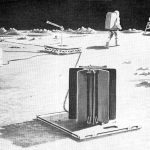
May 23, 1969: Sandia Helps in Apollo Moon Program
The outstanding scientific achievement of the twentieth century will be placing a man on the moon. Sandia will have, so to speak, a small but important piece of the action.
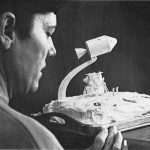
August 1, 1969: Labs Tested Nuclear Heaters Left on Moon by Apollo 11
Two cup-sized radioisotopic heaters analyzed and safety tested at Sandia Laboratories are part of the instrumentation left on the moon by astronauts of Apollo 11.
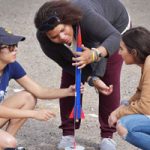
Sky’s the limit
Four Sandia interns mentored eight high school students from throughout New Mexico who participated in this year’s Model Rocket Design and Telemetry project at the 2019 Joint Science and Technology Institute residential STEM camp in June.

Sandia breaks ground on new California data center
National Nuclear Security Administration officials joined Sandia leadership June 3 to break ground on a new data center at the Sandia/California site. The 8,900-square-foot facility will house information-processing equipment essential for providing connectivity and computing support.

Steve Younger joins roundtable to expand trades in New Mexico
Labs Director Steve Younger met with New Mexico 3rd District Congressman Ben Ray Luján at a recent forum to discuss the ACCESS Act, which would establish a five-year grant program run by DOE to create apprenticeship and pre-apprenticeship programs in colleges and technical education schools to fill nuclear industry jobs at national laboratories.
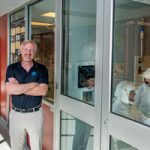
Strategic Priority No. 3
Strategic Priority No. 3: Never surprises, always options: Anticipating threats to national security through Intelligence Science

Budgets double for small business assistance projects
Sandia will be doubling the amount of technical assistance it provides to small businesses, following legislation signed into New Mexico state law this year. The new law, which took effect July 1, raises the cap on the value of services Sandia and Los Alamos national laboratories can offer New Mexico small businesses.