

Celebration at the intellectual property finish line includes family and friends
Sandia researchers were joined by partners, parents and friends in December to celebrate the ninth annual Innovation Celebration, organized by Integrated Partnerships Organizations. The event, at the Albuquerque Museum, recognized individuals who added patents and commercial copyrights to Sandia’s intellectual property portfolio in 2017.
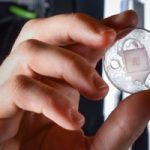
Sandia microneedles technique may mean quicker diagnoses of major illnesses
A new technique using microneedles that are able to draw relatively large amounts of interstitial fluid — a liquid that lurks just under the skin and carries more immune cells than blood — could be effective in rapidly measuring exposure to chemical and biological warfare agents, as well as diagnosing cancer and other diseases.
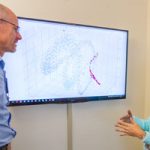
‘Research Club’ enhances research culture and capabilities
Sandia Fellow Kathy Simonson has started a "Research Club" to help Sandia researchers better prepare Laboratory Directed Research and Development ideas and proposals. Having reviewed hundreds of research proposals during her career, Kathy noticed many of the same issues kept cropping up in weaker proposals, which gave her the idea.
Sandia researchers win five R&D 100 awards
Sandia inventions and co-inventions have captured five R&D 100 Awards for 2018. Competitors for the awards include an international pool of universities, corporations and government labs, and the sole criterion for winning is “demonstrable technological significance compared with competing products and technologies.” Since 1976, Sandia has earned a total of 124 awards. Read more to learn about this year's winners.
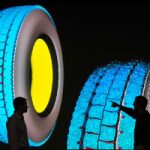
CRADA boom spurs innovation, collaboration with Sandia Labs
Sandia signed 42 CRADAs in fiscal year 2018, more Cooperative Research and Development Agreements than in any previous year this century, sparking dozens of new collaborations and potential technological innovations. A CRADA is an agreement between a government agency and a nonfederal entity to work together on research and development.

Majority rules when looking for earthquakes, explosions
Finding the ideal settings for each sensor in a network to detect seismic activity can be a painstaking and manual process. Sandia researchers are working to change that. They have developed an algorithm that automatically adjusts seismic activity detection levels for each network sensor, tuning out everyday vibrations such as traffic or footsteps to better detect earthquakes and explosions.
Cutting it short
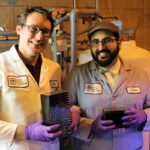
Diseases currently considered incurable could one day be eliminated with a single injection. New gene-editing technologies can cut disease out of a person’s DNA, but they aren’t safe to leave in the body for long, so Sandia scientists have developed a test to quickly, accurately and simultaneously screen thousands of molecules for their ability to shut down DNA-cutting proteins.
Large supercrystals promise superior sensors
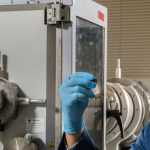
Using an artful combination of nanotechnology and basic chemistry, Sandia researchers have encouraged gold nanoparticles to self-assemble into unusually large supercrystals that could significantly improve the detection sensitivity for chemicals such as explosives or drugs.

Progress toward plugging an antibiotic pump
Each year in the U.S., at least 23,000 people die from infections caused by antibiotic-resistant bacteria. Using computer modeling, researchers from Sandia and the University of Illinois at Urbana-Champaign are helping to develop the means to prevent some of those deaths.
Sandia light mixer makes 11 colors at once
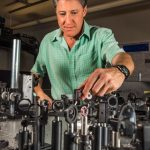
Sandia scientists have developed a new light-mixing metamaterial that can be used in many applications, from creating a multi-color laser pointer to discovering hidden archeological sites in dense forests to detecting signs of extraterrestrial life in the air to increasing communications speed and capacity via fiber-optic networks.