
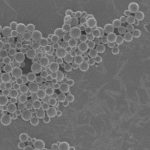
A splash of detergent makes catalytic compounds more powerful
Uniform catalytic compounds produced at Sandia don't just look nice, they outperform commercial varieties used as catalysts in solar cells and which could be used to produce clean-burning hydrogen fuel. If developed for industry, the new technology could improve performance while reducing costs of catalysts used everywhere from environmental cleanup to cancer treatment.
First wind blade from a 3-D printed mold, energy-saving nanoparticles earn Sandia national FLC awards
Sandia’s energy-saving nanomaterial window films and first wind turbine blades made from a 3-D printed mold earn national honors from the Federal Laboratory Consortium

Sandia LEEDs the way with New Mexico campus certification
The U.S. Green Building Council has awarded the Sandia/New Mexico site a LEED v.4 for Campus Certification, the first such certification at a DOE lab. It's the largest LEED Campus Certification in the history of the program, as well as the first Version 4 certification in New Mexico.
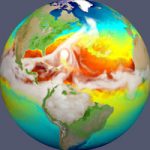
Exascale
The Energy Exascale Earth System Model, or E3SM, is an earth modeling system developed by eight DOE labs and several universities working under the aegis of DOE's Office of Science. It is expected to have one of the finest resolutions ever achieved by supercomputers simulating aspects of the planet’s climate.
Biologically inspired membrane purges most greenhouse gases from coal-fired smoke
Biologically inspired membrane purges most greenhouse gases from coal-fired smoke
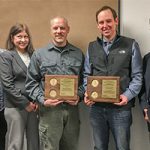
Sandians honored for sustainability efforts
Sandians honored for sustainability efforts
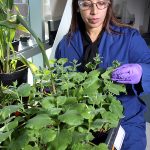
New routes to renewables
Sandia speeds transformation of biofuel waste into wealth
Recycling smarter
Sandia responds to changes in recycling market
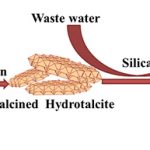
A cooler filter
Reducing power plants’ freshwater consumption with Sandia’s new silica filter
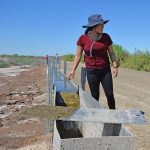
The good, the bad, and the algae
Sandia tests Salton Sea-grown algae as new fuel source and pollution solution