
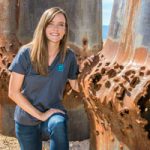
Shocking experiences bring intern back for more
Rebecca Nylen, a doctoral candidate in civil engineering at Georgia Tech, is completing her second summer internship at Sandia and has every intention of returning to Albuquerque in 2019.
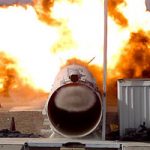
Blast tube tests at Sandia simulate shock wave conditions nuclear weapons could face
Sandia researchers are using a blast tube configurable to 120 feet to demonstrate how well nuclear weapons could survive the shock wave of a blast from an enemy weapon, and to help validate the modeling.
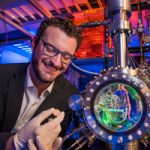
Sandia engineers world’s most wear-resistant metal alloy
Sandia’s materials science team has engineered a platinum-gold alloy believed to be the most wear-resistant metal in the world. It’s 100 times more durable than high-strength steel, making it the first alloy in the same class as diamond and sapphire, nature’s most wear-resistant materials.
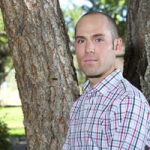
Sandia engineer receives top honor
Sandia researcher Brandon Heimer has been selected to participate in the National Academy of Engineering’s (NAE) 24th annual U.S. Frontiers of Engineering symposium. The academy called Brandon one of 84 of the nation’s “top-notch” engineers performing exceptional engineering research and technical work in a variety of disciplines.
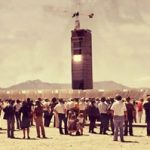
Sandia to celebrate 40 years of solar power research
In 1978, Sandia began a unique program of research on concentrating solar power at the newly constructed National Solar Thermal Test Facility. Forty years later, the facility is still the only one of its kind in the United States. Sandia will celebrate the solar tower’s 40th anniversary on July 31.
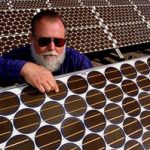
The amazing growth of renewable energy from solar cells: A lesson for how we fund research?
Since 2004, the rate at which solar cell power is installed has doubled every 22 months and is now in excess of 0.1 terawatts per year. Research driving some of this expansion began right here at Sandia more than 40 years ago.
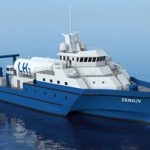
Diesel doesn’t float this boat
Marine research could soon be possible without the risk of polluting either the air or the ocean, thanks to a new hydrogen fuel cell ship design and feasibility study led by Sandia. Hydrogen fuel cells have existed for decades, but the feasibility of a hydrogen-powered research vessel has never been studied or proven. Until now.
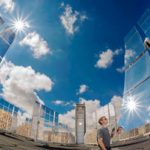
Cooking composites in the sun
Sandia’s solar tower is helping to assess how extreme temperature changes affect materials. The tests for the Air Force take advantage of the ability of Sandia’s National Solar Thermal Test Facility to simulate a very rapid increase in temperature followed by an equally rapid decrease.
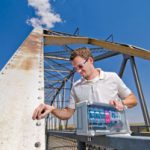
Smarter, safer bridges with Sandia sensors
Sandia and UK-based Structural Monitoring Systems PLC have been working together for 15 years to create transportation systems that can send a signal when they're damaged. They've outfitted a U.S. bridge with a network of sensors that will alert maintenance engineers when they detect a crack large enough to require repair.
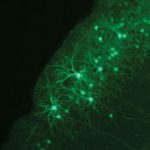
Sandia computational researcher wins DOE Early Career Research Program award
Sandia researcher Eric C. Cyr has received a 2018 Early Career Research Program award of $500,000 every year for five years to improve deep neural networks so they more efficiently combine experimental results with the most complex computer models.