
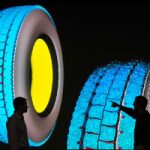
CRADA boom spurs innovation, collaboration with Sandia Labs
Sandia signed 42 CRADAs in fiscal year 2018, more Cooperative Research and Development Agreements than in any previous year this century, sparking dozens of new collaborations and potential technological innovations. A CRADA is an agreement between a government agency and a nonfederal entity to work together on research and development.

Majority rules when looking for earthquakes, explosions
Finding the ideal settings for each sensor in a network to detect seismic activity can be a painstaking and manual process. Sandia researchers are working to change that. They have developed an algorithm that automatically adjusts seismic activity detection levels for each network sensor, tuning out everyday vibrations such as traffic or footsteps to better detect earthquakes and explosions.
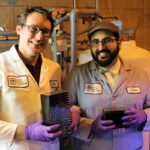
Cutting it short
Diseases currently considered incurable could one day be eliminated with a single injection. New gene-editing technologies can cut disease out of a person’s DNA, but they aren’t safe to leave in the body for long, so Sandia scientists have developed a test to quickly, accurately and simultaneously screen thousands of molecules for their ability to shut down DNA-cutting proteins.
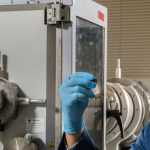
Large supercrystals promise superior sensors
Using an artful combination of nanotechnology and basic chemistry, Sandia researchers have encouraged gold nanoparticles to self-assemble into unusually large supercrystals that could significantly improve the detection sensitivity for chemicals such as explosives or drugs.

Progress toward plugging an antibiotic pump
Each year in the U.S., at least 23,000 people die from infections caused by antibiotic-resistant bacteria. Using computer modeling, researchers from Sandia and the University of Illinois at Urbana-Champaign are helping to develop the means to prevent some of those deaths.
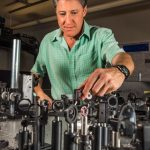
Sandia light mixer makes 11 colors at once
Sandia scientists have developed a new light-mixing metamaterial that can be used in many applications, from creating a multi-color laser pointer to discovering hidden archeological sites in dense forests to detecting signs of extraterrestrial life in the air to increasing communications speed and capacity via fiber-optic networks.
Generating electrical power from waste heat
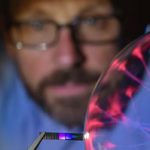
Directly converting electrical power to heat is easy, but the opposite, converting heat into electrical power, hasn't been so easy — until now. Sandia researchers have developed a tiny silicon-based device that can harness what was previously called waste heat and turn it into DC power.
Sandia’s robotic work cell conducts high-throughput testing ‘in an instant’
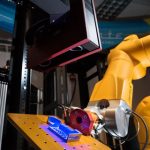
With 3D printing, you can make almost anything in a matter of hours. However, making sure 3D-printed parts work reliably takes weeks or even months. To speed up the process, Sandia scientists have designed and built a six-sided work cell around a commercial robot that conducts high-throughput testing to quickly determine how well those parts perform.
A splash of detergent makes catalytic compounds more powerful
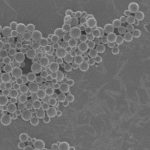
Uniform catalytic compounds produced at Sandia don't just look nice, they outperform commercial varieties used as catalysts in solar cells and which could be used to produce clean-burning hydrogen fuel. If developed for industry, the new technology could improve performance while reducing costs of catalysts used everywhere from environmental cleanup to cancer treatment.
Sandia measurements expert named Asian American Engineer of the Year
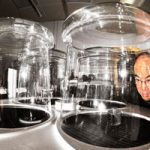
“I am deeply both humbled and honored to have been nominated by Sandia and selected by CIE-USA,” senior scientist Hy Tran said of his selection. “This is not so much a personal honor. This honor belongs to Sandia National Laboratories.”