
News Article, August 24, 2026 • Accurately simulating how fuel burns in turbulent flows is essential for designing and running jet engines, rocket motors, and new hypersonic propulsion systems, which are important for national security. However, fully capturing the complex chemical reactions and fluid transport in these flames can require solving hundreds to thousands of coupled...
DOE
Current Filters
Clear all
Researchers develop a tantalizing method to study cyberdeterrence
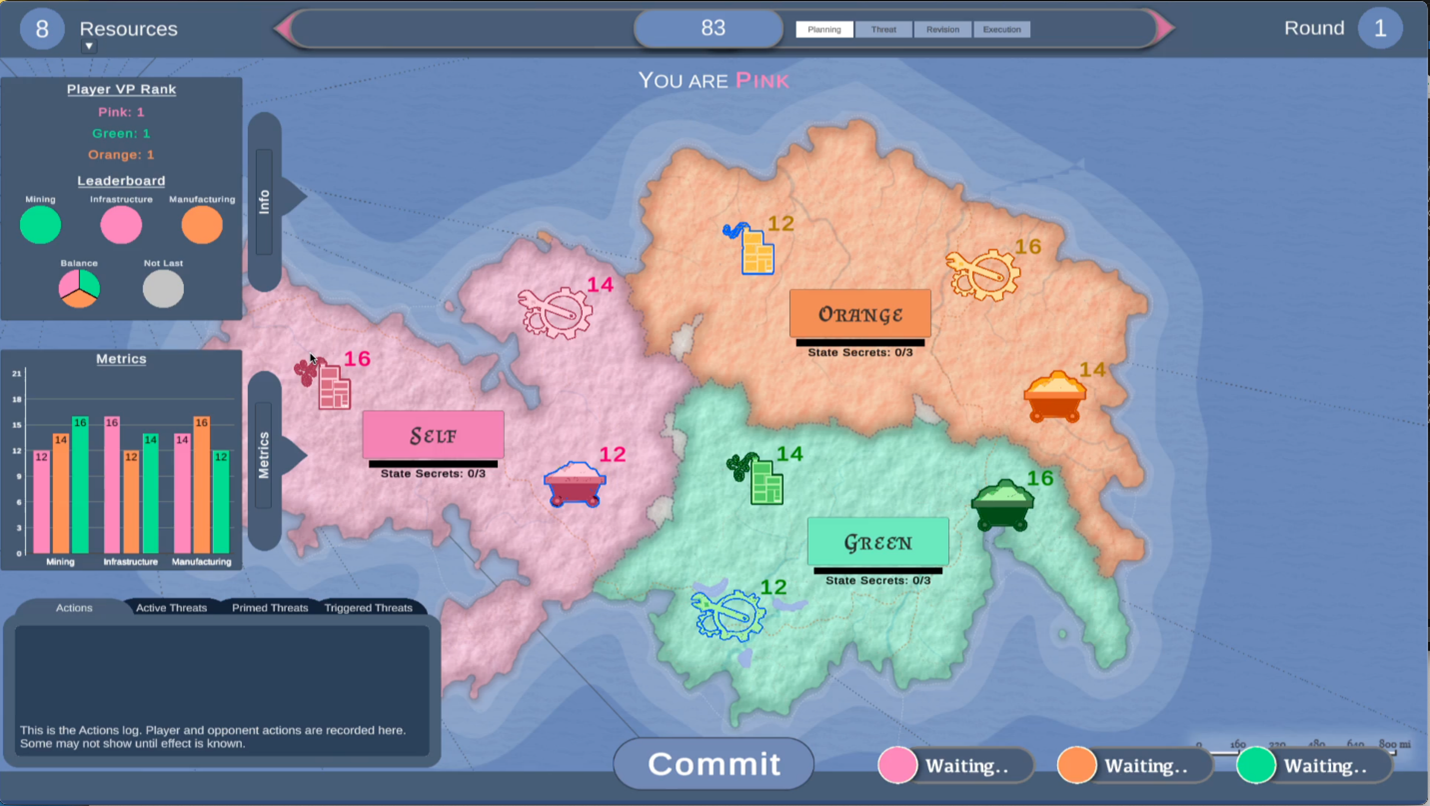
News Article, November 27, 2023 • TANTALUS — The online game simulates how success or failure is within a player’s reach. Experimental war gaming provides insightful data for real-world cyberattacks In Greek mythology, Tantalus was the king of Sipylus who so angered Zeus with his treachery that his punishment was to go thirsty and hungry while...
RUBISCO – Soil carbon working group: Collaborative science to enhance predictive understanding.
News Article, April 30, 2024 • Project Description Current Energy Earth System Models (ESM) representation of soil organic matter (SOM) and its response to future environmental changes are not certain. The objective of SOM working group is to enhance our predictive understanding of the response of SOM under future environmental changes. The team hopes to achieve...

Sandia scientist testifies how AI is helping with science innovation
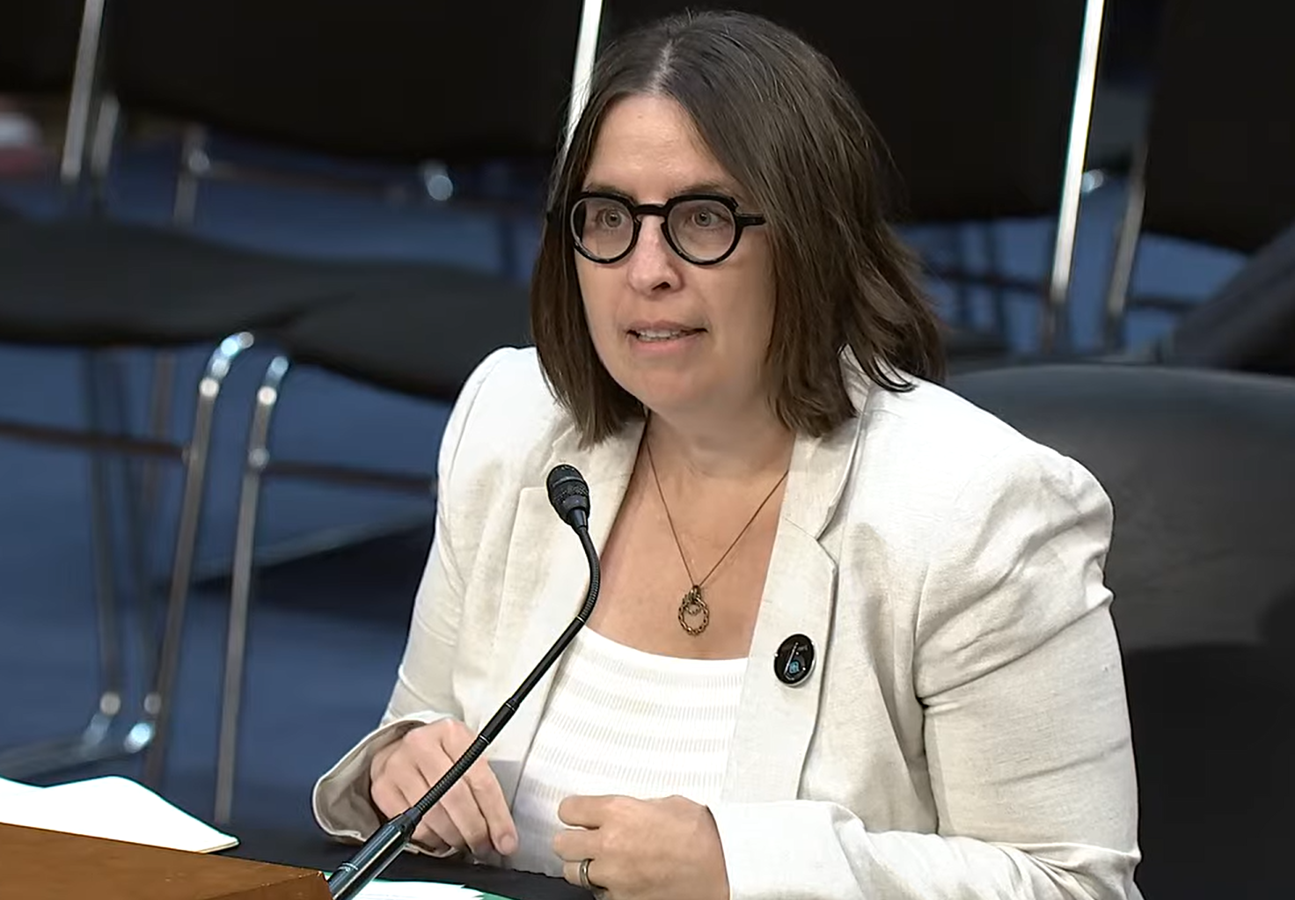
News Article, July 23, 2024 • Sandia’s Jennifer Gaudioso testifies during a Senate committee hearing June 4 that DOE data and supercomputing capabilities position U.S. national labs to shape future AI initiatives. (Image captured from hearing video) Sandia’s Jennifer Gaudioso testified before Congress on how scientists at U.S. national laboratories are poised to elevate artificial intelligence...
Shielding future fusion reactors: DIII-D’s testing of advanced plasma-facing materials
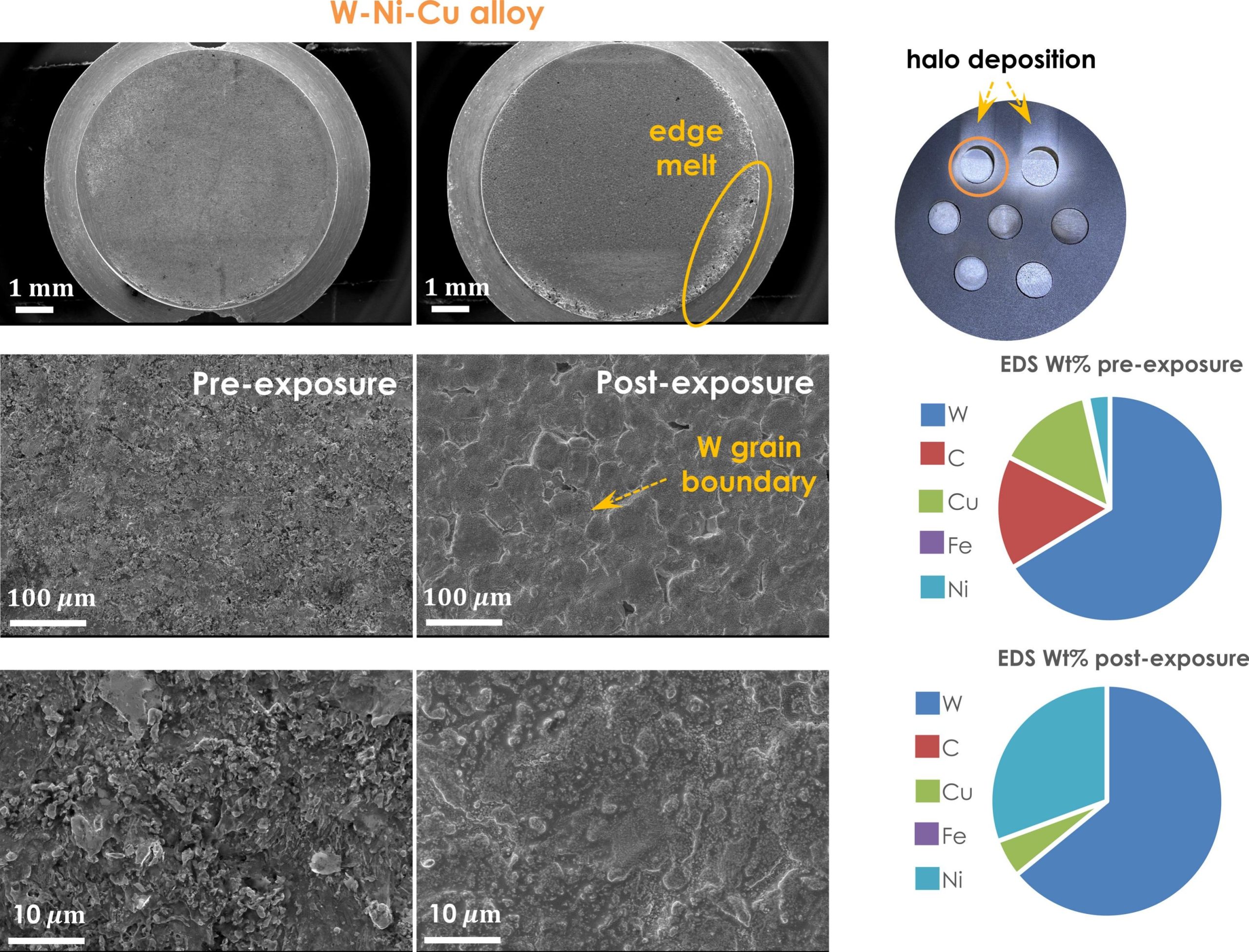
News Article, September 21, 2026 • Research at the DIII-D National Fusion Facility addresses a critical need for materials that can survive the punishing environment inside a future Fusion Pilot Plant, an energy source with major implications for long-term national security and energy resilience. Over the first year of a two-year campaign, researchers used a specialized...
Stability of disconnections in solute atmosphere
News Article, March 3, 2025 • Disconnections, such as the disconnection dipole shown here from relaxed molecular dynamics simulations, are found on many grain boundaries and postulated to regulate boundary mobility. (b) An atomic-scale map of the segregation energy of dilute Ag atoms in a Cu matrix illustrating a zone of strong segregation (blue) for preferred...

Statistical earthquake models inform understanding of material degradation at the nanoscale
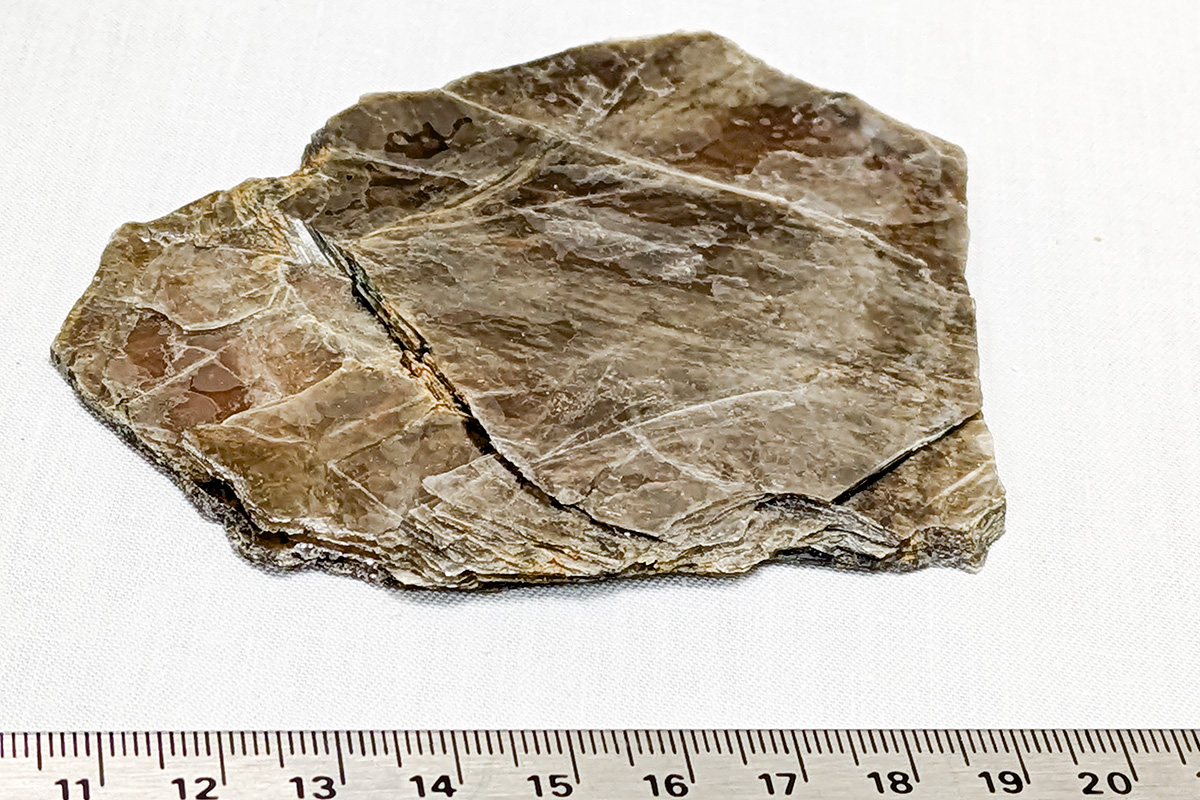
News Article, December 10, 2024 • Muscovite mica, used in many materials science applications, is known for its extremely flat and flaky layers, making it highly susceptible to hostile environmental conditions. (Photo by Anastasia Ilgen) Understanding how materials will interact with their environment is crucial when selecting components for engineering applications. To help inform material selection, geologists...
Testing a photon transport model against real-world experiments for improved simulation accuracy
News Article, July 14, 2025 • Simulated and observed photon travel time agreed within uncertainty across the two cloud thicknesses (1, 2) under study. How long does it take for photons to travel through clouds of particles in the air? Sandia researchers utilized a new photon propagation simulation tool based on the open-source Physically Based Rendering...
The study of Z-pinches with engineered defects
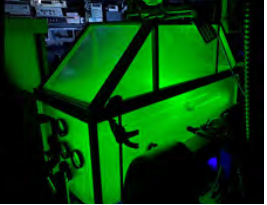
News Article, October 13, 2022 • 3D-magnetohydrodynamic simulations of electrothermal instability growth by studying Z-pinches with engineered defects Electrothermal instability (ETI) is driven by Joule heating and arises from the dependence of resistivity on temperature. When a metal is Joule-heated through the boiling point, ETI drives azimuthally correlated surface density variations or “strata,” which provide the dominant seed...
Transformational capabilities demonstrated by Sandia at AI Expo
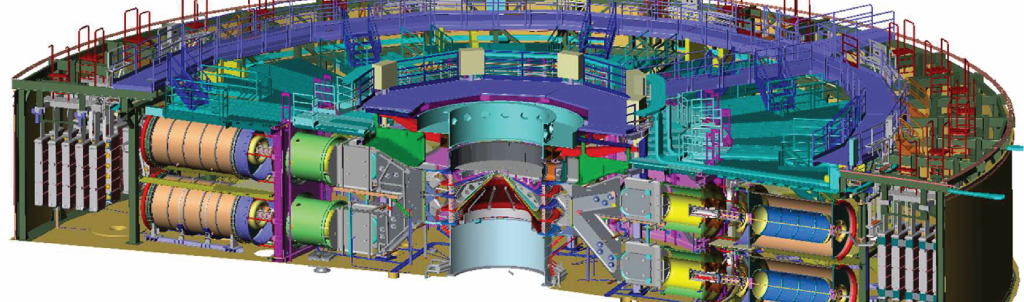
News Article, June 17, 2024 • Danny Gomez from Sandia watches as Senator Martin Heinrich experiences the immersive extended reality environment of JARVIS. (Photo courtesy of John Feddema) Ten national laboratories, including Sandia, shared one of the largest booths at the AI Expo for National Competitiveness from May 7-8 in Washington, D.C. The new conference provided...

Tunable quantum metasurface for scalable secure quantum technologies
News Article, August 24, 2026 • A team including researchers at Sandia’s Center for Integrated Nanotechnologies and Microsystems and Engineering Sciences Application (MESA) Complex developed a tunable optical metasurface that improves how much light is emitted from embedded Gallium Arsenide (GaAs) quantum dots (QDs) and at what wavelength this light is emitted. The QDs produce single...
Understanding the effects of radiation on reconfigurable phase change materials
News Article, June 22, 2023 • David Adams was elected Fellow and President of American Vacuum Society: Science and Technology of Materials, Interfaces and Processing in 2023. Chalcogenide thin films that undergo reversible phase changes show promise for next-generation nanophotonics, metasurfaces, and other emerging technologies. This general class of thin films can be switched rapidly between...

Using machine learning to create rapid stronglink mechanisms
News Article, April 10, 2023 • Computer aided design (CAD) to simulation workflows for nuclear deterrence (ND) have shown dramatic performance improvements with ML. This work targets some of the most inefficient, tedious, and error-prone bottlenecks using new ML-based methods. Common mechanisms such as fasteners and springs can now be quickly identified and reduced to simulation-ready...
Using nonlocal interface problem allows for 7x speedup in large-scale simulations
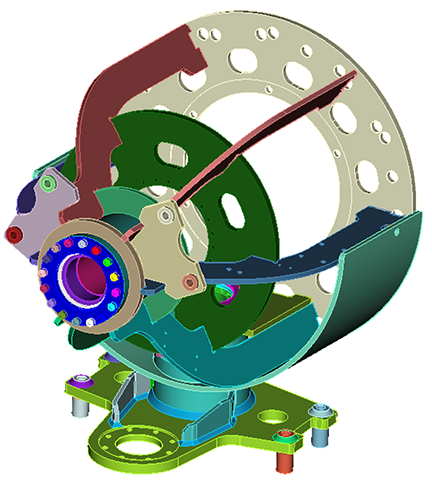
News Article, May 9, 2023 • Multimaterial problems exist in mission applications such as mechanics and subsurface transport. To capture effects arising from long-range forces at the microscale and mesoscale that aren’t accounted for by classical partial differential equations, the MAThematical foundations for Nonlocal Interface Problems (MATNIP) project team developed a mathematically rigorous interface theory employing...
Results 26–39 of 39