
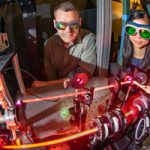
Wind tunnel and lasers give nation a hypersonic proving ground
Sandia's hypersonic wind tunnel and advanced laser diagnostic technology are helping U.S. defense agencies understand the physics associated with aircraft flying five times faster than the speed of sound. With potential adversaries reporting successes in their own programs to develop aircraft that can be flown at Mach 5 or greater, U.S. development of autonomous hypersonic systems is a top defense priority.

Majority rules when looking for earthquakes, explosions
Finding the ideal settings for each sensor in a network to detect seismic activity can be a painstaking and manual process. Sandia researchers are working to change that. They have developed an algorithm that automatically adjusts seismic activity detection levels for each network sensor, tuning out everyday vibrations such as traffic or footsteps to better detect earthquakes and explosions.
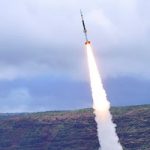
Sandia delivers first DOE sounding rocket program since 1990s
Sandia has developed a new rocket program, called the High Operational Tempo Sounding Rocket Program, or HOT SHOT, and integrated it for its first launch earlier this year under NNSA direction. The new program could help cut research and development time for new weapons systems from as many as 15 years to less than five.
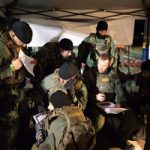
In case of emergency: Urban Shield 2018
The emergency response exercise is part training and part competition among 35 local, state, national and international SWAT teams. This year’s exercise included groups from Hong Kong, the Netherlands, Las Vegas and the California Highway Patrol, along with 31 Bay Area SWAT teams.

Labs Director signs annual assessment letter
In late September, Sandia President and Laboratories Director Steve Younger signed Sandia’s annual assessment letter. Each year, Sandia assesses the safety, reliability and performance aspects of the nation’s nuclear weapons stockpile for which it has responsibility.

Rick Perry thanks employees for national service
Energy Secretary Rick Perry emphatically thanked Sandia employees for their contributions to science and issues of national and international security, equating research to public service during a visit to the Labs on Oct. 9.
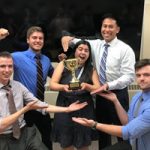
Sandia interns sprint to the challenge
Four intern teams competed for eight weeks this summer in Sandia’s fourth annual Nuclear Weapons Summer Product Realization Institute. During the NW SPRINT, nontraditional teams develop innovative concepts using new technologies, and identify and address gaps in those technologies. It also serves to create a recruiting pipeline.

Strongest of the strong
Tiffany Tafoya, a Sandia missile defense technologist, deadlifts cars and carries around giant heavy stones in her free time. She’s also really good at it. Tiffany trains in strongman, a weightlifting-based sport that involves physical and mental strength, speed and endurance.
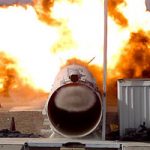
Blast tube tests at Sandia simulate shock wave conditions nuclear weapons could face
Sandia researchers are using a blast tube configurable to 120 feet to demonstrate how well nuclear weapons could survive the shock wave of a blast from an enemy weapon, and to help validate the modeling.
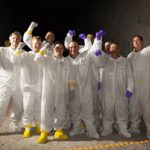
Keeping perspective during a long recovery
Sean Dunagan knows firsthand how to bring a major project back online after a three-year shutdown. Following the February 2014 events that closed the Waste Isolation Pilot Plant in Carlsbad, New Mexico, he was the senior WIPP recovery manager at DOE. Now back in Sandia’s employ, Sean manages special projects and remote site support for the Labs’ Carlsbad office.