LDRD

Results 26–36 of 36
Current Filters Clear all

Smart materials for highly complex tags with environmental response 

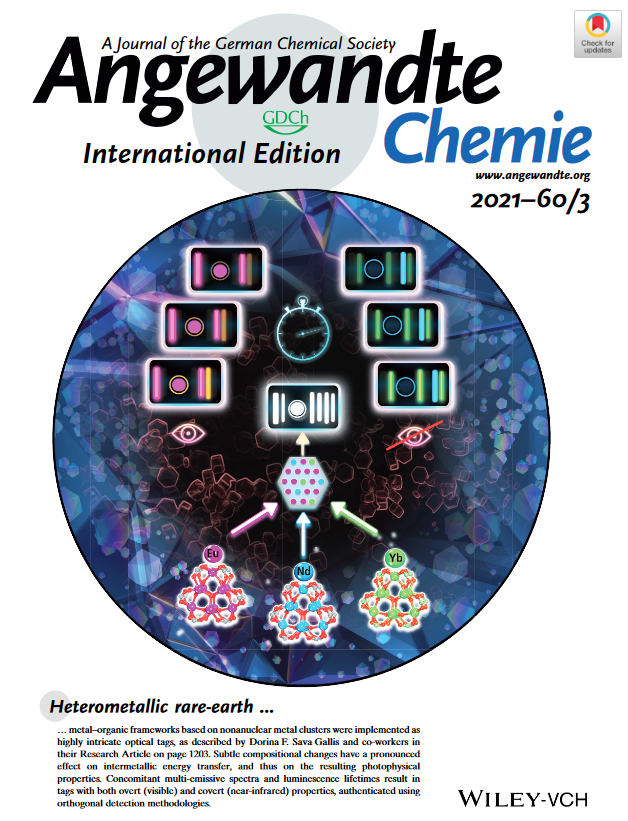
News Article, June 22, 2023 • Cover of the Journal of the German Chemical Society Angewandte Chemie International Edition As counterfeiting methods become more sophisticated, countermeasures must be developed at the same pace. In this Sandia LDRD project, unique exemplars of next generation anticounterfeiting optical tags were developed that leverage the luminescent properties of materials for...
Cover of the Journal of the German Chemical Society Angewandte Chemie International Edition

Statistical earthquake models inform understanding of material degradation at the nanoscale

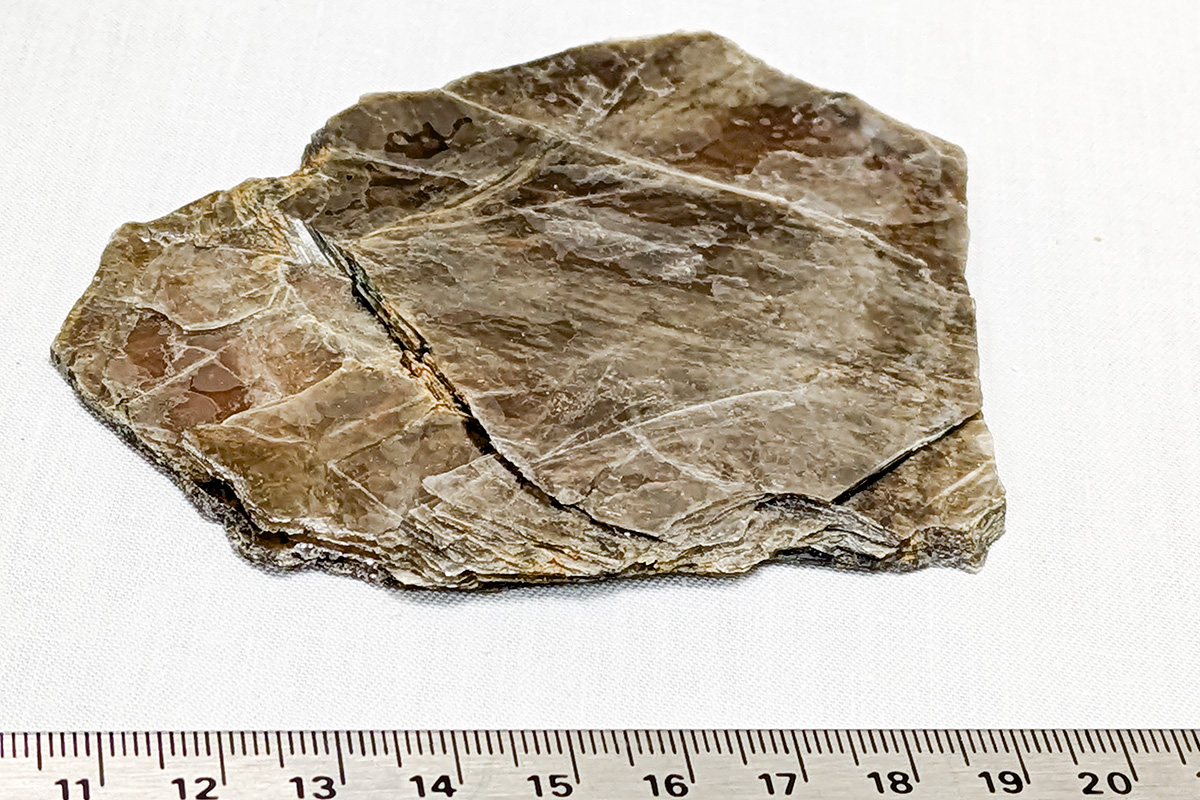
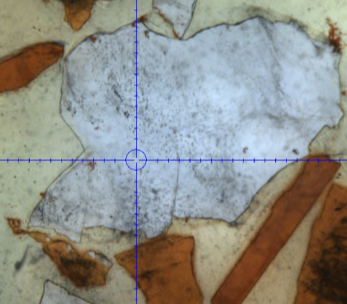
News Article, December 10, 2024 • Muscovite mica, used in many materials science applications, is known for its extremely flat and flaky layers, making it highly susceptible to hostile environmental conditions. (Photo by Anastasia Ilgen) Understanding how materials will interact with their environment is crucial when selecting components for engineering applications. To help inform material selection, geologists...

Stress intensity thresholds for development of reliable brittle materials 

News Article, June 22, 2023 • Cover of the Journal of the American Ceramic Society Brittle material failure can appear random and unpredictable at subcritical stresses. A fundamental understanding of how structural and environmental factors impact fracture propagation is necessary to predict fracture in these systems. Through this project, a physics-based model of glass fracture was...
The Journal of the American Ceramic Society featuring the Sandia research projects.

The study of Z-pinches with engineered defects

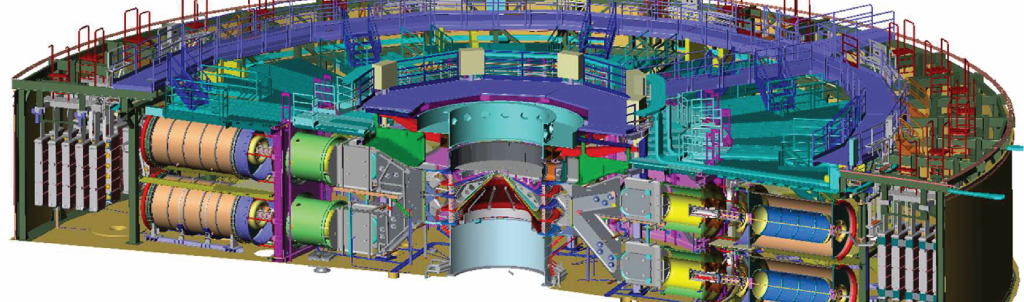
News Article, October 13, 2022 • 3D-magnetohydrodynamic simulations of electrothermal instability growth by studying Z-pinches with engineered defects Electrothermal instability (ETI) is driven by Joule heating and arises from the dependence of resistivity on temperature. When a metal is Joule-heated through the boiling point, ETI drives azimuthally correlated surface density variations or “strata,” which provide the dominant seed...
3D-magnetohydrodynamic simulations of electrothermal instability growth by studying Z-pinches with engineered defects

Understanding molecular-scale effects on fracture can inform resource extraction and help maintain the nation’s infrastructure 

News Article, June 8, 2023 • Three images show liquid nanoindentation setup, the indentation site, and water inside the crack tip in a molecular dynamics simulation. Subcritical fracture controls deformation and permeability of rocks and degradation of manmade materials. To further understand the chemical mechanisms controlling subcritical fracture, this three-year project created nanomechanical and continuum-scale mechanics...

Understanding the effects of radiation on reconfigurable phase change materials

News Article, June 22, 2023 • David Adams was elected Fellow and President of American Vacuum Society: Science and Technology of Materials, Interfaces and Processing in 2023. Chalcogenide thin films that undergo reversible phase changes show promise for next-generation nanophotonics, metasurfaces, and other emerging technologies. This general class of thin films can be switched rapidly between...
David Adams was elected Fellow and President of American Vacuum Society: Science and Technology of Materials, Interfaces and Processing in 2023.

Using machine learning to create rapid stronglink mechanisms

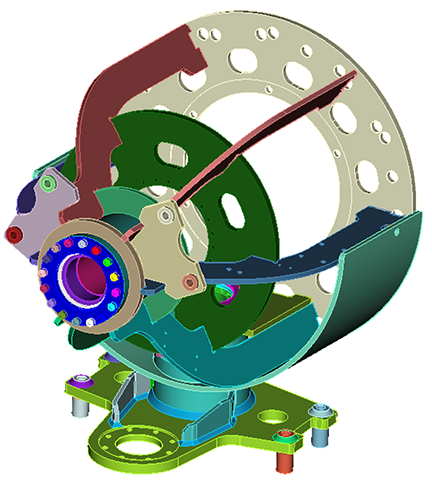
News Article, April 10, 2023 • Computer aided design (CAD) to simulation workflows for nuclear deterrence (ND) have shown dramatic performance improvements with ML. This work targets some of the most inefficient, tedious, and error-prone bottlenecks using new ML-based methods. Common mechanisms such as fasteners and springs can now be quickly identified and reduced to simulation-ready...
A CAD model

Using nonlocal interface problem allows for 7x speedup in large-scale simulations

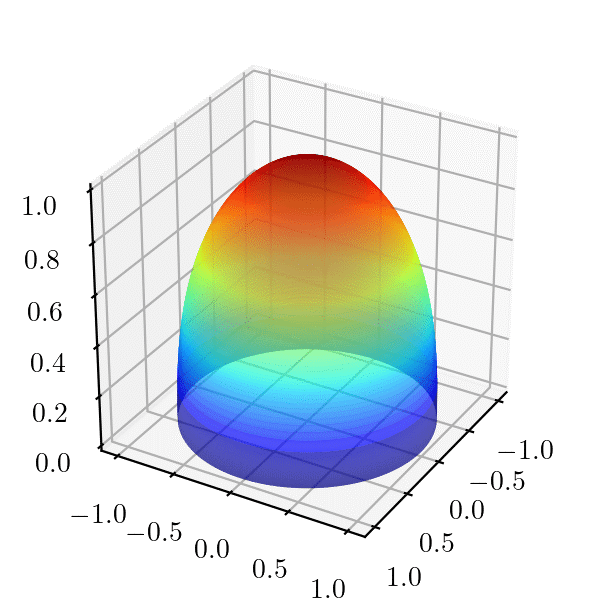
News Article, May 9, 2023 • Multimaterial problems exist in mission applications such as mechanics and subsurface transport. To capture effects arising from long-range forces at the microscale and mesoscale that aren’t accounted for by classical partial differential equations, the MAThematical foundations for Nonlocal Interface Problems (MATNIP) project team developed a mathematically rigorous interface theory employing...
Analytic solutions u 2D 0,0 for s = 0.4 and u 2D 1,1 for s = 0.6. The behaviour (3.17) close to the boundary is apparent.

Wide-bandgap semiconductors benefit from development of single-photo sources in gallium nitride 

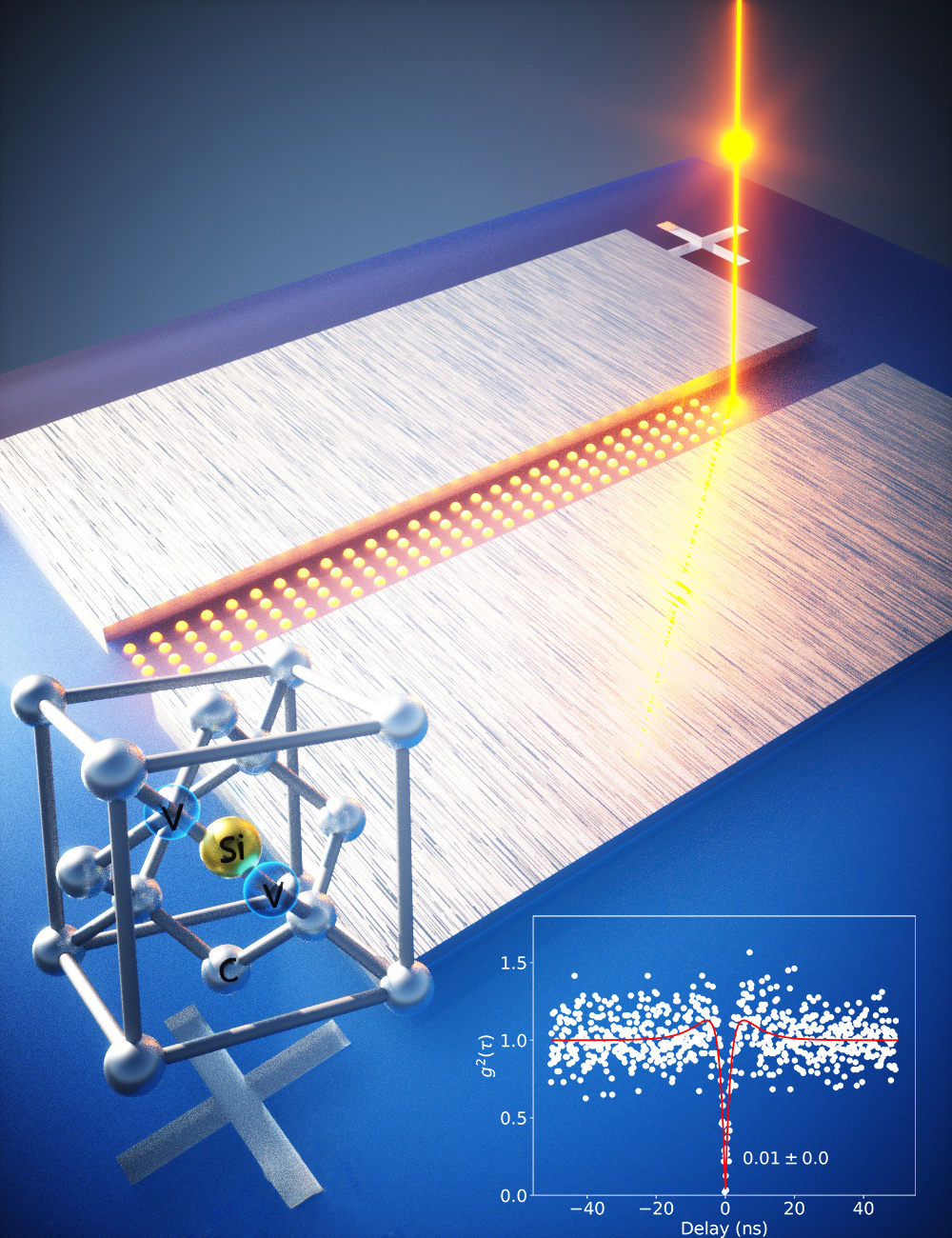
News Article, June 8, 2023 • Single-photon sources based on atom-like features in solid-state materials offer the prospect for integrated, on-demand solid-state platforms and are being intensively explored for numerous mission-related quantum information technologies. Gallium nitride (GaN) is a very hard, mechanically stable wide-bandgap (WBG) semiconductor that permits devices to operate at much higher voltages, frequencies,...
A graphic showing a model of an atom over a wide-bandgap semiconductor
Results 26–36 of 36