Search

Results 126–150 of 267

Improving predictive capability in REHEDS simulations with fast, accurate, and consistent nonequilibrium material properties 

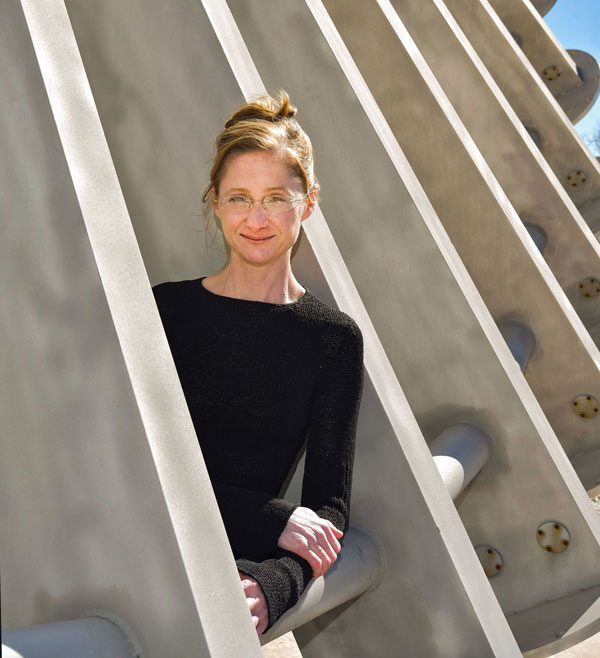
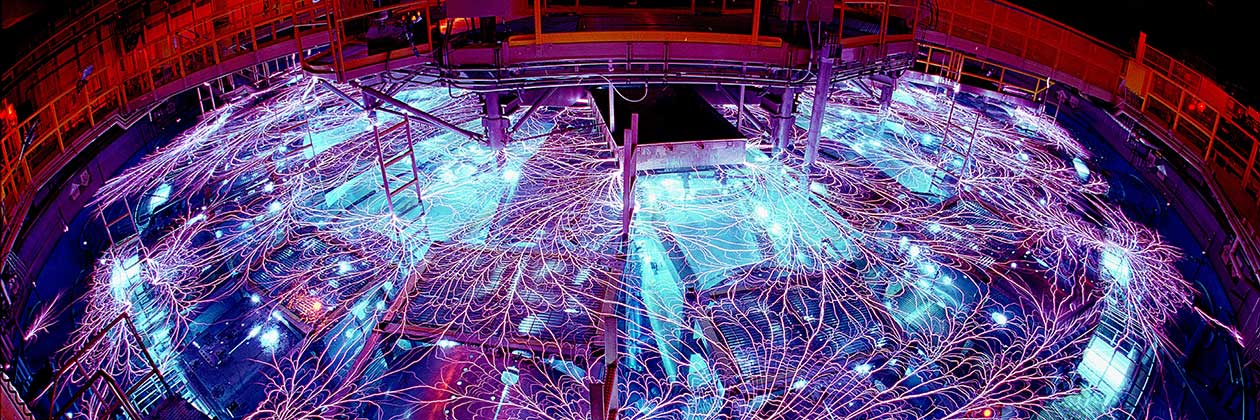
News Article, June 22, 2023 • Sandia scientist Stephanie Hansen was elected Fellow of the American Physical Society by its Division of Plasma Physics. (Photo by Randy Montoya) Predictive design of experiments in Radiation, Electrical, and High Energy Density Science (REHEDS) requires knowledge of material properties (e.g., equations of state (EOS), transport coefficients, and radiation physics). Interpreting...
Sandia scientist Stephanie Hansen

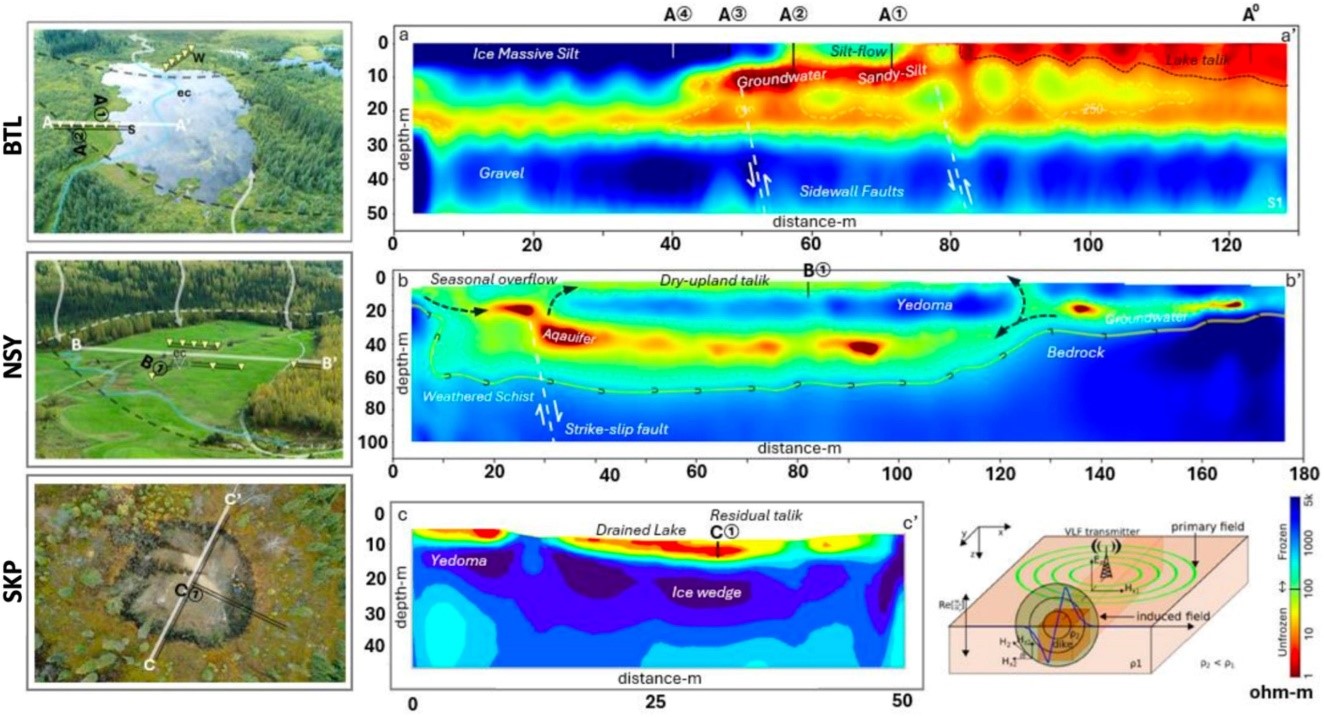
Improving understanding of microbial roles in permafrost carbon release

News Article, June 2, 2025 • As permafrost thaws, it exposes ancient organic matter that microbes can use as fuel. This process contributes to the release of gases like carbon dioxide, methane (CH₄) and volatile organic compounds (VOCs). In areas like the Yedoma permafrost, which holds large amounts of frozen organic material, the formation of thermokarst...

Integrated Materials Research Laboratory (IMRL)

Facility • IMRL integrates research from atomic scale to full scale components, investigates organic materials, advanced alloys, electronic and photonic semiconductors, high temperature superconductors, ceramics, quantum systems, and laser, optical and dielectric materials.
Integrated Materials Research Laboratory Facility

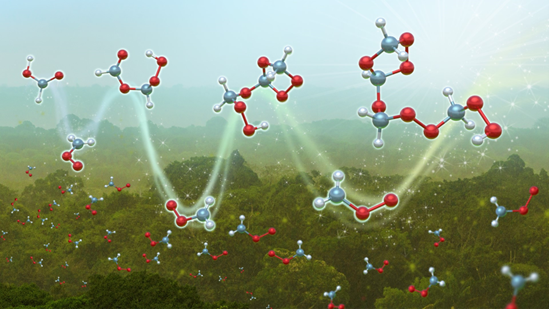
International team makes breakthrough in the chemistry of atmospheric aerosol formation.

News Article, March 14, 2024 • Figure 1 — Sequential insertion reactions of Criegee intermediates (CH2OO) produce low volatility, highly oxygenated molecules that may form organic aerosols in the troposphere. (Figure courtesy of Ellen Weiss, Argonne National Laboratory) A multidisciplinary team has combined measurements in the Amazon forest with experimental and theoretical kinetics to show the...

Ion Beam Laboratory (IBL)

Facility • The IBL enables scientists to study and modify materials systems using ion and electron accelerators.
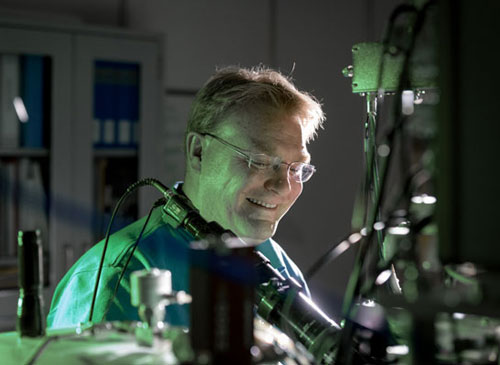
Scientist observing materials

Jessica K. Kustas

Page • Jessica K. Kustas Senior Member of the Technical Staff Analytical Chemistry Dr. Jessica Kustas is an analytical chemist at Sandia National Laboratories located in Albuquerque, New Mexico. Recruited from the U.S. Army Corps of Engineers, Champaign Illinois, her career has been focused heavily on mass spectrometry analysis of materials and...

Joint BioEnergy Institute (JBEI)

Facility • JBEI is a DOE Bioenergy Research Center dedicated to developing advanced biofuels—liquid fuels derived from the solar energy stored in plant biomass that can replace gasoline, diesel, and jet fuels.
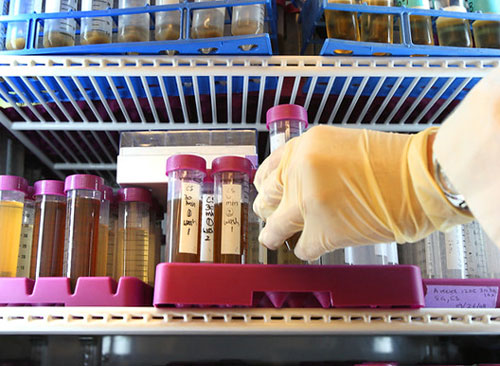
Scientist places test tube in tray

Joint Test Assembly (JTA)

Facility • JTA program allows critical assessment of weapon systems, Department of Defense (DOD) platforms, and support personnel performance.
Researcher working on a component

Krupa Ramasesha named Fulbright US Scholar

News Article, August 14, 2025 • The Department of State named chemist Krupa Ramasesha to the Fulbright U.S. Scholar Program to Austria for the 2025-2026 academic year. During her time in Austria, Krupa will hold the Fulbright-NAWI Graz Visiting Professorship in the Natural Sciences at the Institute of Experimental Physics at Graz University of Technology. In this position,...

Laboratory Directed R&D

Page • Locating lost qubits Recycling products from the inside out Landing planes with cell phone signals Creating the mother of all motion sensors High-risk, potentially high-payoff science and engineering research is at the heart of Sandia’s Laboratory Directed Research & Development (LDRD) program. This program provides the flexibility needed to anticipate...

Laser Application Facility (LAZAP)

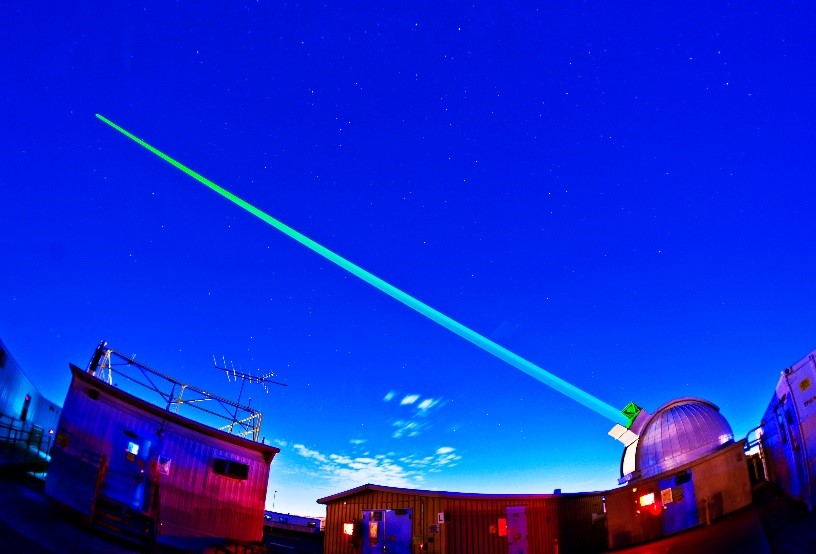
Facility • LAZAP tests and calibrates U.S. reconnaissance and Global Positioning System (GPS) satellites. The facility propagates visible high-powered lasers of multiple wavelengths through the atmosphere with a large aperture beam director.
High-powered laser directed at the sky at dusk

Leveraging machine learning to refine material models for fusion applications

News Article, July 14, 2025 • To enable future innovative designs for fusion platforms on the Z machine, a Sandia LDRD team developed an automated framework for constructing material models. This directly addressed the challenge of creating comprehensive material models that can leverage machine learning and integrate data from multi-fidelity datasets, something vital for uncertainty quantification...

Lightning Facility

Page • The Sandia Lightning Simulator (SLS) allows test objects to be subjected to simulated lightning currents up to severe levels. The SLS can be configured to produce either one or two simulated strokes, with or without continuing current. It can deliver a maximum peak current of 200 kA for a single...

Lignin processing with machine learning approaches

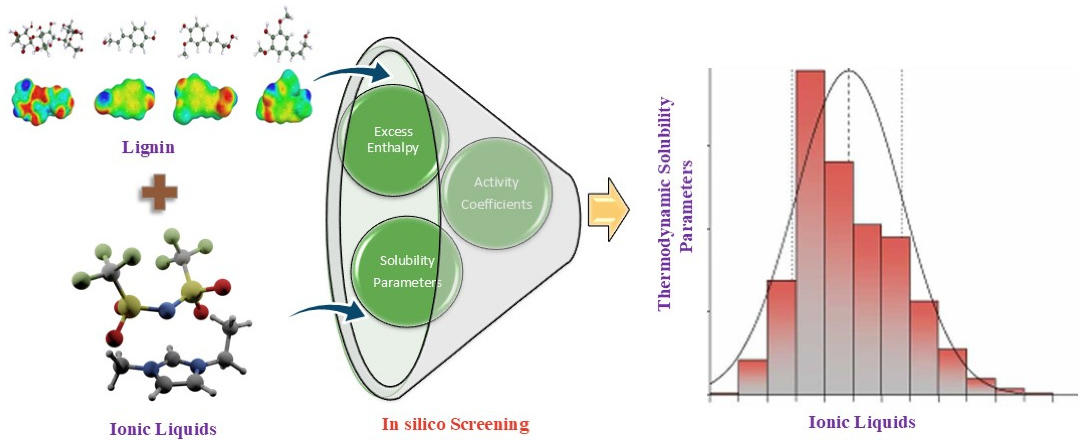
News Article, March 3, 2025 • The schematic diagram for screening of solvents for lignin dissolution. Using ionic liquids (IL) to break down and make use of lignin is really important for creating eco-friendly energy sources and a sustainable economy. Scientists at Sandia, who are part of the Joint Bioenergy Institute (JBEI), are looking closely at...

Materials and Advanced Manufacturing

Page • Award-winning materials scientists Creating cleaner ways to purify critical metals Creating products that kill viruses, bacteria and fungi  Fundamental research in materials science provides the solid technical basis needed for Sandia’s engineering decisions and future mission work. This research includes innovative and hypothesis-driven science efforts that combine theory, computation, and...

Materials science researcher is Sandia’s first outbound Faculty Loan joint appointee  

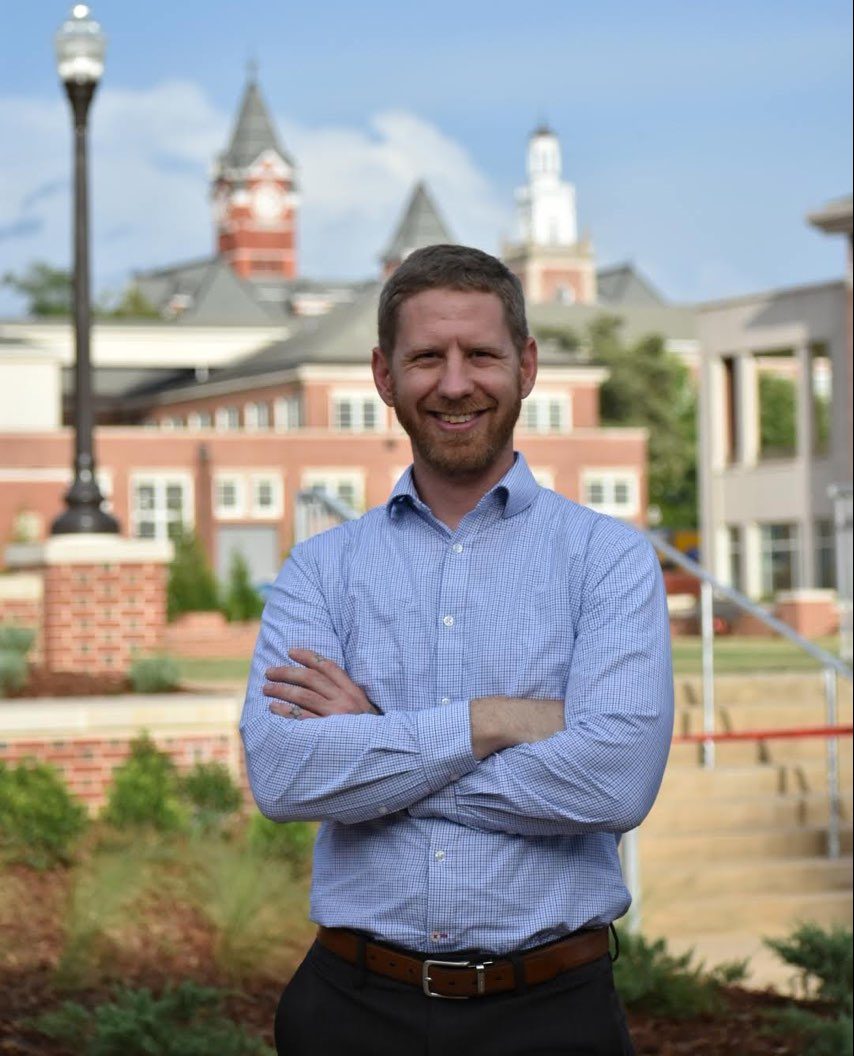
News Article, June 22, 2023 • Jonathan Pegues, a researcher in Sandia’s Coatings & Additive Manufacturing department, was approved to be the first formally approved Sandia outbound Faculty Loan joint appointee. Pegues’ joint appointment is an agreement between Sandia and Auburn University’s (AU) National Center for Additive Manufacturing Excellence (NCAME). The NCAME is a collaborative effort...
Jonathan Pegues stands in front of a building of Auburn University

Mechanical Shock Complex

Facility • The Mechanical Shock Complex provides tailored impact environments, such as shock and crush. The complex simulates dynamic environments such as weapon delivery, severe accident, and pyroshock.
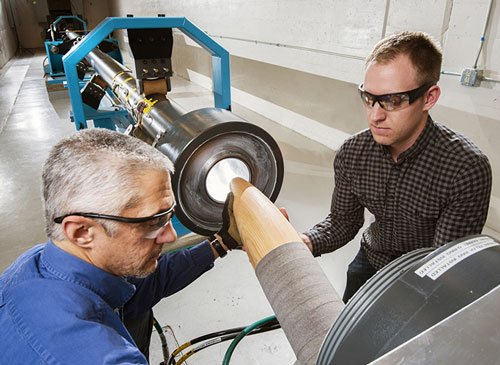
Two researchers holding Davis Gun to prepare for a test

Mechanical Test and Evaluation Facility

Facility • The Mechanical Test and Evaluation Facility conducts experimental research and develops diagnostics to study the mechanical behavioral of materials.
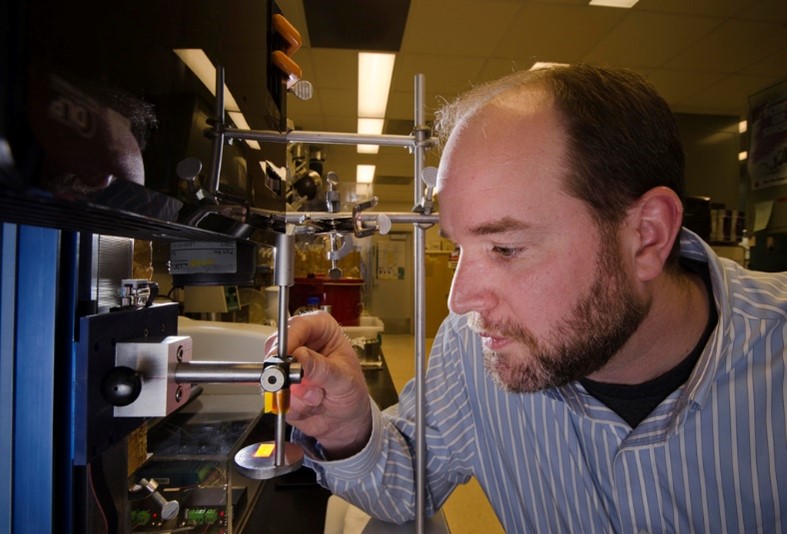
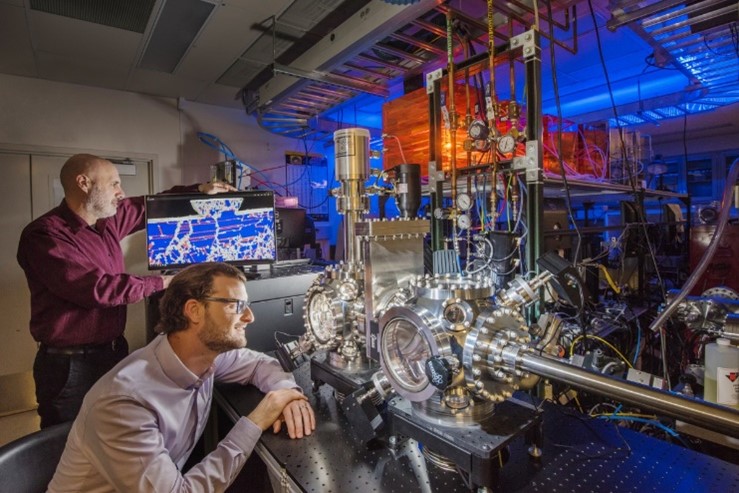
Researchers observing mechanical behavior of materials

Micro and Nano Technologies Laboratories (MANTL)

Facility • MANTL comprises four buildings with office and lab space and Sandia’s Plating Research Laboratory. MANTL research focuses on mechanical and electrical engineering, chemistry, radiography plating, and more.
MANTL facility

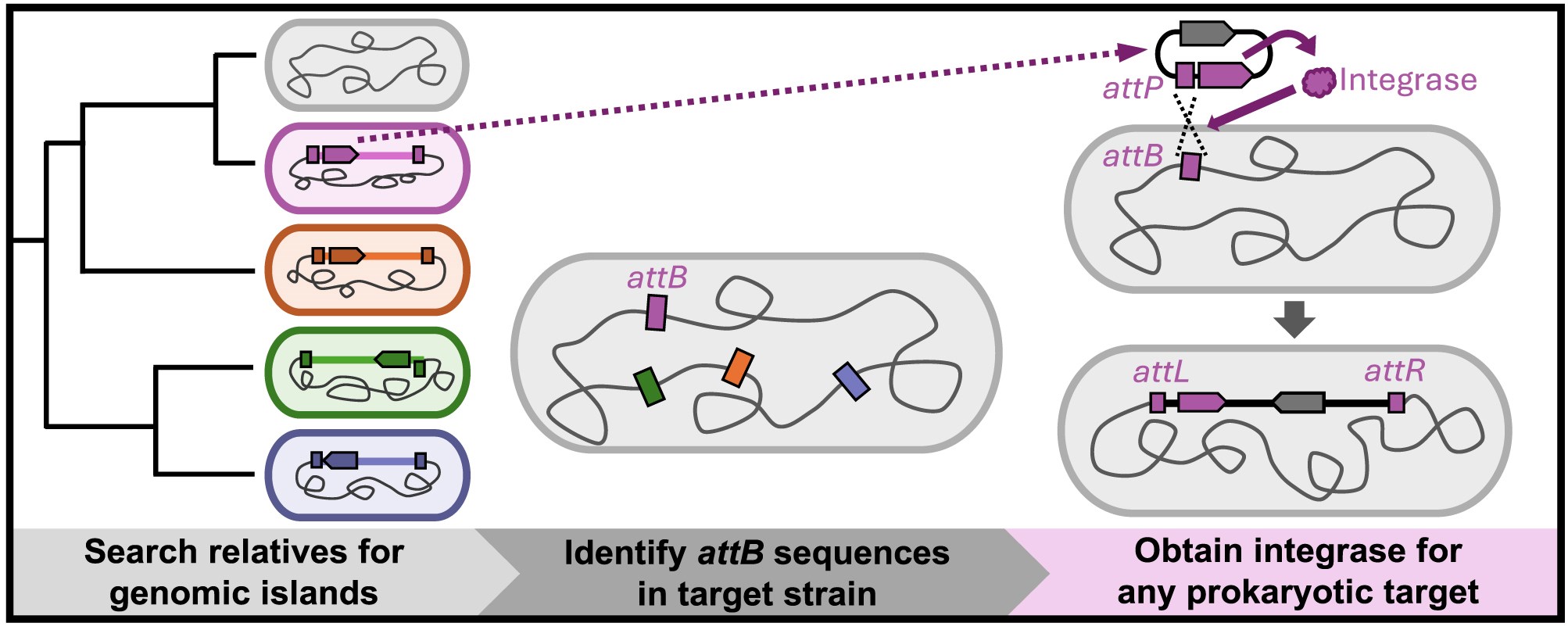
Microbiome editing to improve economic viability of algae growth as a feedstock

News Article, June 27, 2023 • The major challenge with using algae as a feedstock is growing it economically, which hinges strongly on the ability to prevent pond crashes due to biotic factors, like bacteria. Phages, the viruses of bacteria, offer an unexplored solution to this problem. In contrast to antibiotics, phages are typically species-specific and...
Algae is shown growing from underneath the water.

Microsystems Engineering, Science and Applications (MESA)

Facility • MESA integrates scientific disciplines to produce functional, robust, integrated microsystems. Today researchers pursue advanced concepts that integrate not only electronics at the micro scale, but embody sensors, photonics, and MEMS components.
Researcher proudly displaying microsystem

Mighty Mouse (M2)

Page • Mighty Mouse, or M2, earned its heroic name by saving the day at the White Sands Missile Range in southern New Mexico when a radioactive cylinder became jammed inside a metal sleeve. Its radiation field was far too dangerous for a human, even in a protective suit, to get near...

Mobile Gun Test Complex

Facility • The MGTC is a set of mobile projectile launch systems (guns) used to test a variety of projectiles and/or targets. The MGTC enables investigation of terminal ballistic events into in-situ geologies or engineered targets.
Davis gun in mid launch
Results 126–150 of 267