
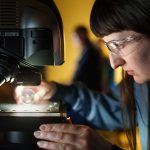
Wearable sensor system tracks levels of ‘last line of defense’ antibiotic
Jill Hruby Fellow leads team that develops a painless monitoring patch.

Beyond Bennu: How OSIRIS-REx is helping scientists study the sonic signature of meteoroids
Scientists hope data will improve detection of hypersonic objects.
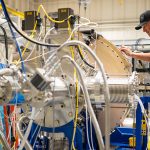
Scorpius images to test nuclear stockpile simulations
Underground football-field-sized machine with a key piece of Sandia tech expected to be up and running in 2027.
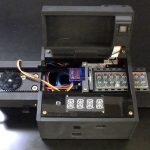
Magnetic beads key to better handheld lab
A new platform that provides higher-fidelity test results for biofluids is ready for commercialization.

Invention at forefront of hydrogen sea change
Sandia’s long history of studying alternative fuel systems leads to a new safety feature for seagoing vessels.
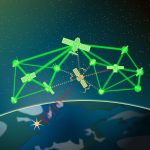
Increasing national security with satellites that team together
Working together, an autonomous group of satellites could boost national security, reduce the risk of relying on any one satellite and diminish downtime.
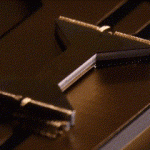
Bigger and better quantum computers possible with new ion trap, dubbed the Enchilada
Sandia produces its first devices that can hold 200 trapped ion qubits. The trap enables scientists to build more powerful machines to advance quantum computing.
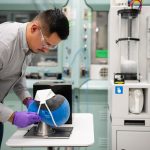
More holistic, efficient tests for protective equipment
A research team has developed a better way to test personal protective equipment by integrating the human form and human behavior.
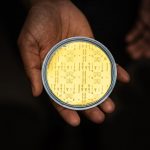
What do you do with a shrunken laser?
Sandia has patented a new method of integrating microscale optical devices on silicon microchips — a challenging feat that could reduce U.S. dependency on foreign manufacturing.
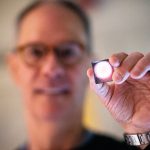
Silicon nose: Small sensor “smells” incipient seizures
Inspired by dogs that can smell changes in body chemistry and warn of an impending seizure, a team of Sandia researchers have sniffed out technology that replicates Fido’s talent.