

Sandia wins seven R&D 100 Awards and two specialty honors
Judges favored projects that demonstrate practical impact and technological significance. Since 1976, Sandia has earned 139 R&D 100 awards.

Sandia shines in inaugural Bay Area postdoctoral research SLAM
Three postdoctoral researchers distilled their ideas into three-minute presentations to participate in the inaugural competition.
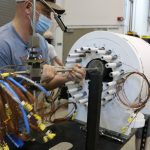
Sandia cooks material-storage containers to assess fire safety
After a series of tests that mimic a raging-hot fire, the team found that their sealed, stainless steel containers did not break open.
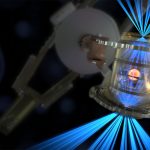
Labs-directed research drives innovation to advance fusion ignition
In August, Sandia developed diagnostic sensors and imagers that contributed to a groundbreaking experiment at the National Ignition Facility.

DOE Deputy Secretary David M. Turk visits California site
Labs leadership welcomed Turk, NNSA Administrator Jill Hruby and others during a visit on Nov. 1.

Underground tests dig into how heat affects salt-bed repository behavior
Scientists launch a yearslong experiment intended to refine computer models and inform policymakers on spent nuclear fuel disposal.
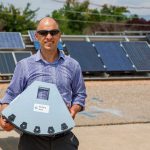
Sandia scientists provide technical assistance to American-Made Solar Prize finalist
Rocking Solar has developed a tracker for solar panels that weigh less, costs less and is lower risk than trackers widely used today. Sandia assisted the company by discussing improvements and considerations for the design.

Sandia creates global archive of historical renewable energy documents
The archive, which includes nearly sixty years of concentrating solar power research, is now easily and publicly accessible, a game-changer for solar researchers and engineers.
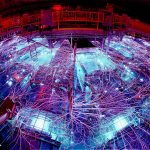
Look who’s turning 25
The Z Pulsed Power Facility, or Z machine, celebrates a history of power and innovation at Sandia.
Sandia-developed solar cell technology reaches space on board small satellite
mPower Technology’s DragonSCALES was initially developed at the Labs to reduce the cost of creating solar technology and increase its efficiencies. Future projects may take the technology as far as the moon.