
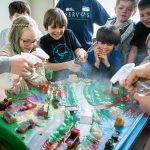
Watershed models offer learning moments
Volunteers from Environment, Safety and Health visited 40 fifth-grade classrooms to provide hands-on education about the importance of preventing water pollution.
Enhancing advanced nuclear reactor analysis
A team of engineers have developed a standardized screening method to determine the most important radioactive isotopes that could leave an advanced reactor site in the unlikely event of an accident.
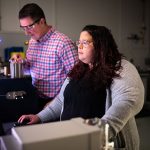
Electric vehicle battery safety takes the front seat
A Sandia-led team is working to create more affordable, convenient, efficient and resilient electric vehicle batteries.
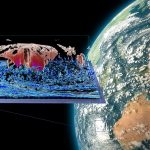
Cloud-resolving climate model meets world’s fastest supercomputer
A new cloud-resolving atmosphere model on Frontier, the first exascale supercomputer, can improve the accuracy of climate predictions.
Sandia celebrates Earth Month
In April, attend presentations from climate security experts or join a service project to give back to the community.
New superalloy could cut carbon emissions from power plants
The 3D-printed, high-performance material could help power plants generate more electricity while producing less carbon.
Making history in wind studies
Sandia’s SWiFT facility reopens with two heavily instrumented meteorological towers and three Vestas V27 wind turbines.
Photovoltaics researchers release five-year, early-life module degradation study
In the last decade, the cost of photovoltaic modules has declined by 85%. Sandia researchers take a closer look to determine whether these savings impact the modules' durability and reliability over time.

Community Involvement grant aids scientific discovery among young learners
The Labs sponsors the newly renovated Animal Discovery Zone at The Lawrence Hall of Science, which features riveting animal photos from National Geographic photographer Joel Sartore.
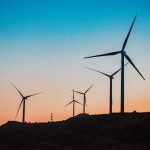
Propelling wind energy innovation
A novel technology at Sandia, called Twistact, eliminates reliance on rare-earth magnets for large-scale wind turbines.