
Sandia Shines at CLEO 2026
May 2026
Sandia National Laboratories will have a strong presence at CLEO 2026, the premier international conference on laser science and electro-optics. Sandia researchers will present 2 invited talks, 8 posters, and 38 oral talks, showcasing advances in quantum technologies, integrated photonics, and more. This highlights Sandia’s leadership in cutting-edge laser and photonics research on the global stage.
Electrically Injected Solid-State Surface Acoustic Wave Phonon Laser
January 2026
Sandia researchers have demonstrated a groundbreaking solid-state surface acoustic wave (SAW) phonon laser, published in Nature (Vol. 649, pp. 597–603). This innovative device integrates a lithium niobate SAW resonator with a compact, electrically injected semiconductor gain medium on a single chip with a footprint under 0.15 mm². Operating at 1 GHz, the phonon laser achieves coherent oscillation with a narrow linewidth (<77 Hz) and high output power (up to −6.1 dBm), all without requiring an external radiofrequency source. This advancement opens new avenues for ultrahigh-frequency SAW sources and miniaturized acoustic systems with applications spanning sensing, quantum phononics, and acousto-optic technologies. The work also outlines pathways to further improve device performance, including higher frequencies, smaller footprints, and enhanced power efficiency.
Gigahertz-Frequency Acousto-Optic Phase Modulation of Visible Light in a CMOS-Fabricated Photonic Circuit
December 2025
Sandia researchers have developed a cutting-edge visible-light acousto-optic phase modulator operating at gigahertz frequencies, published in Nature Communications (Vol. 16, Article 10959). Fabricated on a 200-mm wafer using standard CMOS foundry processes, this device supports over 500 mW of optical power at 730 nm, making it highly scalable and suitable for integrated photonic systems. By combining a piezoelectric transducer with a photonic waveguide in a compact structure, the modulator achieves exceptional optomechanical interaction, enabling modulation depths up to 4.85 radians with only 80 mW of microwave power at 2.31 GHz. This corresponds to a record-low half-wave voltage (Vπ) of 1.32 V, representing a 15-fold improvement over previous devices and significantly reducing power requirements. This breakthrough paves the way for advanced photonic technologies in quantum control, communications, and laser ranging.
META Optics Studio
October 2023

This software package enables the rapid design and optimization of large-scale meta-optics for integration into optical imaging systems.
Ihab El-Kady, Denis Ridzal, Timothy Wilde, Edgar Bustamante, David Fitzpatrick, Ryan Chilton (external collaborator) and Mehmet F. Su (external collaborator)
META Optics is a software package built for the design, simulation and optimization of flat meta-surfaces, which are artificial structures used to engineer the light wavefront for enhanced focusing, phase correction and removal of aberrations. If designed correctly, a metalens can perform the function of a highly focusing, high-speed lens while being a fraction of its weight and absolutely flat. This has revolutionized the field of optical imaging and extended its possibilities by significantly reducing size, weight and power requirements while extending the imaging resolution to be well below the subwavelength limit. META Optics is the only known software capable of simulating a centimeter-sized meta-surface at nanometer resolution within a few hours.
The META Optics project developed out of the Metamaterial Science and Technology Laboratory Directed Research and Development Grand Challenge from 2009-2011.
Inspiring the next generation of microelectronics experts
June 25, 2025
ALBUQUERQUE, N.M. — Sandia National Laboratories has joined a new partnership aimed at helping the United States regain its leadership in semiconductor manufacturing.
ALBUQUERQUE, N.M. — For the second consecutive summer, bright, inquisitive young minds will join Sandia National Laboratories’ Microsystems Engineering, Science and Applications Complex through the Student Intern Group for Microelectronics Advancement, known as the SIGMA institute.
Last summer, the SIGMA institute provided 12 undergraduate and graduate students with hands-on experiences ranging from cutting-edge research fields such as brain-inspired computing, to microelectromechanical production systems and photonics devices. The institute also offered mentorship, tours of Sandia research facilities, professional development seminars and opportunities for participants to showcase research at the end of the summer. This summer the institute is hosting 21 interns.
To find out more, see the Sandia News Article all about this technology.
Most Promising Engineer of the Year honor goes to Sandia scientist
June 12, 2025
ALBUQUERQUE, N.M. — Sandia National Laboratories has joined a new partnership aimed at helping the United States regain its leadership in semiconductor manufacturing.
While the U.S. was considered a powerhouse in chip production in the 1990s, fabricating more than 35% of the world’s semiconductors, that share has since dropped to 12%. Today, the U.S. manufactures none of the world’s most advanced chips which power technologies like smartphones, owned by 71% of the world’s population, as well as self-driving cars, quantum computers, and artificial intelligence-powered devices and programs.
To find out more, see the Sandia News Article all about this technology.
October 5, 2022
ALBUQUERQUE, N.M. — Sandia National Laboratories research and development manager Bishnu Khanal was recently honored with the Most Promising Asian American Engineer of the Year award for his work in next-generation optical lithography process development for numerous technologies, along with his deep-reaching community service.
To find out more, see the Sandia News Article all about this technology.
Most Promising Engineer of the Year honor goes to Sandia scientist
October 5, 2022
ALBUQUERQUE, N.M. — Sandia National Laboratories research and development manager Bishnu Khanal was recently honored with the Most Promising Asian American Engineer of the Year award for his work in next-generation optical lithography process development for numerous technologies, along with his deep-reaching community service.
To find out more, see the Sandia News Article all about this technology.
Record-breaking, ultrafast devices step to protecting the grid from EMPs
March 15, 2022
ALBUQUERQUE, N.M. — Scientists from Sandia National Laboratories have announced a tiny, electronic device that can shunt excess electricity within a few billionths of a second while operating at a record-breaking 6,400 volts — a significant step towards protecting the nation’s electric grid from an electromagnetic pulse.
To find out more, see the Sandia News Article all about this technology.
Technology Commercialization Opportunity: Coherent Fiber Optical Microscopy
November 9, 2020
Sandia National Laboratories (SNL) is seeking partners to further develop and commercialize coherent fiber optical system. Licensing (with the possibility of deferred fees) and technical support (paid by Licensee) are available. SNL has developed a method to lock and/or (strongly) modulate the phase of light in a fiber using a single, inexpensive yet high-performance component. The system, applicable to any coherent fiber machination, has recently been employed for amplitude, phase, polarization, and time sensitive optical field determination in 3D with nanoscale resolution.
To find out more about this contract opportunity, go to https://beta.sam.gov/ and type in the notice ID number 20_17.
Posted Date: November 9, 2020 Response Date: December 9, 2020 11:59pm MST
Keywords: Optical coherence tomography, coherent scanning microscope, fiber optics, interferometry
Sandia joins national center for quantum computing research
August 2020
Sandia National Laboratories will serve as the leading partner in one of five national research centers for quantum information science established by the Department of Energy. The Quantum Systems Accelerator is a multidisciplinary team comprising dozens of researchers from 15 labs and universities. Together, they will collaborate to transform rudimentary quantum computers and related technologies into machines that perform valuable work for DOE and the nation…more
MIRaGE Website Launched
June 2020
Dedicated website for MIRaGE software is launched to facilitate distribution of this advanced software to US Government, contractors, and universities. MIRaGE (short for “Multiscale Inverse Rapid Group-theory for Engineered-metamaterials”) is a group theory-based multiscale simulation toolkit that enables the inverse design of metamaterials exhibiting exotic electromagnetic behaviors beyond the limits of conventional optics…Visit the website
Science journal publication on thermoelectric power generation
March 2020
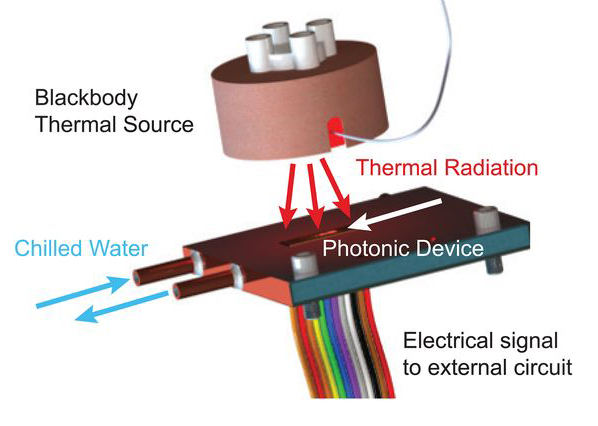
Sandia researcher Dr. Paul Davids reported his groundbreaking research results in conversion of waste heat into electricity in Science in March 2020 (Science 20 Mar 2020: Vol. 367, Issue 6484, pp. 1341-1345 DOI: 10.1126/science.aba2089). To learn more, listen to Science Podcast and read the review of this work in Joule.

Two R&D100 2019 awarded to Sandia National Laboratories in photonics
October 29, 2019
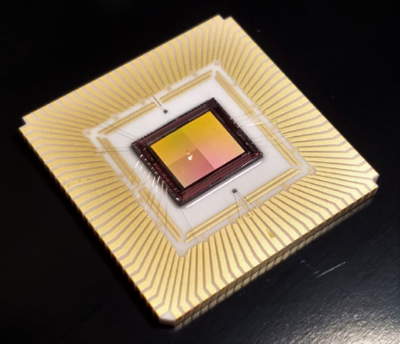
High-Performance Nanoantenna Enabled-Detectors (NEDS): Researchers at Sandia have developed High-Performance Nanoantenna Enabled-Detectors (NEDS), which will allow for enormous advancements over the current state of the art using an architecture that is independent of detector material and wavelength band. In addition to dramatically improving image quality, this architecture allows for entirely new detector concepts unrealizable with existing technology…watch the video
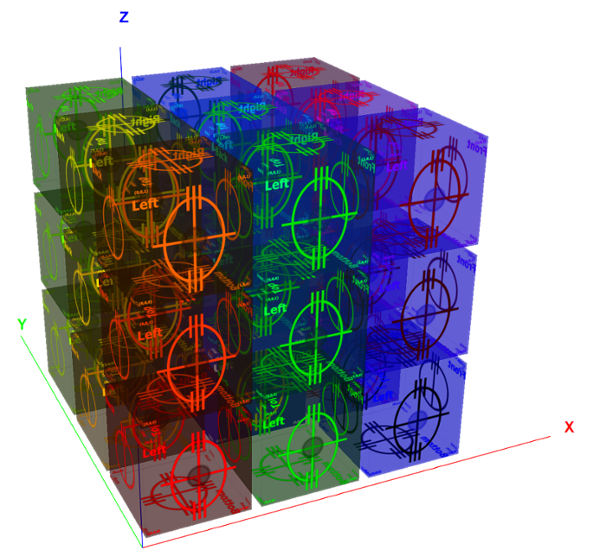
MIRaGE Multiscale Inverse Rapid Group-theory for Engineered-metamaterials: MIRaGE is a group theory-based multiscale simulation toolkit that enables the inverse design of metamaterials exhibiting exotic electromagnetic behaviors beyond the limits of conventional optics. Technological developments enabled by MIRaGE could include lighter-weight satellites, cloaking devices, and compact aberration-free imaging systems…watch the video
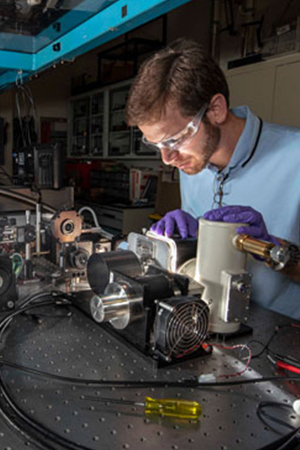
Sandia’s nanoantennas help detectors see more heat, less noise
September 12, 2019
Sandia researchers have developed tiny, gold antennas to help cameras and sensors that “see” heat deliver clearer pictures of thermal infrared radiation for everything from stars and galaxies to people, buildings and items requiring security…more
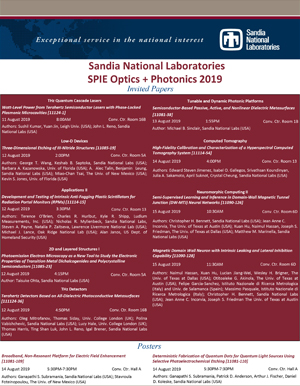
SPIE Optics + Photonics Conference
August 13-14, 2019
Sandia is presenting nine invited papers, thirteen presentations, and two posters at the SPIE Optics + Photonics Conference in San Diego, CA in August 2019. We are also recruiting at the Job Fair, August 13-14, at booth JF14.
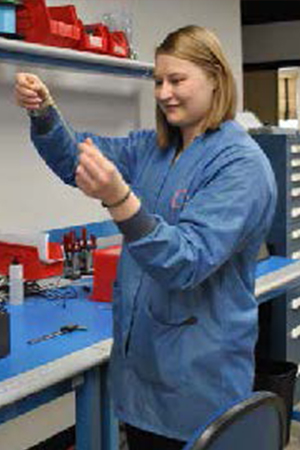
Smaller Imaging System a Big Improvement for Self-Driving Cars
May 1, 2019
Blackmore Sensors and Analytics is partnering with Sandia National Laboratories to improve lidar for autonomous driving systems. The company is a pioneer in Doppler lidar sensors and supporting analytic tools and software. They are licensing Sandia’s chip-scale optical array for beam-steering for use in their products. Read more on pages 18-19.

Conference on Lasers and Electro-Optics (CLEO)
May 6-10, 2019
Sandia presented to 13 invited and contributory talks and four posters at the Conference on Lasers and Electro-Optics (CLEO) in San Jose, CA in May 2019. We also presented at the Product Showcase, highlighting Sandia’s unique photonics capabilities and collaboration opportunities…more
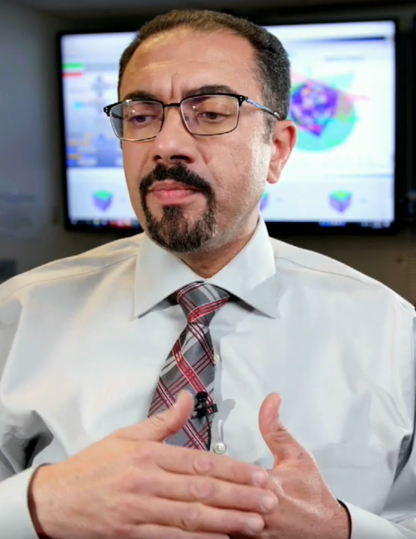
Mirage software automates design of optical metamaterials
March 27, 2019
Sandia National Laboratories has created the first inverse-design software for optical metamaterials — meaning users start by describing the result they want, and the software fills in the steps to get there. The modern design approach takes guesswork out of engineering as-yet theoretical technologies like ultracompact, high-performance cameras and cloaking armor that could make wearers invisible to detection…more