
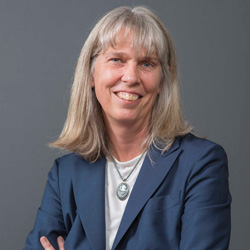
Sandia National Laboratories established the Laboratory Director Jill Hruby Postdoctoral Fellowship in National Security Science and Engineering in 2018. This prestigious fellowship supports early career researchers in engineering and science, fostering their development as future technical leaders in national security.
Named for Jill Hruby, the first woman to lead a major national security laboratory and former DOE Under Secretary for Nuclear Security, the fellowship honors her legacy of leadership and innovation. Hruby Fellows conduct independent research aligned with Sandia’s mission to develop advanced technologies for global security. They propose their own research topics and access Sandia’s cutting-edge facilities at New Mexico or California sites.
Each Fellow is paired with a mentor from Sandia’s technical staff to guide their research and career growth. Beyond research, Fellows engage in a leadership development program featuring coaching, peer mentoring, and opportunities to participate in internal committees and government relations activities.
This highly competitive fellowship seeks outstanding scientists and engineers with demonstrated research excellence and leadership potential, preparing them for impactful careers in national security science and engineering.
Requirements
- Ph.D. completion between October 1, 2024, and October 1, 2027.
- Evidence of strong academic achievement, excellent technical accomplishment, leadership and ability to team effectively.
- Submission of the Applicant Information File, Cover Letter, and CV following the guidance described in the Application and Interview Process Overview section below.
- Ability to obtain and maintain a DOE security clearance, which requires US citizenship.
Benefits
Sandia’s competitive wage and benefits package include an annual salary of $123,300 ($139,600 CA); flexible work arrangements; 13 paid holidays; three weeks of vacation; health, vision, and dental insurance; and a 401(k) savings plan with company match.
The fellowship includes full salary and benefits for three years plus a yearly plus an annual budget of up to $100K which can be used for research equipment, additional personnel, and travel.
Application and Interview Process Overview
Application Phase
- Deadline: The application deadline is 5 PM Mountain Time, October 1, 2026.
- Submission Requirements:
- To complete your application, please follow these steps:
- Access the Application:
- Go to Sandia’s Career portal and search for “Hruby Fellowship.”
- Select the relevant job posting.
- Submit Your Application:
- Click “Apply for Job” and follow the instructions to upload the required documents.
- Required Documents: Please combine all required documents into a single file and upload it during Step 2 of the application process on the careers site, when prompted to submit your resume.
- Completed Applicant Information File: Ensure that all fields are thoroughly and accurately completed.
- Cover Letter: Use the Cover Letter Template
- Curriculum Vitae (CV): In addition to standard CV details, be sure to include the following:
- Research experience
- Highlight projects where you initiated and/or lead the project, including mentoring experiences
- Note collaborative projects with other groups, particularly where you initiated the collaboration
- Communication Skills
- Include traditional publications and conference/invited presentations
- Highlight unique communication opportunities: workshop facilitation, teaching, public outreach, student governance, policy and advocacy engagement, etc.
- Include your impact (e.g., taught workshop to 50 students, successfully advocated for university policy change)
- Awards that you received
- Additional notable leadership, community building, or service experiences
- Access the Application:
- To complete your application, please follow these steps:
Full Proposal Phase
- Eligibility: Only selected candidates from the Application Phase will be invited to proceed to advance to the Full Proposal Phase.
- Deadline: Full proposals must be submitted to HrubyFellowship@sandia.gov by 5 PM Mountain Time on November 17, 2026.
- Resource Guide: Hruby Fellowship Full Proposal Phase Instructions
- References: The Hruby Fellowship administration will contact the references listed in your completed Applicant Information File at this stage.
Interview Phase
- Eligibility: Only candidates selected from the Full Proposal Phase will be invited to proceed to the Interview Phase.
- Dates: Interviews are scheduled for January 12–14 and January 19–21, 2027. Each candidate will have a full day consisting of:
- Resource Guide: Hruby Fellowship Interview Process and Presentation Guidance
- Seminar: A 40–50 minute presentation on your proposal, followed by 10-20 minutes of Q&A (see guidance)
- Panel Interview: A 1 hour and 15-minute session with the Hruby Selection Committee that will start off with a Leadership Presentation (see guidance).
- Technical Interviews and Lab Tours: several interviews with technical experts and group members, lab tours of experimental facilities relevant to your technical area.
- Additional Information: More details regarding the interview and seminar will be sent to selected candidates.
Please ensure you meet all deadlines and submission requirements to remain eligible. If you have any questions, contact the Hruby Selection Committee at hrubyfellowship@sandia.gov.
Fellowship Experiences
Ravyn Malatesta, 2025 Hruby Fellow
The Road from Chemistry to Physics
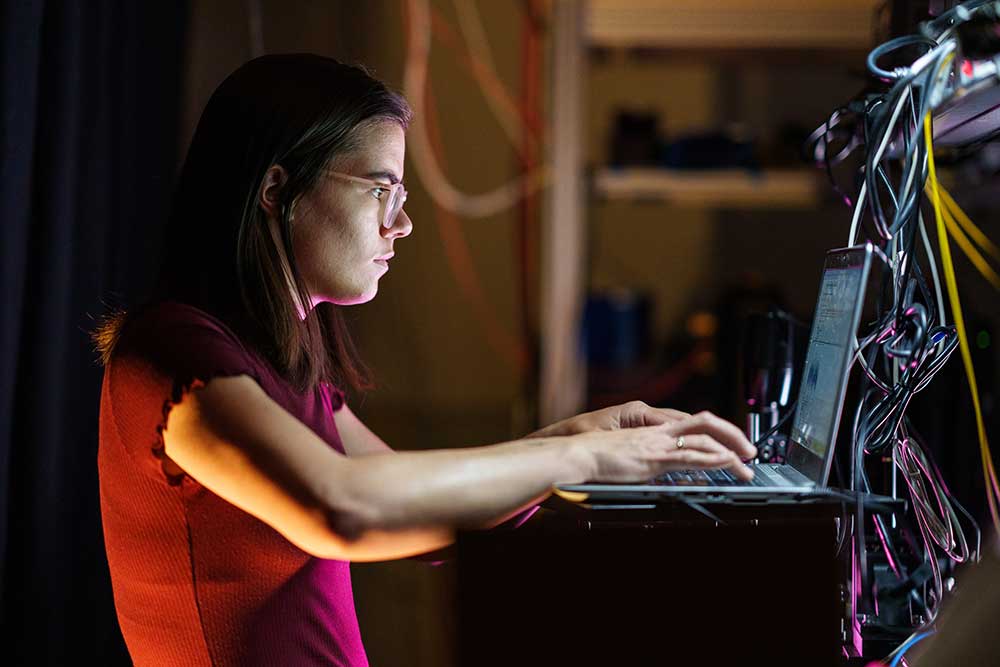
Ravyn Malatesta is focusing on the intricate relationship between light and matter, particularly how entanglement and other quantum properties of photons change when interacting with materials. Her current research explores the use of advanced materials, specifically metasurfaces, ultrathin films that support arrays of artificial nanostructures, to generate and control hyperentangled photon states. This approach could significantly enhance the information-carrying capacity of entangled photon signals, making them more resilient to noise and beneficial for quantum communication and applications in low signal-to-noise environments, such as imaging and sensing.
Read more
Olivia Krohn, 2025 Hruby Fellow
The nature and importance of molecular collisions
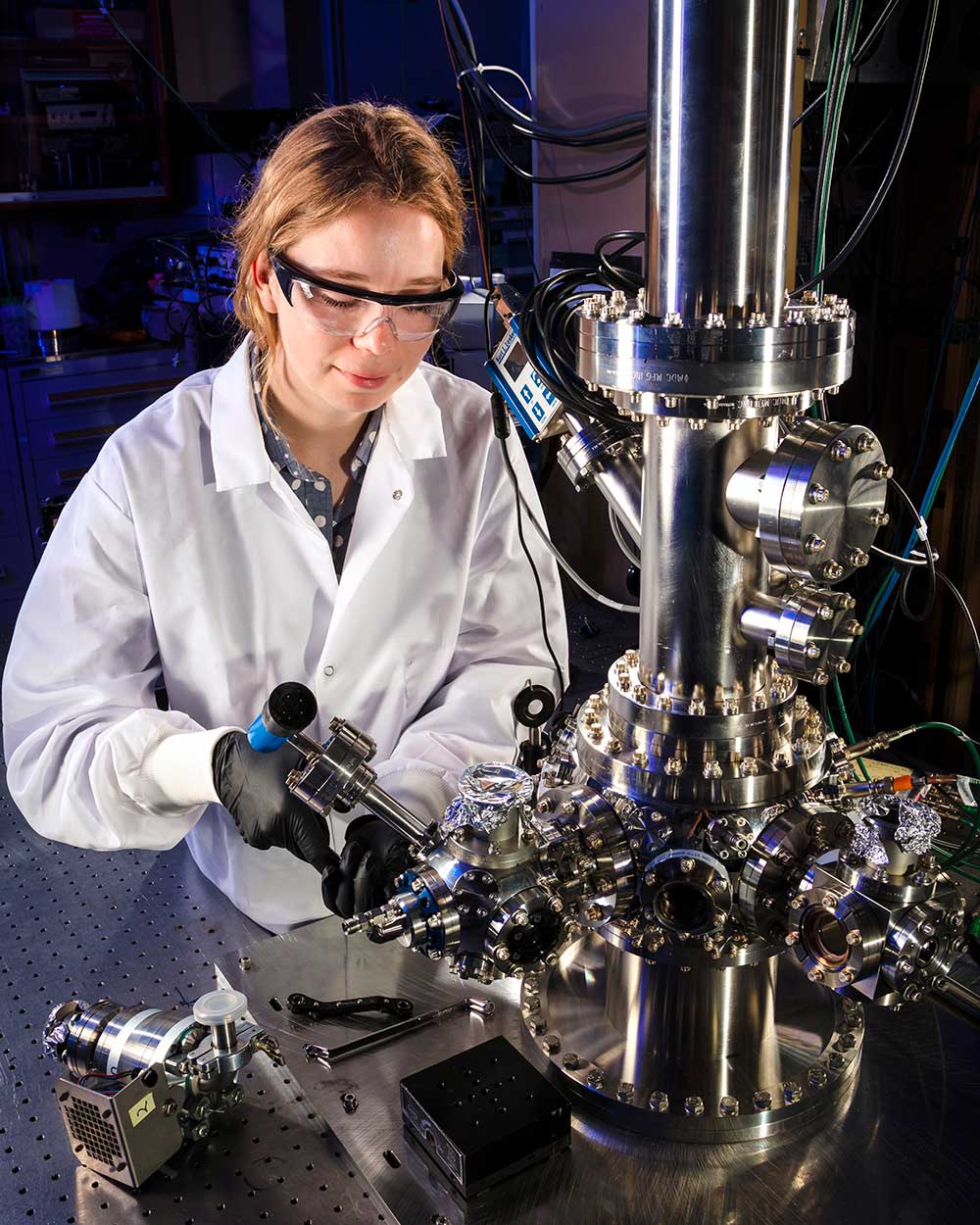
In chemical physics, understanding molecular interactions is vital for scientific advancement. Olivia Krohn, a Jill Hruby Fellow, is investigating these interactions at low energies, which could revolutionize understanding of chemical processes and lead to innovative technologies.
“My research dives into how molecules interact with each other, especially when they’re moving slowly,” she said. “When two atoms collide, their behavior isn’t so different from tiny billiard balls. However, molecules have shapes and additional motions like rotations and vibrations, which require energy. When two molecules collide, they redistribute that energy in interesting ways that are hard to predict.”
Samantha Jaszewkski, 2024 Hruby Fellow
Harnassing ferroelectric materials in extreme environments
Hannah Stroud, 2024 Hruby Fellow
Enhancing reentry vehicle models with roughness features
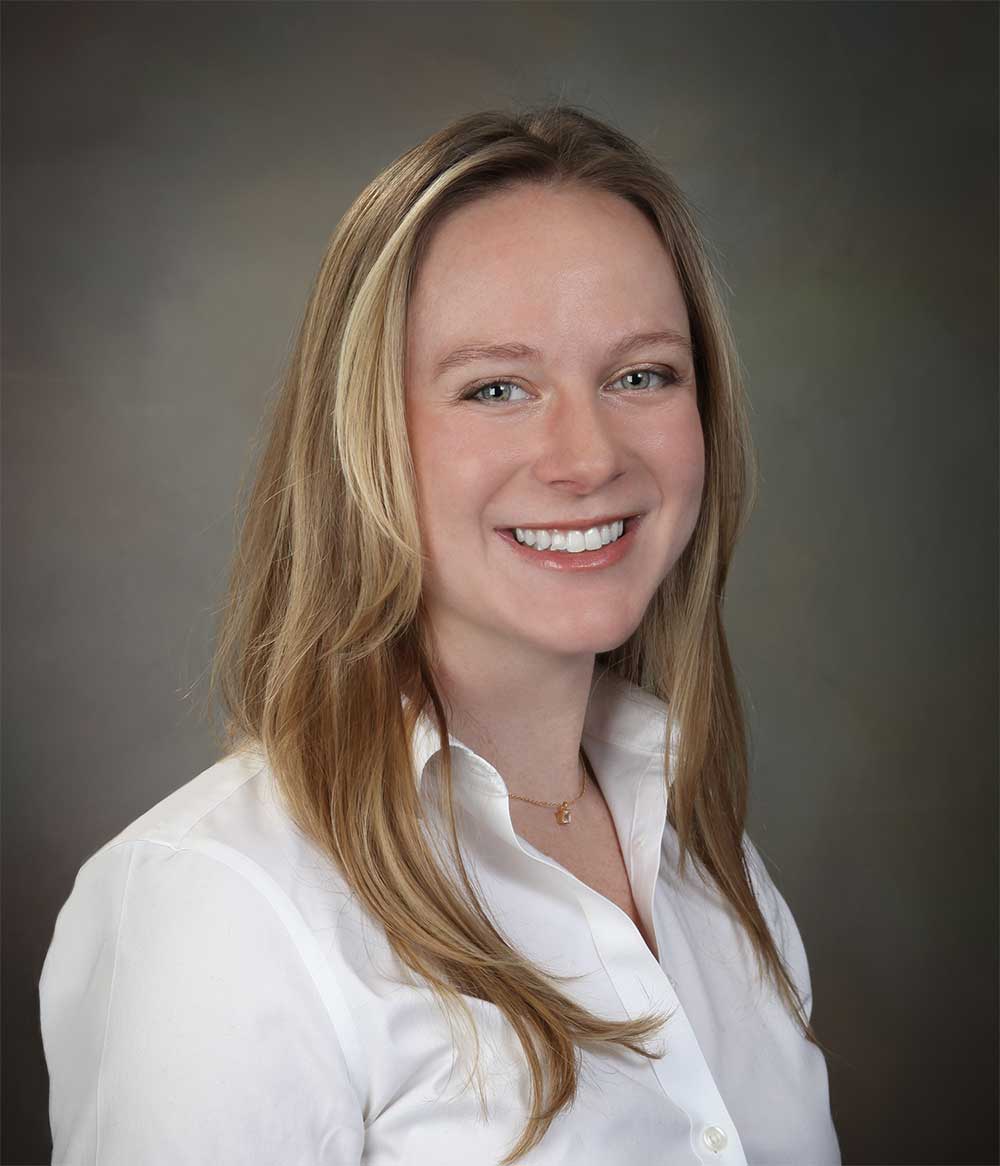
Hannah’s current work proposes methods for including aerodynamic effects of rough surface geometries produced during the ablation process in both fluid models and the ablation model itself. She and other scientists believe that understanding coupled effects are key to developing better hypersonic systems.
“I have a lot of support from people who are invested in the outcome of my work. I’m surrounded by a great team with so much knowledge and experience, and I’m so fortunate to learn everything I can from them,” said Hannah. https://www.sandia.gov/labnews/2024/05/02/exceptional-mission-work-achieved-through-sandia-postdoc-program/
Sommer Johansen, 2022 Hruby Fellow
Sommer Johansen received her doctorate in physical chemistry from the University of California, Davis, where her thesis involved going backward in time to explore the evolution of prebiotic molecules in the form of cyclic nitrogen compounds; her time machine consisted of combining laboratory spectroscopy and computational chemistry to learn how these molecules formed during the earliest stages of our solar system. She aims to improve models that demonstrate how burning bio-derived fuels affect the Earth’s planetary ecology and severe forest fires caused by climate change during her Hruby fellowship at Sandia National Laboratories.
Alex Downs, 2022 Hruby Fellow
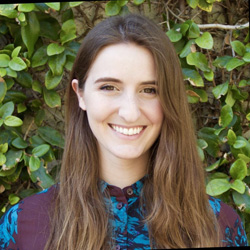
Alex Downs completed her doctorate at the University of California, Santa Barbara, in August 2021. Her thesis title was “Electrochemical Methods for Improving Spatial Resolution, Temporal Resolution, and Signal Accuracy of Aptamer Biosensors.” She thought, “There’s a huge opportunity here for freedom to explore my research interests.” She hopes to create wearable biosensors that gather real-time molecular measurements from health markers and would lessen the need to visit doctors’ offices and labs for evaluations during her Hruby fellowship at Sandia National Laboratories.
Learn more about the 2022 Hruby Fellows.