
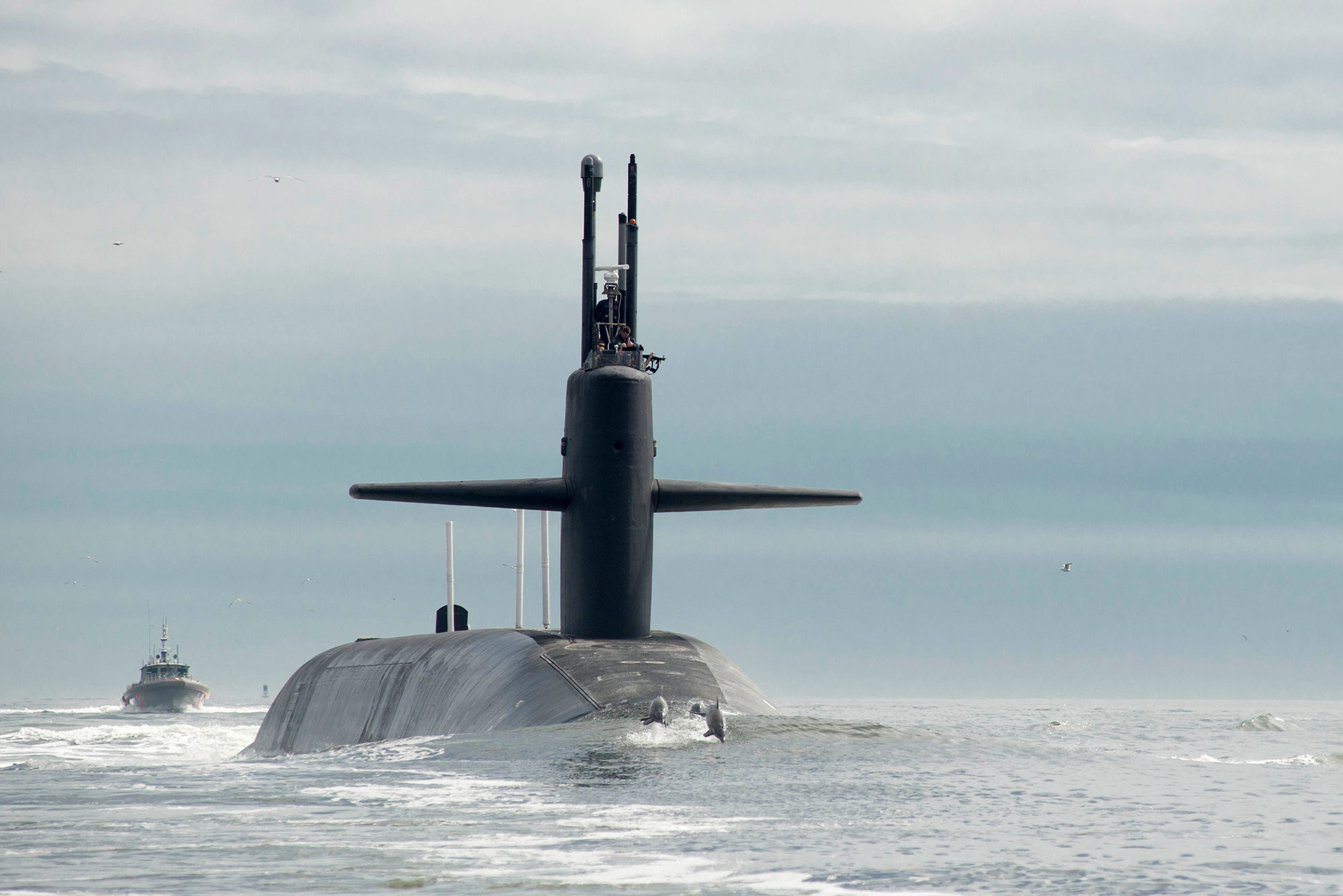
Sandia and the nuclear security enterprise completed production of the W88 Alteration 370 and fully transitioned the modernized warhead into the U.S. nuclear stockpile, shifting the program’s focus to long-term sustainment.
The last production unit was completed at the Pantex Plant in Amarillo, Texas, in November.
“I remember talking about the Alt 370 when we were just putting together plans,” said Troy Savoie, now a manager at Sandia leading the team that oversees stockpile sustainment of the warhead. Troy started his Sandia career helping with specification requirements for environmental testing of the W88 Alt 370, which is carried onboard Ohio-class ballistic missile submarines as the warhead component of the Trident II D5 strategic weapons system.
Sandia is the design agency for non-nuclear components and is the lead systems integrator for nuclear weapon programs. In addition, Sandia served as the production agency for several components within the weapon.
“Completing the W88 Alt 370 is the latest instance of NNSA delivering modernized nuclear weapons to the Department of War at the pace and scale needed to fulfill our deterrence requirements,” NNSA Administrator Brandon Williams said. “Achieving two last production units for the B61-12 and W88 and the first production unit for the B61-13 all within a single year demonstrates our ability to execute NNSA’s fundamental production mission.”
The W88 first entered the U.S. nuclear stockpile in 1988. The Alt 370 modernization program addressed aging-related issues identified through routine surveillance and refreshed key non-nuclear components to extend the warhead’s service life. The effort reached full-rate production in 2022.
Warhead modernization
Michael Steward, who served as W88 Alt 370 system production manager, said his team was responsible for the design, development and qualification of the Alt 370. Most recently, the team has focused on supporting rate production of components and the system as the program moved toward completion.
His job entailed working closely with NNSA, the Navy, the Kansas City National Security Campus, Los Alamos National Laboratory, the Pantex Plant, Lockheed Martin and other partners across the enterprise to address technical challenges and ensure on-time delivery of warheads to the customer.
“The key to overcoming them was working with subject matter experts here at Sandia, at our peer labs, at the production agencies, NNSA and the Navy,” Michael said. “Leveraging all the partnerships and relationships across the nuclear security enterprise ensured that we delivered to the customer.”
At Sandia alone, hundreds of employees played a role in the modernization. “The W88 is the backbone of the sea-based leg of the U.S. nuclear triad,” Michael said. “It provides the president with a highly survivable strategic deterrent against attacks on the U.S. and its allies.”
Sustainment role
Michael and his team worked closely with the sustainment team throughout production to ensure a smooth transition to the stockpile. The teams are co-located and shared knowledge and lessons learned through daily in-person interactions and formal reviews.
“Sandia’s role in those sustainment activities as the systems integrator will remain just as important,” Troy said.
That will include annual assessment of the W88’s state of health in the stockpile, maintaining and extending the underlying technical basis for those assessments and supporting logistics operations, field operations and production operations for surveillance rebuilds, or units taken out of the stockpile for inspection.
Forward-looking activities include assessing compatibility with the next version of the delivery platform and refreshing the surveillance flight test body when it reaches the end of its life. As most production work wraps up, teams at Sandia are ready for the next chapter. “It’s not the end. It’s basically the beginning of stockpile life for the W88 Alt 370,” Troy said. “There’s W88 work at Sandia for years to come.”