

Major upgrade to HOT Shot rocket program culminates in successful launch
The upgrade added new hardware necessary to recover the vehicle and new onboard memory chips, which researchers can retrieve after launch to gather 40 times more data than in previous missions.

Better batteries for grid-scale energy storage
Researchers Leo Small, Erik Spoerke and Martha Gross developed sodium batteries that can operate at lower temperatures, at a lower cost, more safely and for longer than standard lead-acid or lithium ion batteries.

Cleared for takeoff
Airline safety center departs after 30 years

Reusable respirator could ease COVID-19 medical mask shortages
Sandia retools facilities to design, test sterilizable mask

Nuclear waste storage canisters put to the test
Sandia is outfitting three stainless-steel storage canisters with heaters and instrumentation to simulate nuclear waste so researchers can study their durability. Researchers plan to study how much salt gathers on the canisters over time.

Flight test succeeds despite pandemic limitations
Overcoming COVID-19 pandemic challenges through virtual means, teams from Sandia and the U.S. Air Force under the guidance of NNSA performed a critical B61-12 flight test aboard the F-35A Lightning II jet fighter.
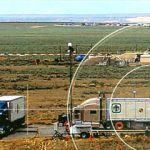
Successful crash test meets major milestone for nuclear deterrence program
Sandia and partners conducted a successful full-scale MGT crash test this summer, meeting a major NNSA milestone. The test involved using the Labs’ sled track and rockets to propel a tractor-trailer into the MGT prototype.
O’Hara named 2020 ‘Woman Worth Watching’
Sandia systems engineer Carrie O’Hara has been selected as a 2020 Women Worth Watching award winner by Profiles in Diversity Journal. The awards, in their 19th year, recognize dynamic professional women who are using their talents and influence to change our workplaces and our world.
How to multitask when nuclear nonproliferation is on the line
New cognitive science research from Sandia shows that while maps can help you identify landmarks while being escorted, using one also limits situational awareness and knowledge of surroundings not on the map. This finding is one of several coming from a three-year project that paired cognitive scientists and nuclear safeguards experts to conduct human performance tests and develop recommendations for inspectors.
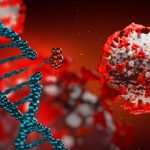
Marshaling resources to fight COVID-19
As Sandia and the nation came to terms with a new, socially distanced reality, researchers within the Labs’ Integrated Security Solutions Division were working to understand the biology of the novel coronavirus, learn how the human body responds to infection by SARS CoV-2 and model how COVID-19 spreads in a population.