
Labs’ expertise keeps spacecraft alive in intensely radioactive Jovian atmosphere

As the United States approaches its 250th anniversary, we celebrate the pivotal moments when Sandia has stepped up to support the nation. Through innovation, collaboration and dedication, Sandia has consistently demonstrated its commitment to addressing the challenges that shape national security and the future.
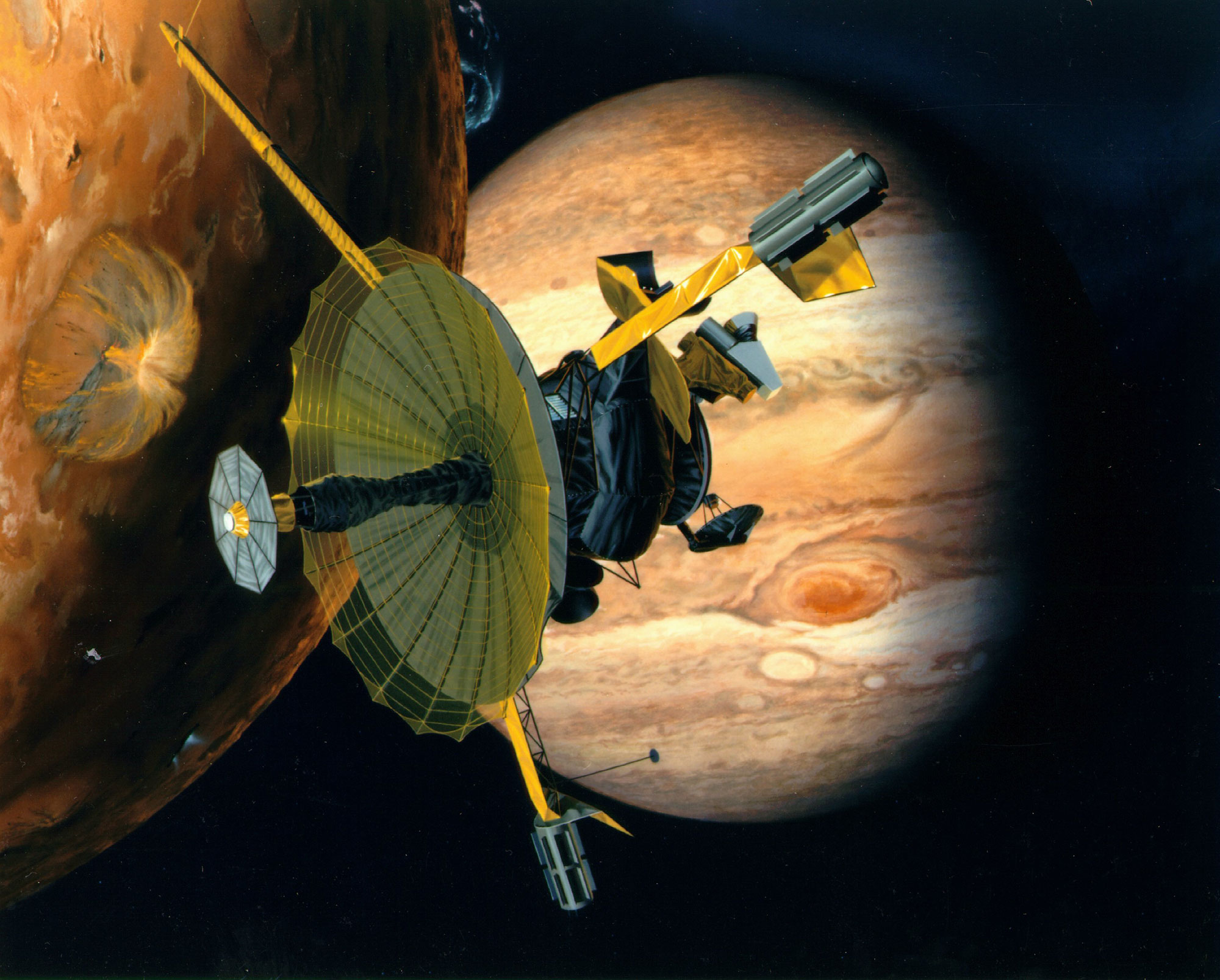
NASA’s Galileo mission to Jupiter was one of the most successful planetary explorations in history, and Sandia helped make it possible.
Launched in 1989, Galileo was the first spacecraft to orbit one of the outer planets. It traveled 2.8 billion miles before it disintegrated into the atmosphere of Earth’s gigantic neighbor in 2003.
“We learned mind-boggling things,” Galileo project manager Claudia Alexander said in a 2003 Lab News article. “This mission was worth its weight in gold.”
Who wants to go to Jupiter?
Talk of exploring the largest planet in the solar system and its many moons dates back to as early as 1959, but serious planning did not begin until more than a decade later. And once it did, it became clear that Jupiter’s intense radiation belts would make the mission exceptionally challenging, if not impossible.
That’s when NASA called in Sandia and its expertise in radiation-hardened microelectronics. Core to its mission, the Labs had spent decades ensuring that electronics for nuclear weapons could withstand intense radiation environments. And now it would take those lessons “to infinity and beyond,” to quote “Toy Story’s” Buzz Lightyear.
“At the time, Sandia was the only organization capable of designing, fabricating and qualifying the critical parts needed for the spacecraft,” Paul Dressendorfer, one of the Sandia engineers who led the effort, said in 2003.
In 1980, Sandia announced it had been selected to supply radiation-hardened memory and processor chips for Galileo to NASA’s Jet Propulsion Laboratory. The following year, the Labs began supplying electronic components capable of withstanding a radiation dose of up to 50,000 rads.
A late upset
In 1982, Galileo project officials identified another problem that required a pivot late in the game. Four spacecrafts that had flown past Jupiter in the 1970s had encountered problems later attributed to Single Event Upsets — errors in memory cells caused by highly charged particles.
The challenge now was to build chips that were not only radiation resistant but also immune to SEU events. Sandia scientists and engineers did just that, and in 1985 delivered more than 10,000
radiation-hardened, SEU-immune chips to JPL.
“Sandia’s work in this area was absolutely crucial for the success of the mission,” Project Galileo Director John Casani said in 1985. “SEU was not a well understood phenomenon early in the project. Sandia’s quick solution to the problem avoided the necessity to develop a new computer for the spacecraft at a very late date.”
‘Mind-boggling’ discoveries
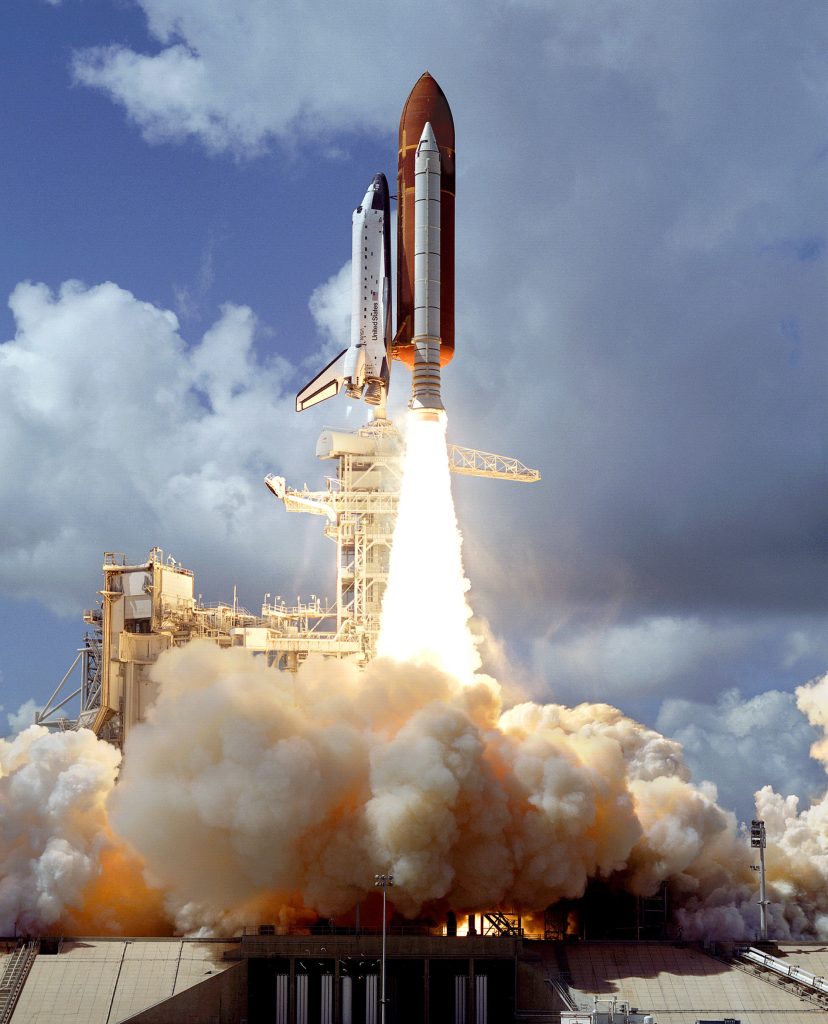
Galileo launched aboard Space Shuttle Atlantis on Oct. 18, 1989. Six years later it arrived at its destination, where it would spend the next eight years in orbit, circling Jupiter 35 times before being intentionally guided into the Jovian atmosphere, where it disintegrated on Sept. 21, 2003.
The Jet Propulsion Laboratory noted at the time that the “hardy spacecraft endured more than four times the cumulative dose of harmful radiation it was designed to withstand.”
Over its 14-year odyssey, Galileo returned 30 gigabytes of data and 14,000 pictures.
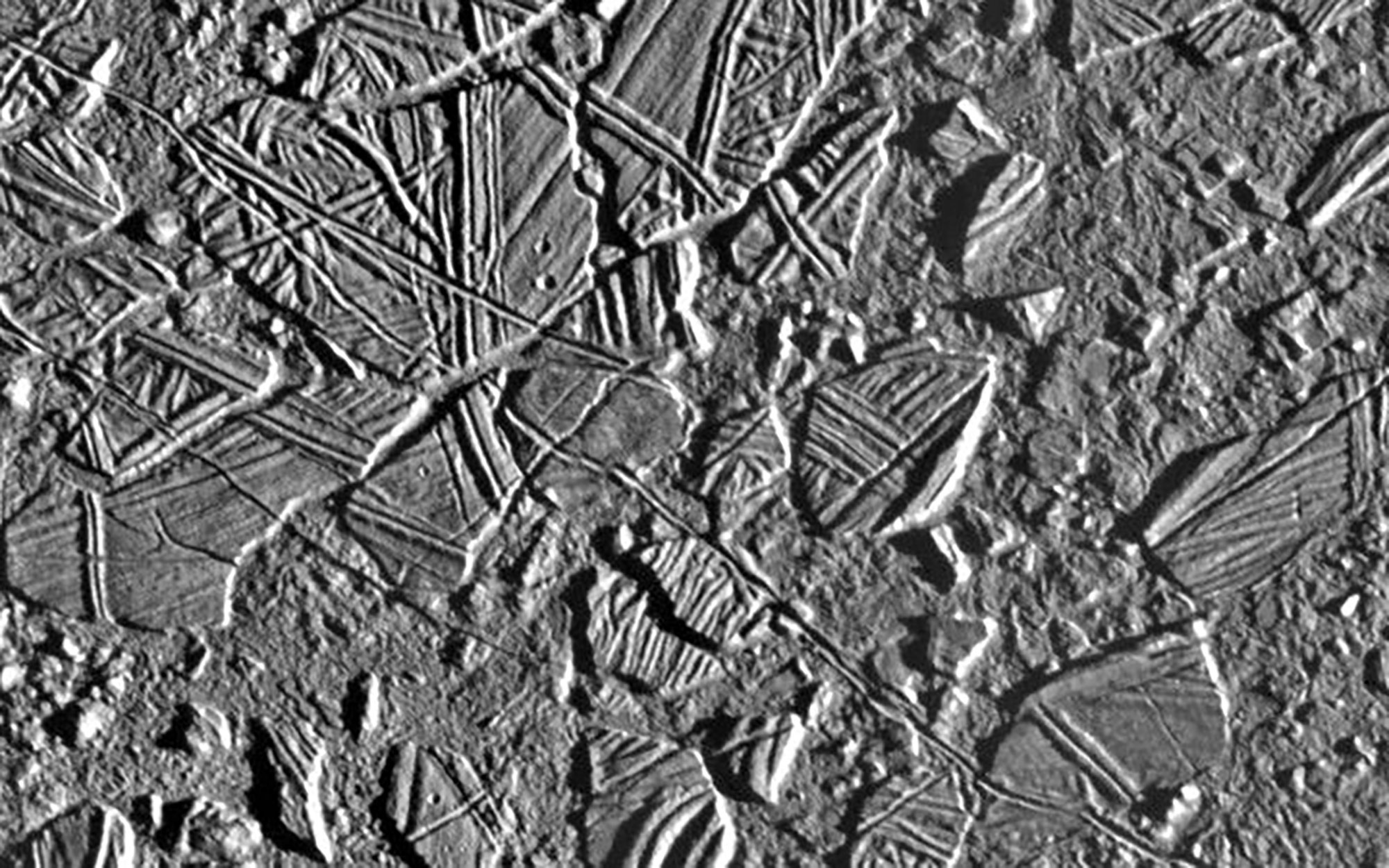
Among those “mind-boggling” discoveries was the subsurface ocean of Europa, one of Jupiter’s four largest moons, first spotted in 1610 by the spacecraft’s namesake, Italian astronomer Galileo Galilei. Beneath Europa’s icy crust lay a vast liquid water ocean, twice the size of all the oceans on Earth, though intensely salty and packed with radionuclides. The ocean is kept liquid by heat generated by Jupiter’s gravitational pull, making Europa one of the most promising places in the solar system to search for life beyond Earth.
Galileo also found that Io was the most volcanically active body in the solar system, that Ganymede possessed its own magnetic field, and that both Ganymede and Callisto also might harbor subsurface oceans. An atmospheric probe dropped into Jupiter’s clouds in 1995 sent back direct measurements before being crushed by pressure — data that could not have been gathered any other way. Taken together, these discoveries have fundamentally changed how scientists think about where life might exist in our solar system.
Not just any Labs
In the decades since, Sandia has continued to play a role in space exploration, but Galileo is remembered as the Labs’ most direct and celebrated contribution. Perhaps Dave Myers, former deputy director of what is now known as Microsystems, Engineering, Science and Applications said it best in a 2001 Lab News article: “It’s not like just any microchips would work in the Jovian radiation field.”
He was right. Sometimes when the nation needs something extraordinary, the only place to turn to is Sandia.