
As the United States approaches its 250th anniversary, we celebrate the pivotal moments when Sandia has stepped up to support the nation. Through innovation, collaboration and dedication, Sandia has consistently demonstrated its commitment to addressing the challenges that shape national security and the future.
As the nation turned 220, optimism from the collapse of the Soviet Union and the end of the Cold War gave way to growing fears about terrorism. The Oklahoma City bombing in 1995, unrest in Saudi Arabia and heightened security for the Summer Olympics in Atlanta formed a tense backdrop to a tragedy that triggered the most extensive government investigation up to that time.
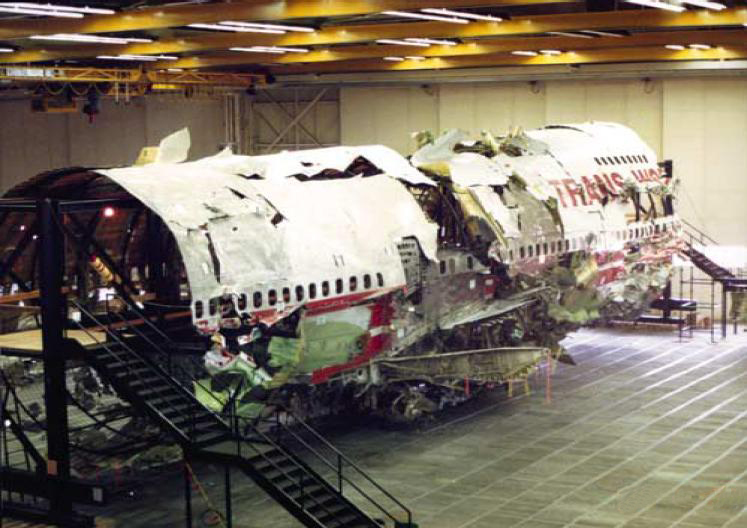
During the evening of July 17, 1996, TWA Flight 800 burst into flames after takeoff from John F. Kennedy International Airport in New York City and spiraled into the Atlantic Ocean. All 230 people on board died. A singular question rang throughout the nation: Why?
Sandians helped discover the facts of what happened, leading to policy reforms and new technologies that would carry air travelers to a safer future.
Clues emerge from massive investigation
The National Transportation Safety Board led the investigation as the FBI worked to determine whether a bomb caused the crash. CIA analysts spent thousands of hours assessing whether the plane could have been hit by a missile.
The Coast Guard was among the first on scene and mobilized a recovery operation that eventually included dozens of ships and hundreds of personnel working at the surface to retrieve bodies and wreckage. The Navy ran salvage operations more than a hundred feet below.
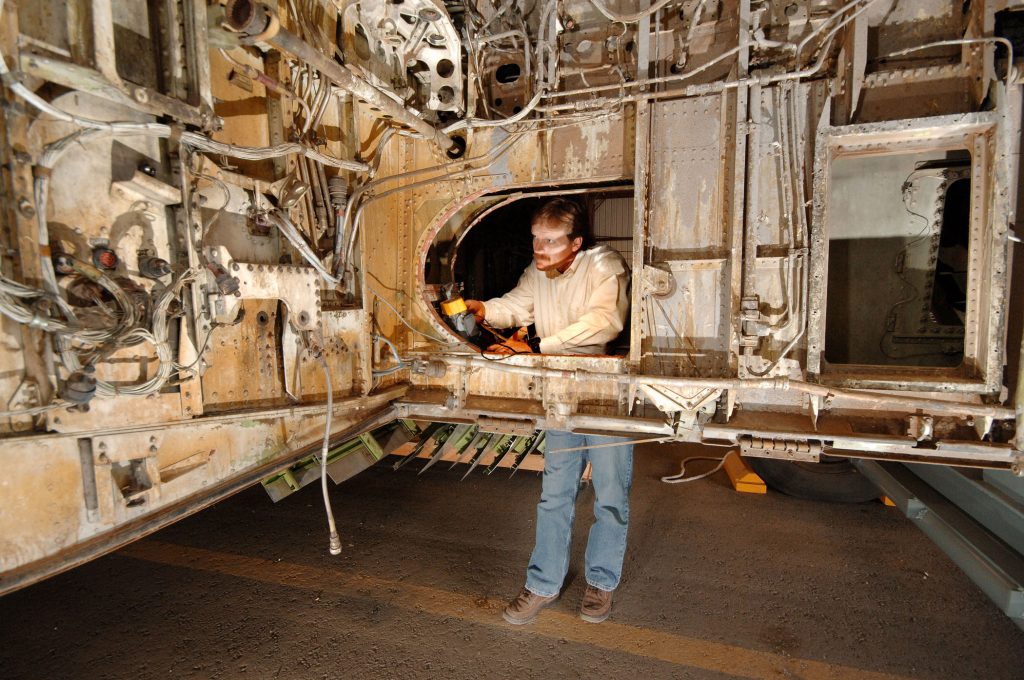
From the recovered wreckage, clues emerged that the disaster had originated inside the center wing fuel tank, a reserve tank with a capacity of more than 12,000 gallons positioned between the wings under an airplane. Sandia explosives expert Paul Cooper was called to assess the damage from the reconstructed pieces.
“When I got there, the plane’s pieces were being reassembled, and I could walk through the fuel tank. I looked around and could see where it started and where it detonated,” he recalled in 2012.
This came as a surprise. Fuel tanks on commercial planes were largely considered explosion-proof. Engineers understood that inside the tank, fuel vapors and oxygen would mix in the space above the fuel, even in an otherwise empty reserve tank with small puddles that never completely drain out. This mixture was potentially combustible; all it would need was a spark. So, aircraft were designed to eliminate any possible source of ignition from the fuel tanks.
If there had been a spark, where did it come from?
Sandia researchers combined computational simulations with experiments to model how a vapor explosion would have spread through and breached the tank. Their data helped investigators form a theory of how the accident occurred.
Inside the tank are sensors that measure the amount of fuel. These are powered by low-voltage wires that never carry enough electricity to ignite the vapors. However, this plane was 35 years old, and aging, potentially unsafe wiring had been found in the wreckage, including near the tank. A short could have transferred a powerful surge of energy from nearby higher voltage wires to the low-voltage sensor wires and into the tank. On top of that, nearby air conditioning equipment would have already heated the tank and its contents to combustible temperatures.
After four years of investigation, the National Transportation Safety Board finally concluded an electrical short was the most probable cause.
It wasn’t terrorism.
As a result of Sandia’s work, policymakers and aircraft manufacturers were forced to recognize that commercial jet fuel tanks were not explosion-proof, as they had once believed. Reforms were passed requiring aircraft to be equipped with military-inspired systems that now pump nitrogen into empty spaces, rendering vapors inert. Aircraft maintenance routines were reevaluated, too.
Sandia carries on with excellence in aircraft safety
The investigation also inspired new technologies as Sandia researchers continued to study aircraft safety in the following years.
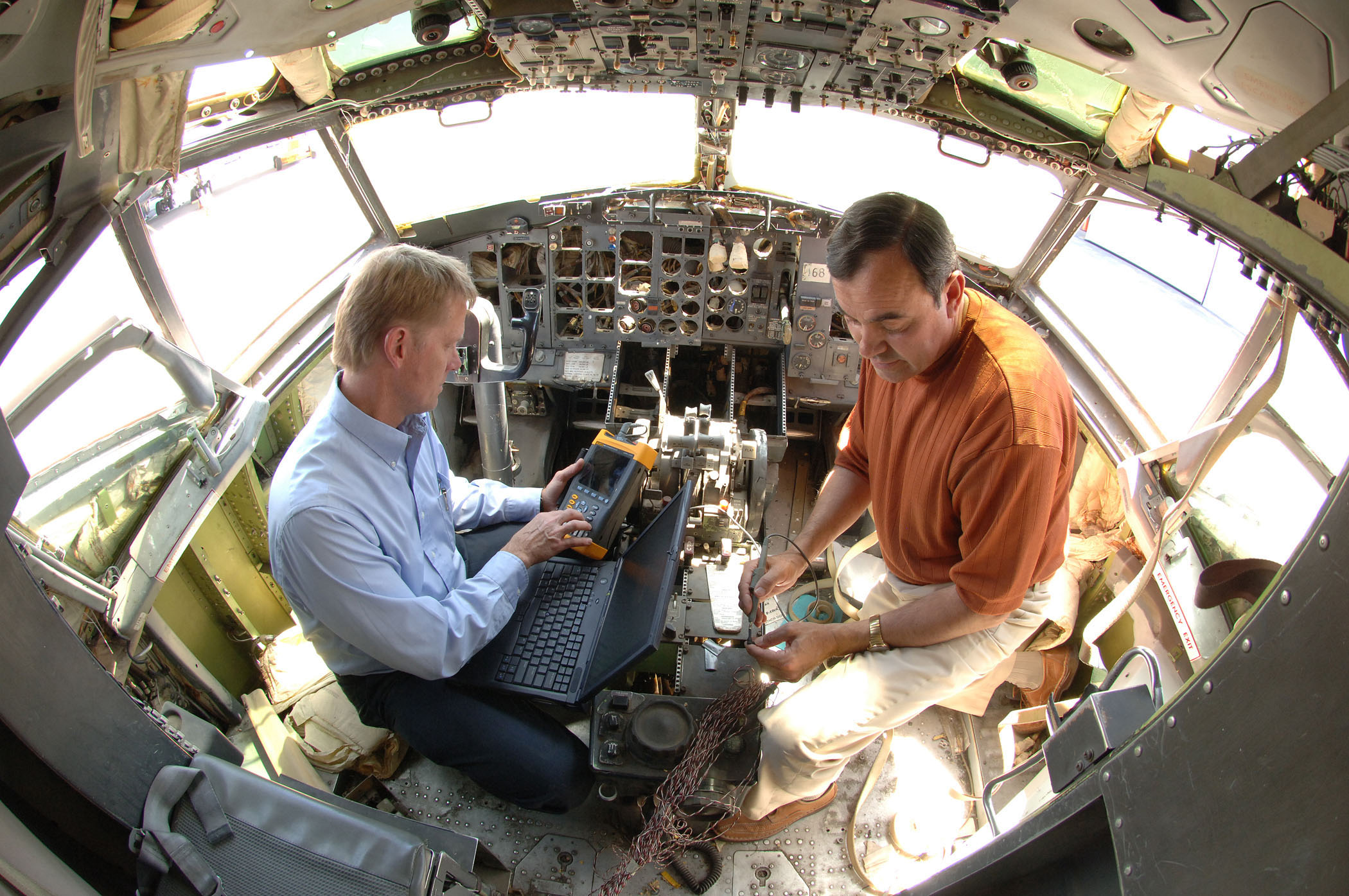
Larry Schneider led a team that invented a technology called Pulse Arrested Spark Discharge to non-destructively inspect, identify and locate damaged wiring. Previous, similar diagnostics could only locate exposed wires if they were touching a metal structure, like a strut. The new technology was licensed and commercialized as ArcSafe, earning an Federal Laboratory Consortium award for technology transfer in 2007.
“Rather than reacting to a problem, these systems can find a fault before it manifests into a catastrophic event,” Schneider told the Lab News in 2006.
Others at Sandia went on to advocate for better safety investigations and education. In a conference paper submitted to a 2004 International Society of Air Safety Investigators seminar, Sandians Paul Werner and Richard Perry, reflecting on numerous tragedies wrote, “One obvious lesson from the short history of aviation is that most accidents are not the result of unknown scientific principles (but from) the failure to apply well-known engineering practices.”
When the TWA 800 crash happened, Chuck Rhykerd, now a manager, was a postdoc. He did not participate in the investigation, but today he recalls the mood of the nation and the impact it had on the Labs.
“For better or worse, the climate of fear back then resulted in the DHS, TSA and the security we have in airports today. Sandia pivoted in that era, growing to meet the national security challenges of the day.”