
PAN Disrupter neutralizes shoe bombs, Unabomber device and more

As the United States approaches its 250th anniversary, we celebrate the pivotal moments when Sandia has stepped up to support the nation. Through innovation, collaboration and dedication, Sandia has consistently demonstrated its commitment to addressing the challenges that shape national security and the future.
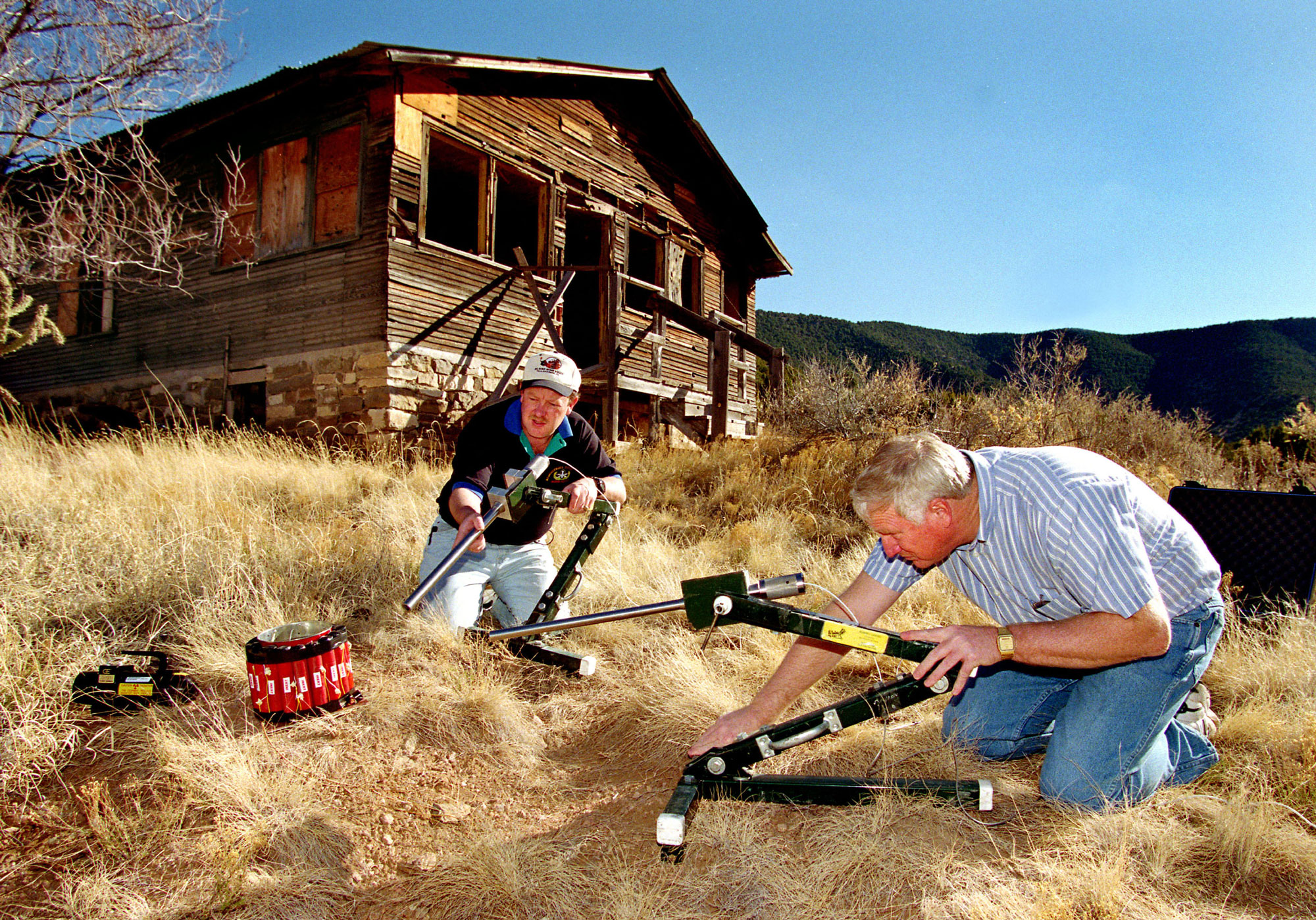
On Dec. 22, 2001, Massachusetts State Police officers aimed a small device at Richard Reid’s shoe bombs and rendered them useless without blowing them up. Sandia developed the device, as well as the training the officers needed to use it.
Bomb disablement expert Chris Cherry and a team of researchers developed the Percussion-Actuated Nonelectric Disrupter in the early 1990s to keep bomb technicians safe and disable bombs without exploding them. The PAN works by punching holes in the bomb, ruining the circuitry and disabling active bomb components.
Since 1992, Sandia has developed and licensed a family of bomb disablers for different situations. The PAN Disrupter has become the primary tool used by bomb squads nationwide to disable conventional, handmade bombs remotely.
“This is another example of our national labs’ technological wizardry being put to good use to support America’s security,” former Energy Secretary Spencer Abraham said in a 2002 Lab News article.
Unlike the devices that preceded it, the PAN was created not only to disable a bomb but do so nonexplosively. A bomb that has been destroyed lacks valuable information, whereas prosecutors can use intact bombs as evidence.
PAN on tour
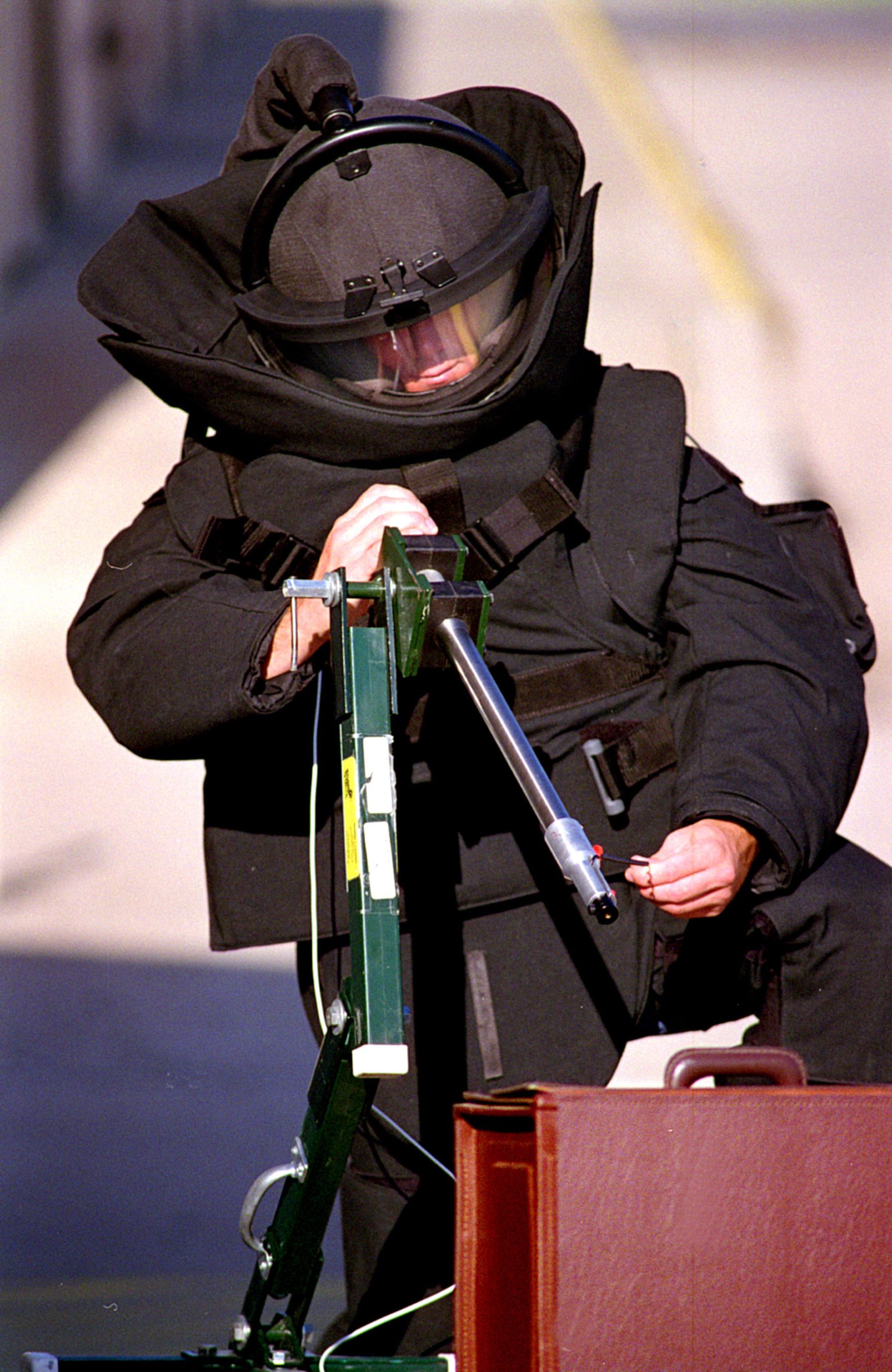
Before the shoe bomber, the PAN Disrupter disabled the Unabomber’s device number 17. In April 1996, at the FBI’s request, Cherry and his team traveled to a cabin in a remote area of Montana to disarm a bomb following the arrest of Theodore Kaczynski. The intact bomb was evidence that helped lead to Kaczynski’s guilty plea and sentencing.
“The cabin was a wealth of information,” Cherry said in 1998. “We were there with white gloves going through the evidence to try to ascertain what some of the chemicals were and some of the parts he may have used to construct the bombs.
“Our objective was not just to defuse the bomb but to surgically defuse it so that we would have all the evidence captured. We couldn’t just blow apart the bomb. We had to go into it to ensure that all the evidence was preserved and we understood the working functions of it.”
Later, the PAN was instrumental in safely disabling several suspect bombs in Atlanta during the 1996 Summer Olympic Games. It was also deployed by bomb squads in Salt Lake City during the 2002 Winter Olympic Games.
Operation America
Cherry’s team built both the tool and the training program to deploy it. In 1994, Sandia trained bomb squads from across the nation to use the technology in Operation Albuquerque. In 1997, Sandia offered the same training at Operation Riverside, and later, Operation America, in partnership with the National Institute of Justice.
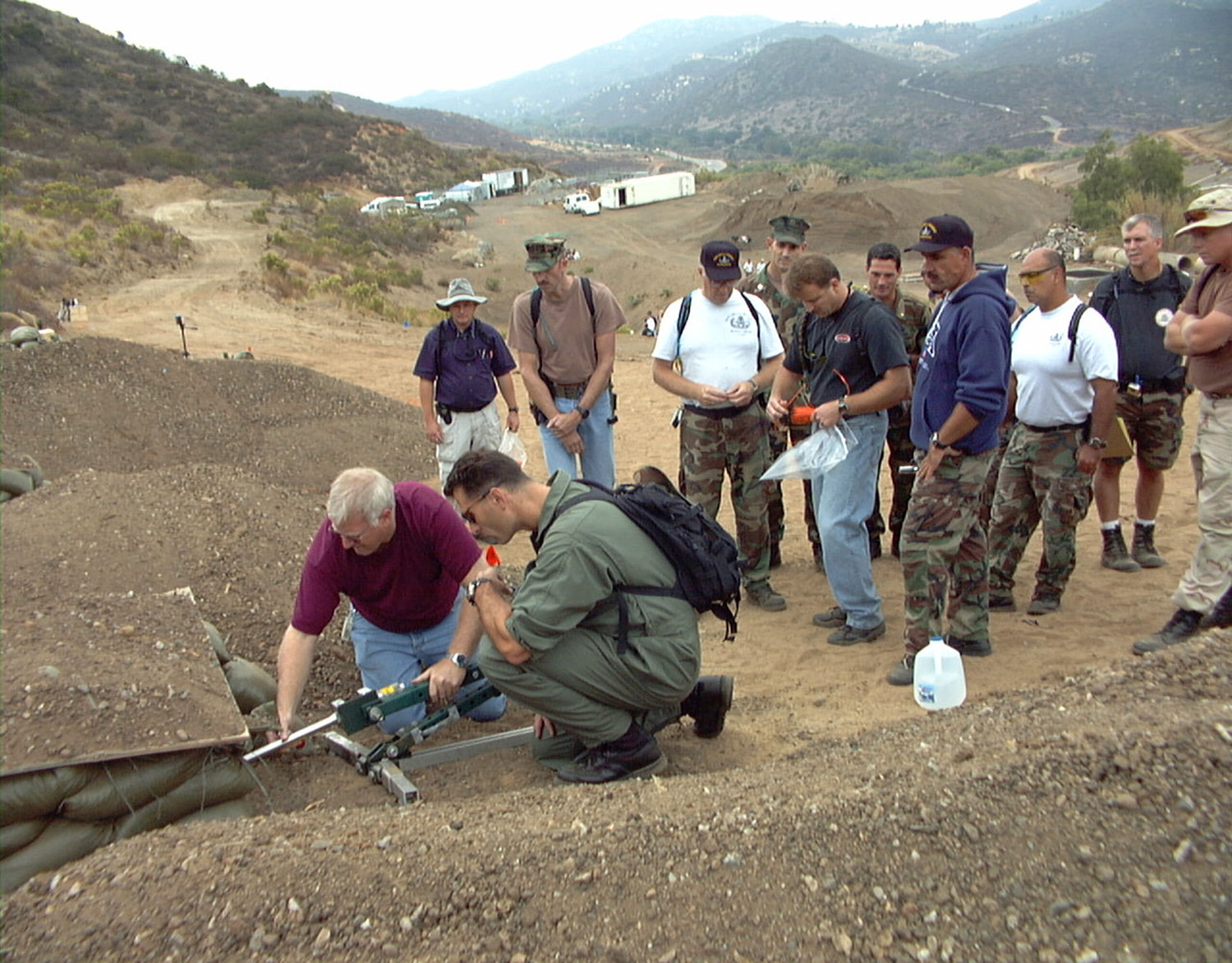
Participants included specialists from bomb squads of major U.S. cities, including New York, Houston and Los Angeles; state police departments; and federal agencies such as the FBI, Secret Service and the Bureau of Alcohol, Tobacco and Firearms.
“This is the honors program for bomb techs,” Cherry said in 2002. “We are proud to work with some of the country’s best bomb squads to discuss and practice the art and science of disabling the increasingly complex terrorist bombs of today while protecting the lives of the public and our first responders.”
Through the training sessions, officers who disabled Richard Reid’s shoe bombs and dozens of others were equipped with the PAN device and given experience to use it in their departments. Since Operation America, the FBI has trained thousands of officers to use the PAN Disrupter through its Hazardous Devices School and other programs.
Beyond the PAN
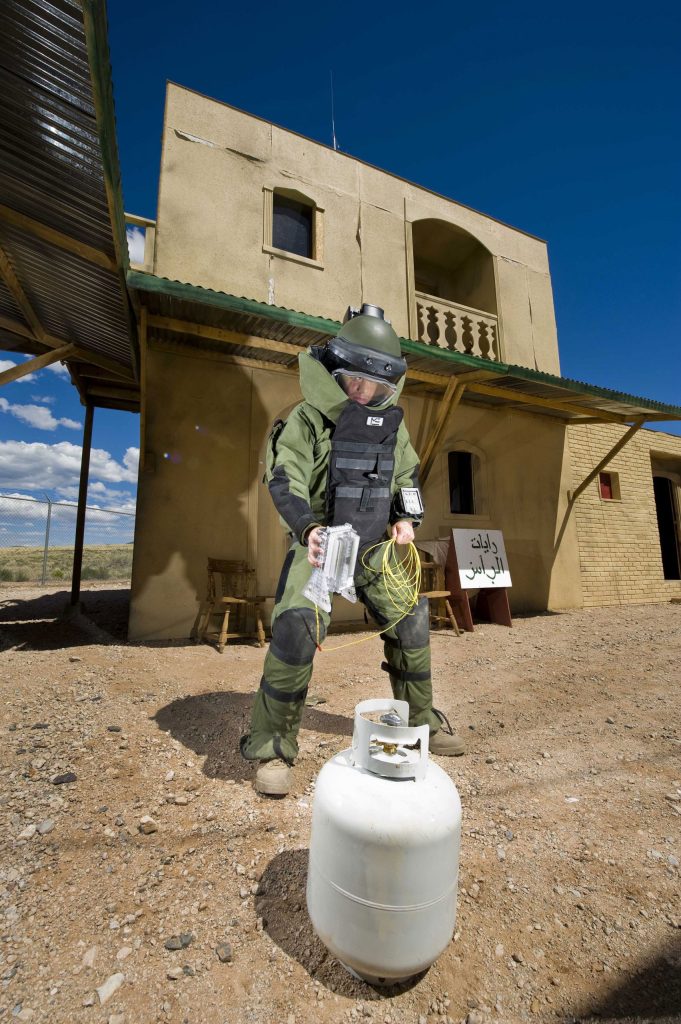
Over the last 30 years, Cherry’s instinct to neutralize bombs without destroying evidence has informed bomb disablement technology as the threat landscape has evolved. In 2010, a Sandia-developed device that shoots a blade of water capable of penetrating steel aided U.S. troops in Afghanistan in disabling deadly improvised explosive devices, or IEDs. Like the PAN Disrupter, it was designed to defeat the device while retaining it for evidence.
Expertise in bomb disablement, demonstrated by building these tools and training programs, later positioned Sandia to lead the High Explosives Home Team for the Nuclear Emergency Support Team, a DOE program that responds to nuclear or radiological incidents worldwide.