Sandia technology plays vital role in everyday life
As the United States approaches its 250th anniversary, we celebrate the pivotal moments when Sandia has stepped up to support the nation. Through innovation, collaboration and dedication, Sandia has consistently demonstrated its commitment to addressing the challenges that shape national security and the future.
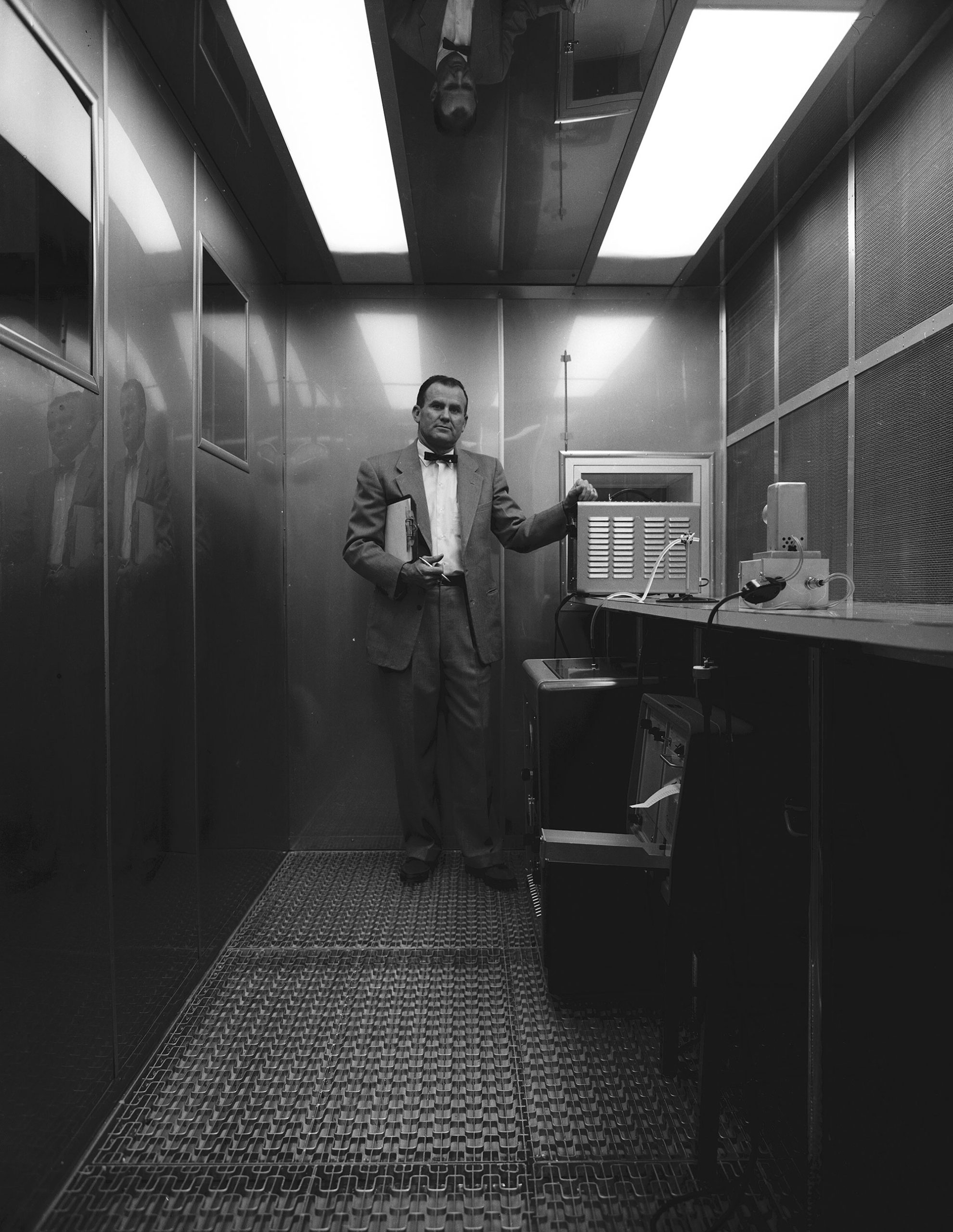
When Sandia physicist Willis Whitfield invented the modern cleanroom, he aimed to solve a very specific problem: preventing tiny dust particles from contaminating the small, delicate components used in nuclear weapons assembly.
Little did he — or anyone — know that his innovation would become a critical part of everyday life. From computer chips to vaccine and pharmaceutical manufacturing, aerospace and defense, hospital operating rooms, and even food processing and packaging, cleanroom technology invented at Sandia protects many of the sensitive products and processes the world relies on.
Let the air be the janitor
In 1959, Whitfield was part of a team trying to figure out how to keep microscopic dust particles out of complex manufacturing environments. At the time, cleanrooms of a sort existed, but the term “clean” was open to interpretation. Tests showed that one of the best cleanrooms from that era still averaged more than one million particles per cubic foot of air. For context, that’s roughly the same number of tiny, invisible specks floating around a typical college classroom or busy office today, according to Indoor Air Quality data from the Environmental Protection Agency.
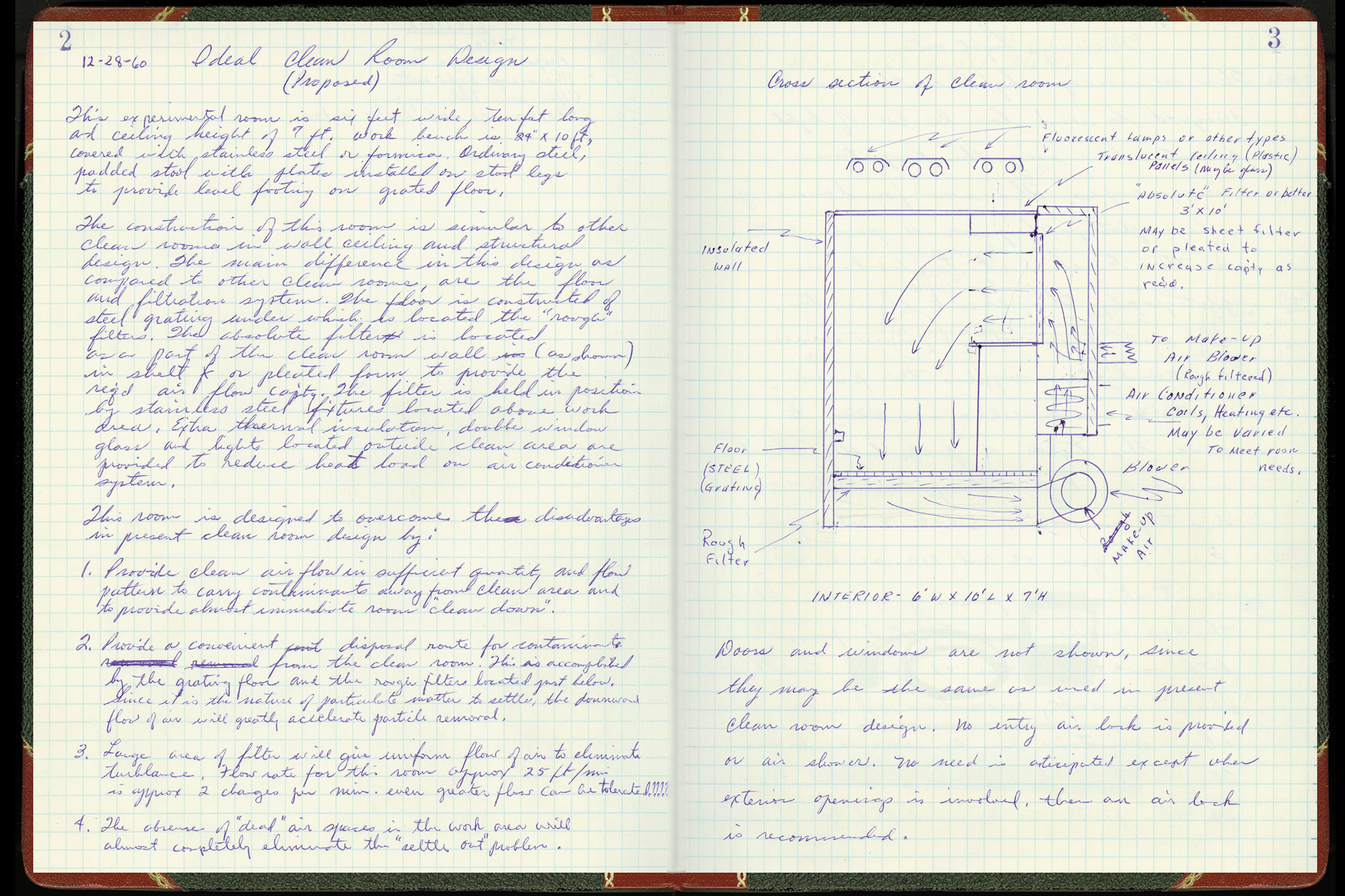
The revolutionary technology now known as laminar flow was born from a simple sketch Whitfield made on an airplane in 1960. Laminar flow — or as Whitfield once described it, “letting the air be the janitor” — involves continuously sweeping a room with highly filtered air. This process pushes particles to the floor, filters them out, and circulates clean air back into the room with a steady, slow movement.
Data collected in 1961 using Whitfield’s prototype showed air quality that was 1,000 times cleaner than the best cleanrooms of the time, so clean that some doubted the results. In a 2024 Lab News article, former Labs historian Rebecca Ullrich recalled, “People at meetings questioned his claims. There were people there who had to vouch for Whitfield’s credibility.”
The cleanest air in the world
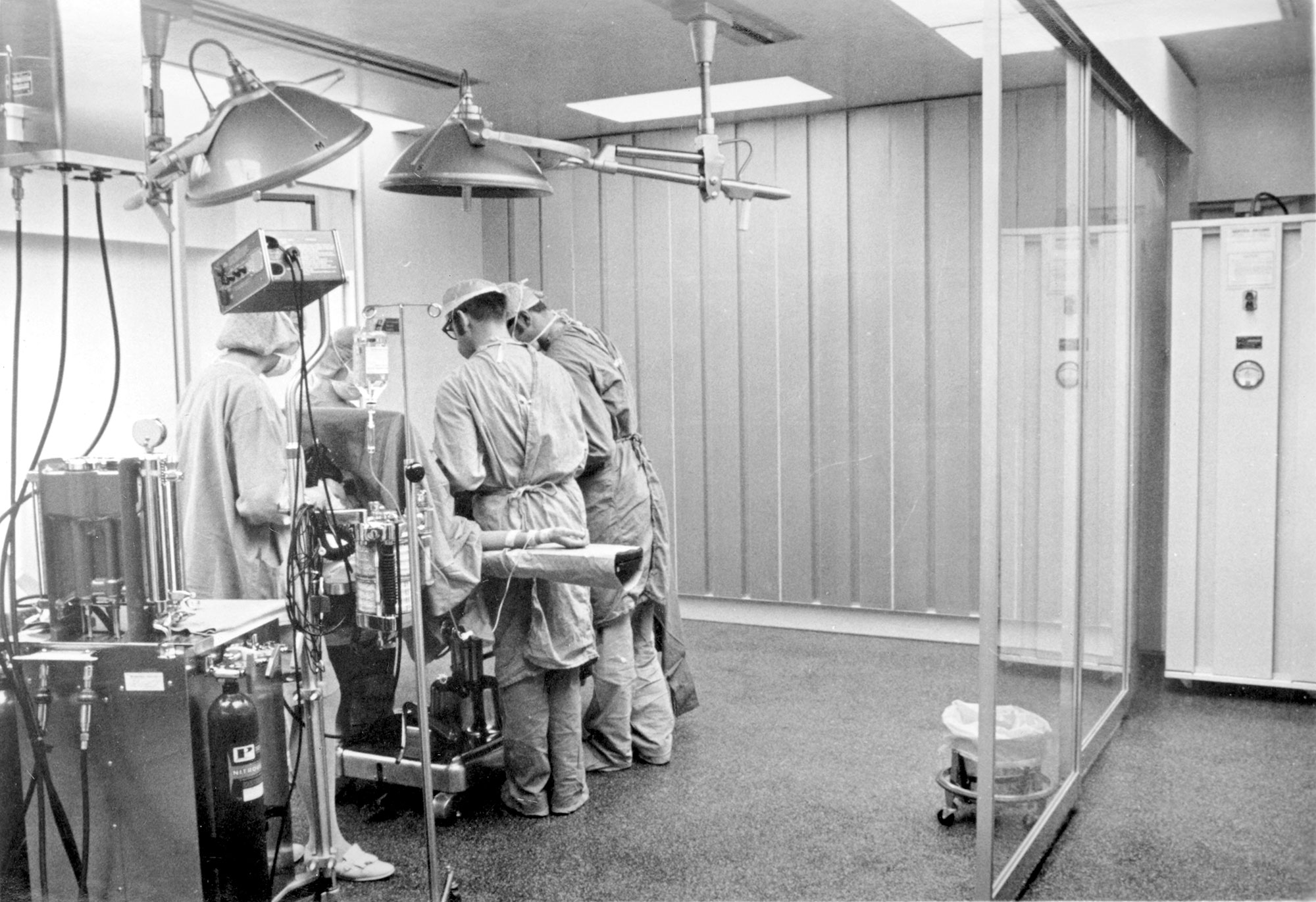
In 1962, a Lab News article called the new cleanrooms a “significant breakthrough.” D.W. Ballard, then supervisor of the Advanced Manufacturing Division, said the technology was “far beyond our most optimistic expectations.” Another supervisor, J. Gordon King, told the paper, “The cleanest air in the world is what we have.”
That same year, Whitfield presented his “ultra-cleanroom” at the Institute of Environmental Sciences meeting in Chicago. Following the publicity, Ullrich noted, “Industry jumped all over it.” Early adopters included leaders in electronics and communications technology, automotive manufacturing, telecommunications and medical research.
Cleanroom technology today
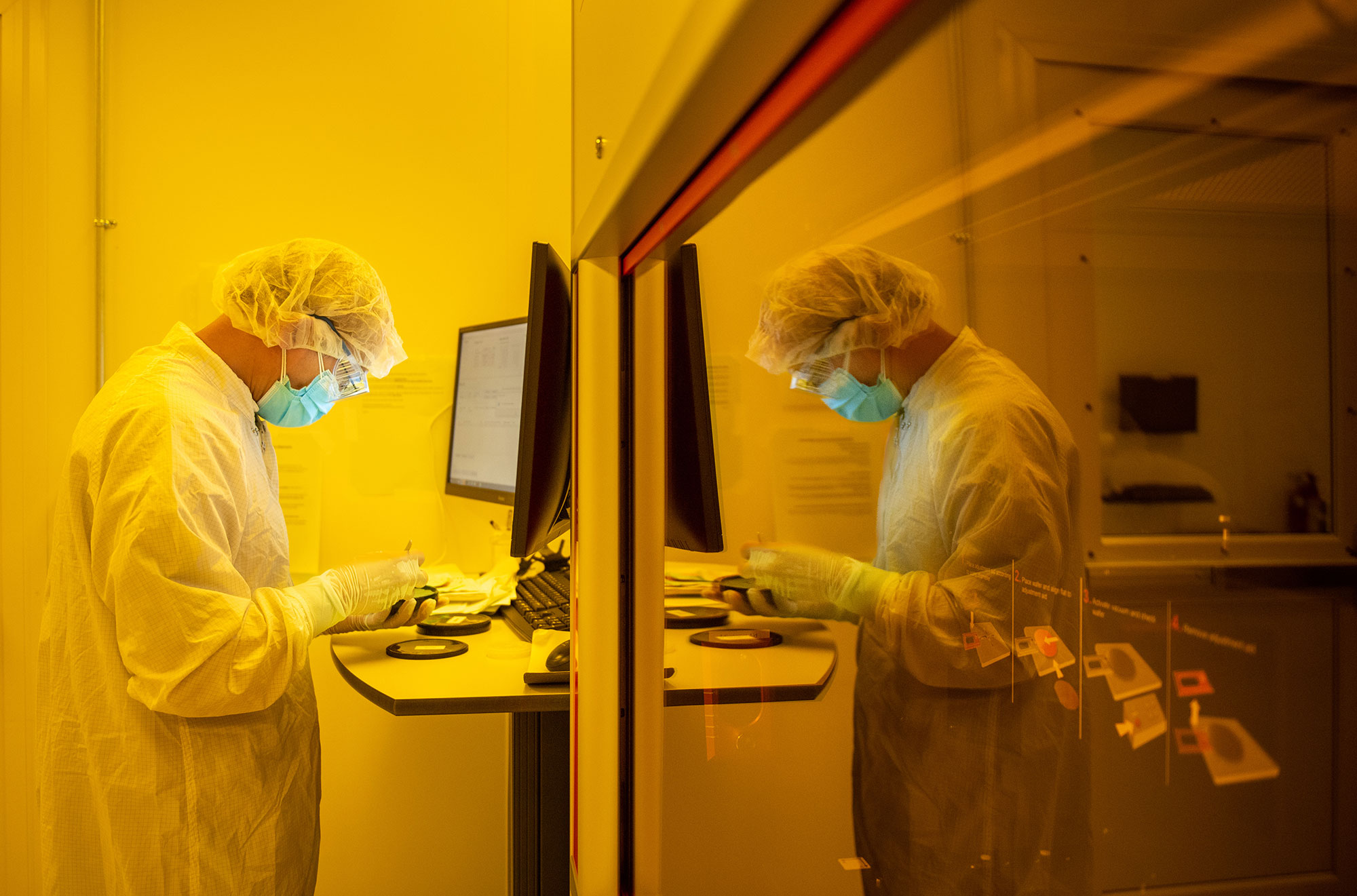
Today, 64 years later, cleanroom technology remains essential to cutting-edge industries such as manufacturing of the microchips that power smartphones and computers; biotechnology and pharmaceutical firms developing vaccines and life-saving medicines; aerospace and defense organizations build satellites and advanced avionics; automotive manufacturers of electric vehicles and sophisticated sensors; and medical device companies creating implants and surgical instruments.
True to its original purpose, cleanrooms continue to play a vital role in Sandia’s nuclear deterrence mission by preventing tiny dust particles from contaminating controlled environments. The cleanroom supports stockpile stewardship, enhances safety and advances technologies critical to national security.