
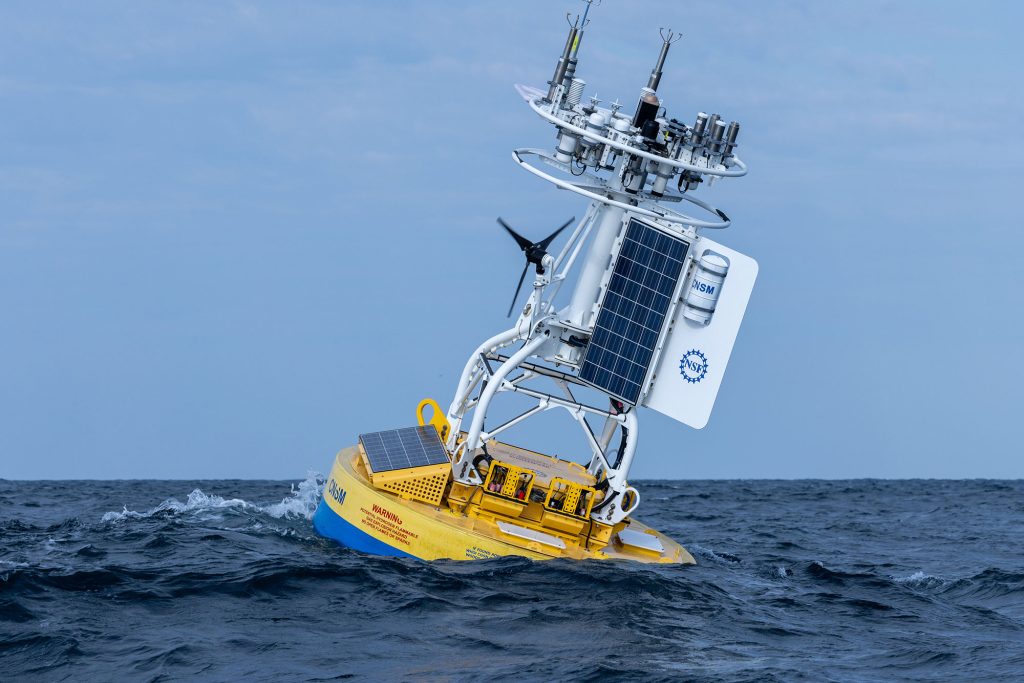
Off the North Carolina coast, an oceanographic buoy gathers real-time, publicly available ocean data with the help of a first-of-its-kind bolt-on wave energy converter designed by Sandia engineers. The WEC was designed for the Pioneer Array, part of the National Science Foundation’s Ocean Observatories Initiative, which deploys and maintains more than 900 instruments, such as buoys and underwater sensors.
The Pioneer Array comprises a series of coastal surface moorings and other platforms that work together to monitor and analyze interactions between the ocean’s surface and deeper waters, contributing to a greater understanding of the ocean.
The challenge
Initially, the coastal surface moorings were designed to use solar and wind energy. However, harsh ocean conditions, such as long periods of fog or low wind, made it difficult for them to generate sufficient power for continuous operation.
Sandia’s Hydrodynamic Energy Systems department, led by Peter Kobos, collaborated with the Ocean Observatories Initiative to create design requirements for a WEC that would not disrupt mooring dynamics or compromise data collection integrity.
This multiyear endeavor culminated in a novel system developed through a co-design process to meet Ocean Observatories Initiative design needs. The WEC is fully enclosed, so only electricity and data are exchanged, significantly reducing the risk of mechanical failure and harmful ecological impacts.
The deployment
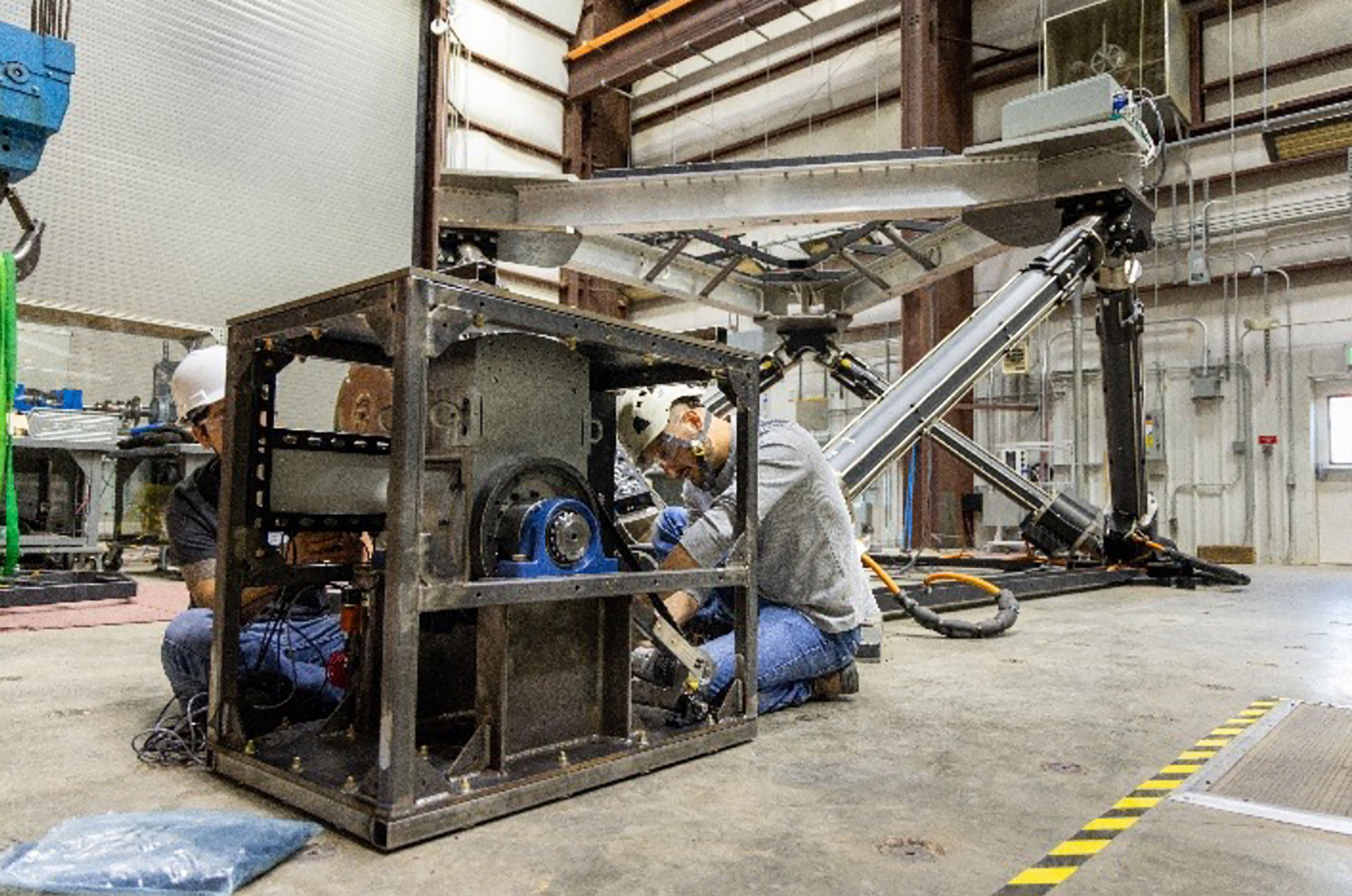
The first Pioneer WEC prototype was constructed at Sandia’s New Mexico site and then shipped to the Woods Hole Oceanographic Institution. There, project team members partnered with the Sandia team to perform final testing and assemble the WEC with the Pioneer coastal surface mooring buoy.
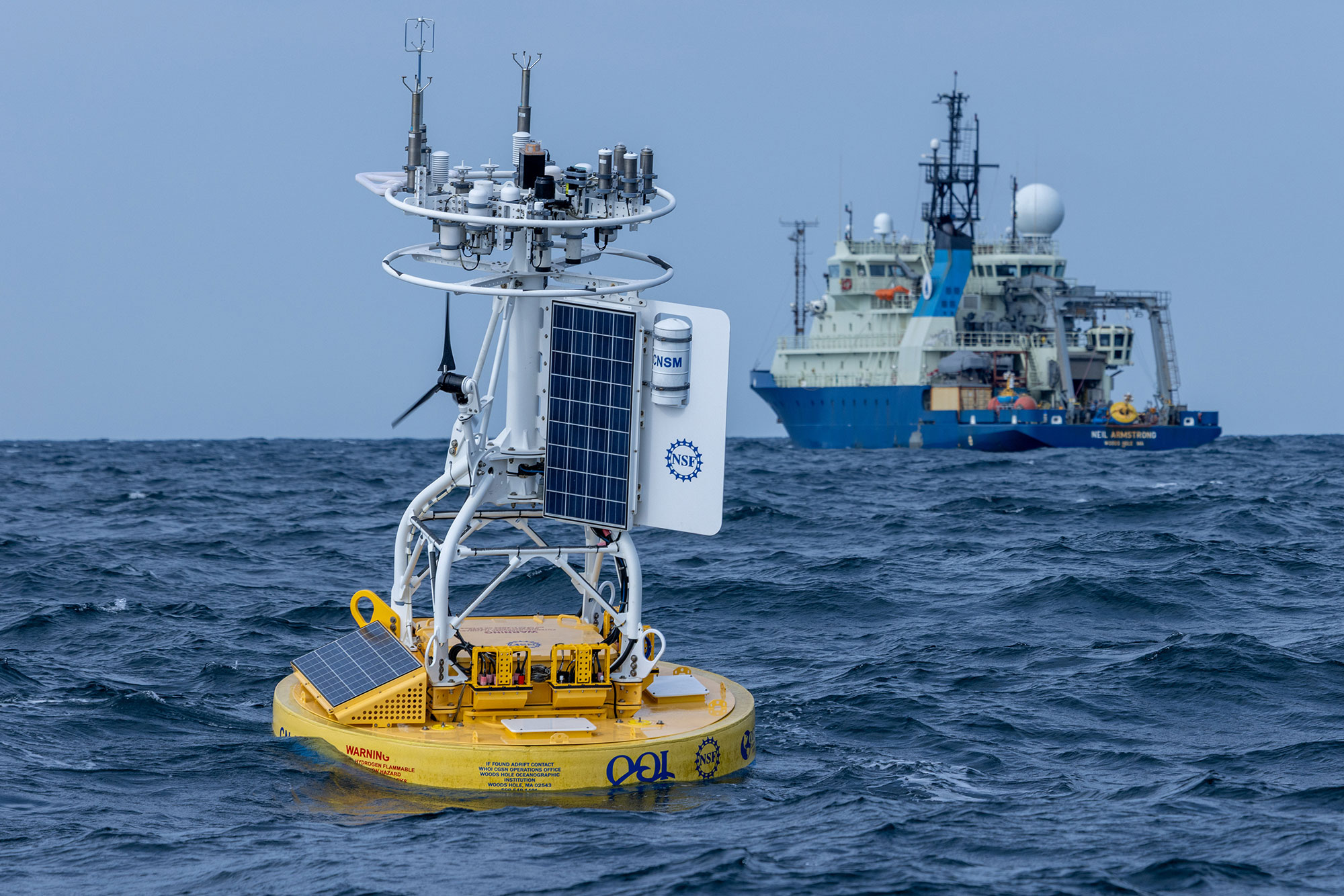
The research vessel Neil Armstrong deployed the buoy at a site roughly 50 nautical miles off the coast of Nags Head, North Carolina, just north of Cape Hatteras. The location meets Ocean Observatories Initiative’s goals and has a seasonal mix of wind and waves, along with occasional strong storms that offer an ideal environment for testing the efficiency and power output of the WEC. Sandia team member Ryan Coe joined the deployment cruise, during which the Woods Hole Oceanographic Institution team successfully deployed the coastal surface mooring buoy with its newly attached WEC.
Initial results
Initial data from the WEC shows promising results. The overall project goal is for the WEC to generate 10-20 watts with minimal variability. In the first six weeks of deployment, the WEC produced a median output of 10.2 watts and operated 99% of the time. This performance is particularly encouraging, as it validates Sandia’s numerical models and the WEC’s potential to provide a stable power source for the Ocean Observatories Initiative surface mooring system. The integration of wave energy technology into oceanographic research has the potential to improve data collection and offers innovative ways to power remote oceanographic systems and sensors.
The future
Deployment of the first prototype is just the beginning. Data collected during this initial phase will inform the development of a second version, which is planned for deployment in 2027. This iterative design process is crucial for optimizing the performance and reliability of WECs and improving their viability for commercial use.
This project demonstrates that wave energy can enhance the operational efficiency of oceanographic buoys, increasing the continuity of data delivery, allowing for longer periods of operation between maintenance trips and reducing overall costs.