
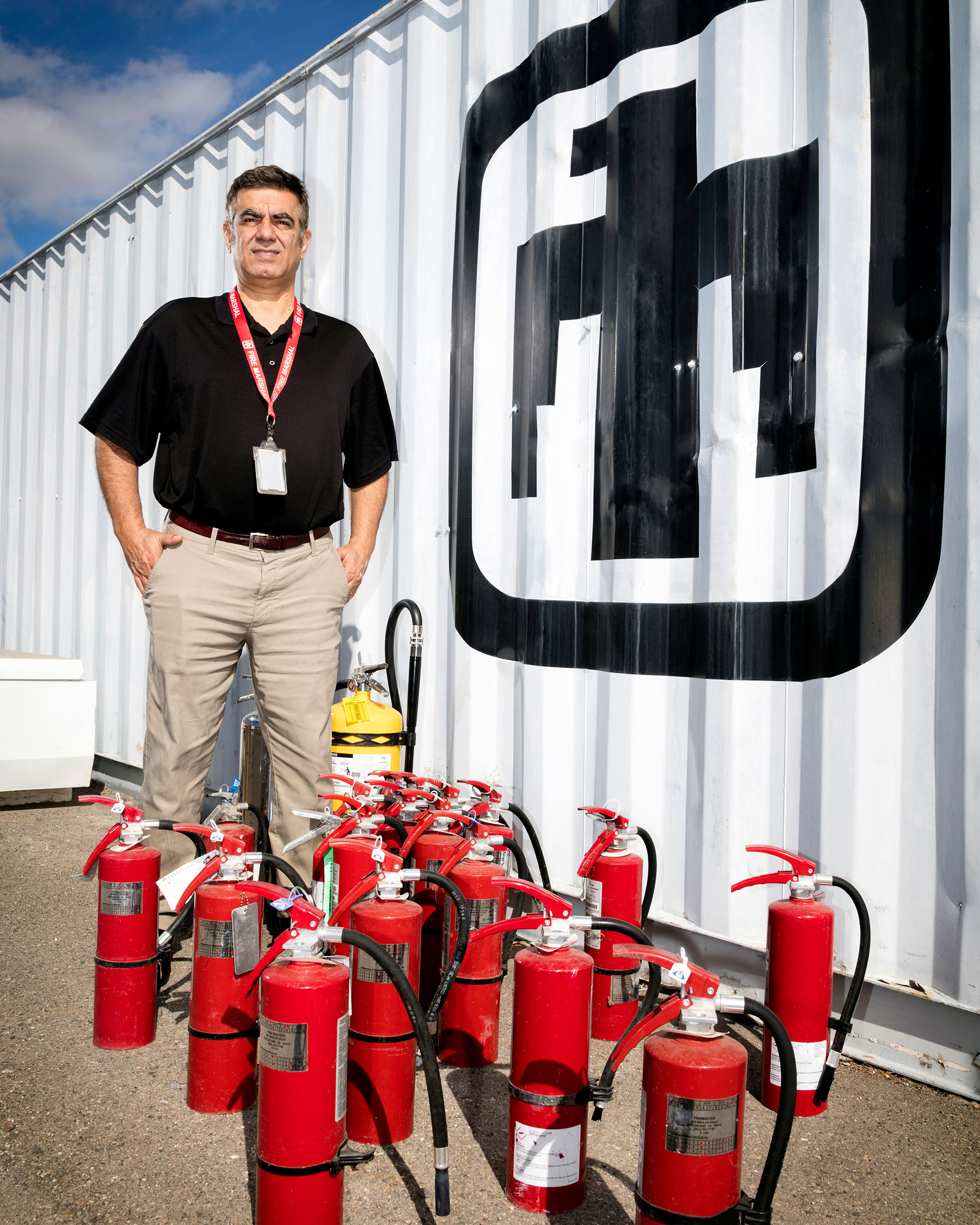
Educating Sandians about how to prevent and mitigate fires is part of the job for Sandia California fire marshal Mohammad “Mo” Mosallaei and Sandia New Mexico fire marshal Tomas Sanchez.
Four to five times a year, Mo conducts hands-on fire extinguisher training at the Livermore site. After 30 minutes of lecture, students practice putting out small fires. At Sandia’s Albuquerque site, Tomas partners with Fire Protection and Emergency Management to deliver an interactive online and hands-on course.
The Sandia fire marshals’ authority is assigned by the NNSA Sandia Field Office. This authority, which is limited to following building and fire codes, allows Sandia to approve routine workflows, such as building and construction permits, and hot work.
Sandia’s fire marshals are responsible for fire code enforcement and fire investigations. They must address the challenges that are specific to the Labs, such as ensuring hazards associated with Sandia’s work are conducted in facilities and environments appropriate for the work.
“There are unique risks associated with laboratories that are not present at lots of other places,” Mo said. “We have to do our best to work with customers and develop guidelines that will mitigate fire risk while not impeding the important research going on here at the Labs.”
Both fire marshals actively engage in partnerships to enable comprehensive fire safety programs. Sandia New Mexico partners with the Kirtland Air Force Base Fire Department to address fire risk, while Sandia California partners with Alameda County. Mo and Tomas also work closely with the NNSA Sandia Feld Office and key partners such as Sandia Emergency Services to reduce fire risks.
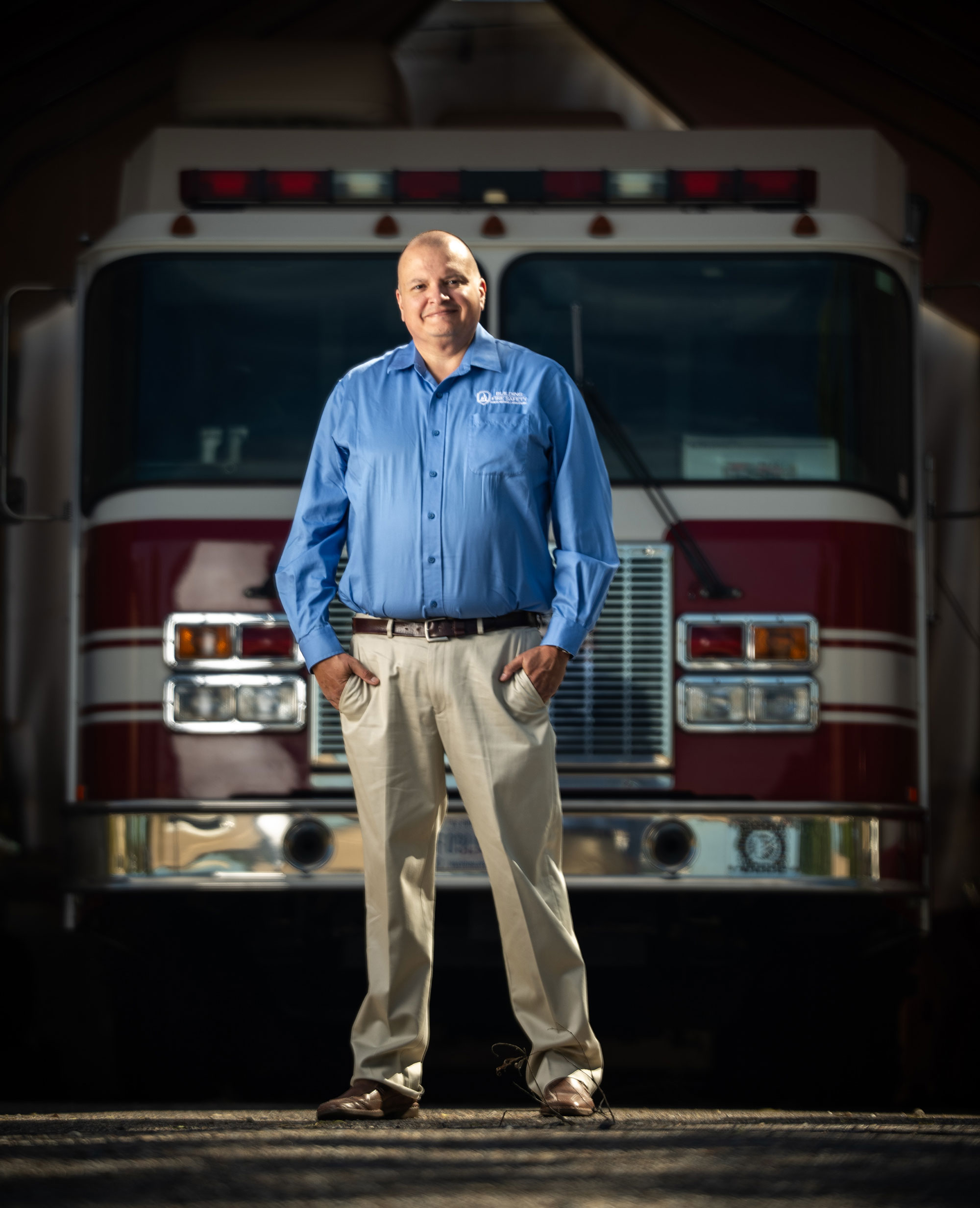
“There is a shift across the complex to be more risk-informed in our decision making and allow for more performance-based approaches,” Tomas said. “We work diligently with the Sandia Field Office and our key partners to find solutions that allow work to proceed while ensuring life safety, mission continuity and environmental concerns are addressed.”
A fire extinguisher course is required for all personnel who may work with flames or fire in their job, including lab workers and emergency personnel. Other Sandians can choose to take the course to increase their knowledge of fire safety.
“Knowing how to put out a small fire is important, not only in a lab environment, but for life outside of work as well,” Mo said.
In addition to leading trainings, Mo and Tomas handle a wide range of responsibilities as Sandia’s fire marshals, whose job is to protect people first, then property.
“People are of paramount importance,” Tomas said. “If there is a fire, our first priority is to notify people of the emergency and get them safely out of the buildings. Our second is to protect the environment and property.”
The Livermore and Albuquerque sites each have their own challenges based on their geography and requirements. For instance, the Albuquerque site has hazards related to explosives, lithium-ion batteries and nuclear facilities. Training is required to ensure fire protection teams are current on new technology and emerging hazards.
Wildfires are also common at both sites, requiring robust fire safety programs. In California, Mo manages additional state regulations, like providing a fire break around the site’s perimeter and maintaining vegetation to reduce fire risk.
“As the eyes and ears at the sites, our partnership with Sandia Field Office, the authority-having jurisdiction, and other agencies is imperative in striving toward the continuous improvements of our fire safety programs,” Mo said.