
A look at Sandia’s observatory that tracks satellites
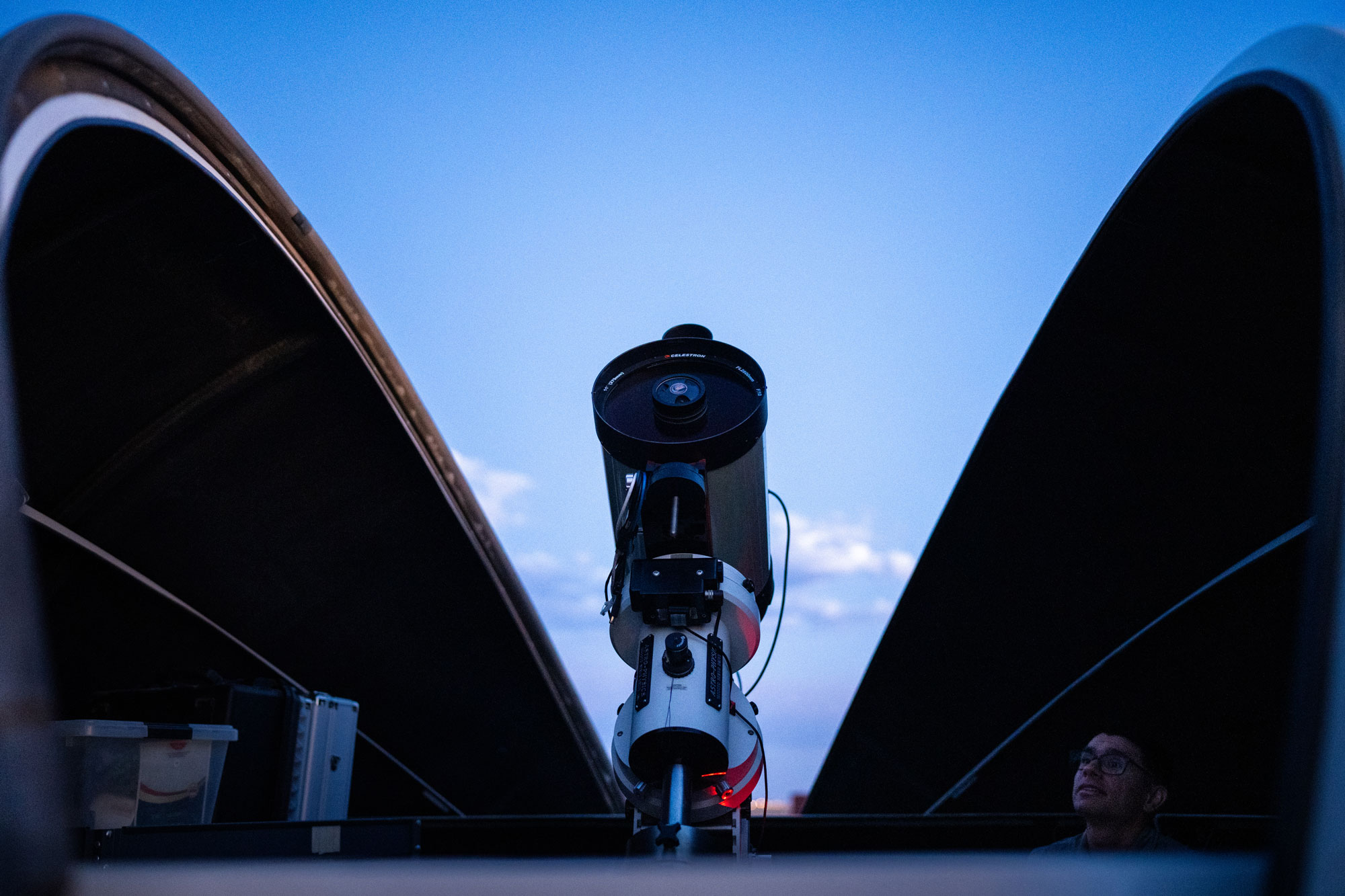
Allen Schnibben’s interest in space started when he was a child.
“I picked up some books about the solar system when I was in elementary school. In middle school, I got a telescope and I started observing the night sky as a hobby,” said Allen, a computer scientist at Sandia. “My entire life, I’ve had an interest in space.”
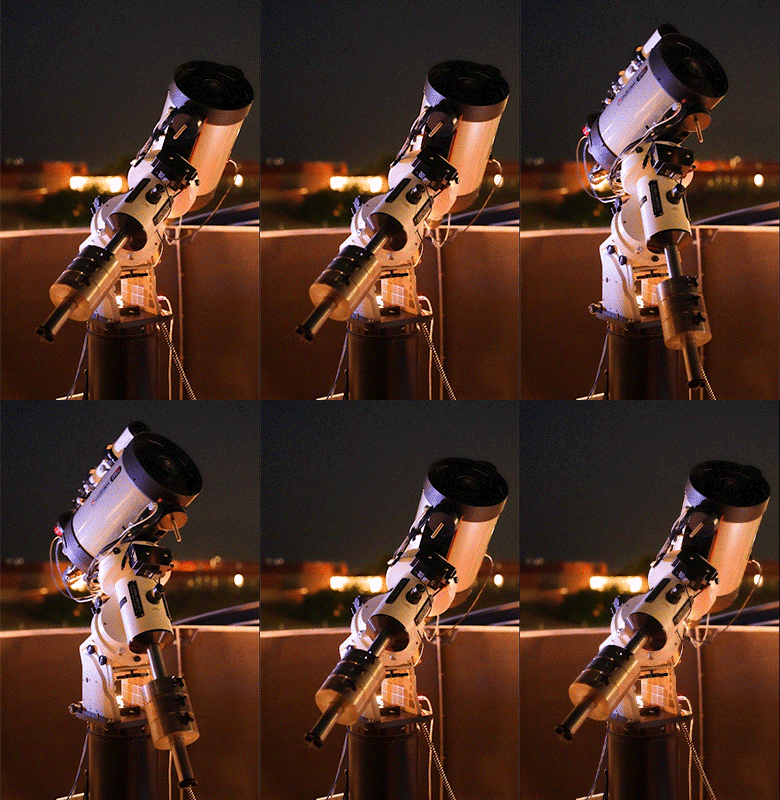
Now, Allen collects data on satellites at Sandia’s SOHBRIT facility, a 12-foot-wide observatory.
“If we don’t keep track of them, then satellites could inadvertently come close to each other and potentially run into each other,” Allen said. “Satellites travel very fast. So, a collision at the speeds you expect satellites to be at could be a very catastrophic collision.”
The debris from a collision would present additional hazards to other satellites.
More satellites
According to NASA, more than 45,000 human-made objects were orbiting Earth as of 2024. The number of satellites has increased significantly due to satellite constellations containing thousands of satellites instead of just a few. Satellites are used for communication, space imagery and university projects, among other purposes.
“Space is becoming more readily accessible for different groups of people,” Allen said. “Groups like university students can build a small payload and have that payload launched and put up into space.”
SOHBRIT supports experiments and testing for Sandia’s Space Mission Program.
“It helps with things like predicting if satellites are going to collide with each other or if one satellite has moved. Essentially, it’s keeping track of where all these satellites are, which is an important mission for the military and Sandia,” Allen said.
Automating operations
SOHBRIT was built with commercial off-the-shelf products.
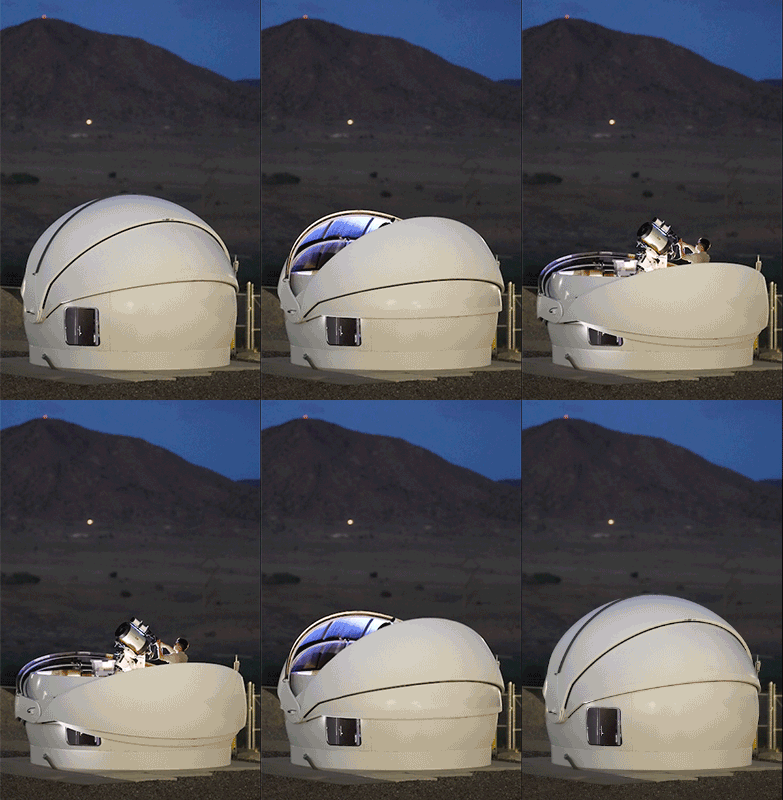
“The intent was to put together a system that’s relatively low cost and build some automation software around it so that you don’t need a person out there to operate the observatory,” Allen said. “From my desk, I can set up a schedule that will execute during the night. And for the most part, I don’t have to continuously monitor it. All I have to do is just come in the next day and I have a fresh new set of data that was collected overnight.”
On a typical clear night, SOHBRIT can observe about 80 satellites.
“It takes images of these satellites and then Sandia employees can use that collective imagery to do experiments on things like detection algorithms or maybe machine learning models,” Allen said. “It may lead to a new technique where they can push the limits of what the optical systems can do.”
Engineering expertise
Allen thinks it’s important for others to know about Sandia’s role in space work.
“When I first moved to Albuquerque, I was working with another contractor on Kirtland Air Force Base. I didn’t know Sandia did space work until I was looking for other jobs in the area,” Allen said. “At Sandia, there’s a ton of people who have a very detailed engineering knowledge of space systems and how they work, and they use that engineering expertise to push the boundaries of what’s possible.”