
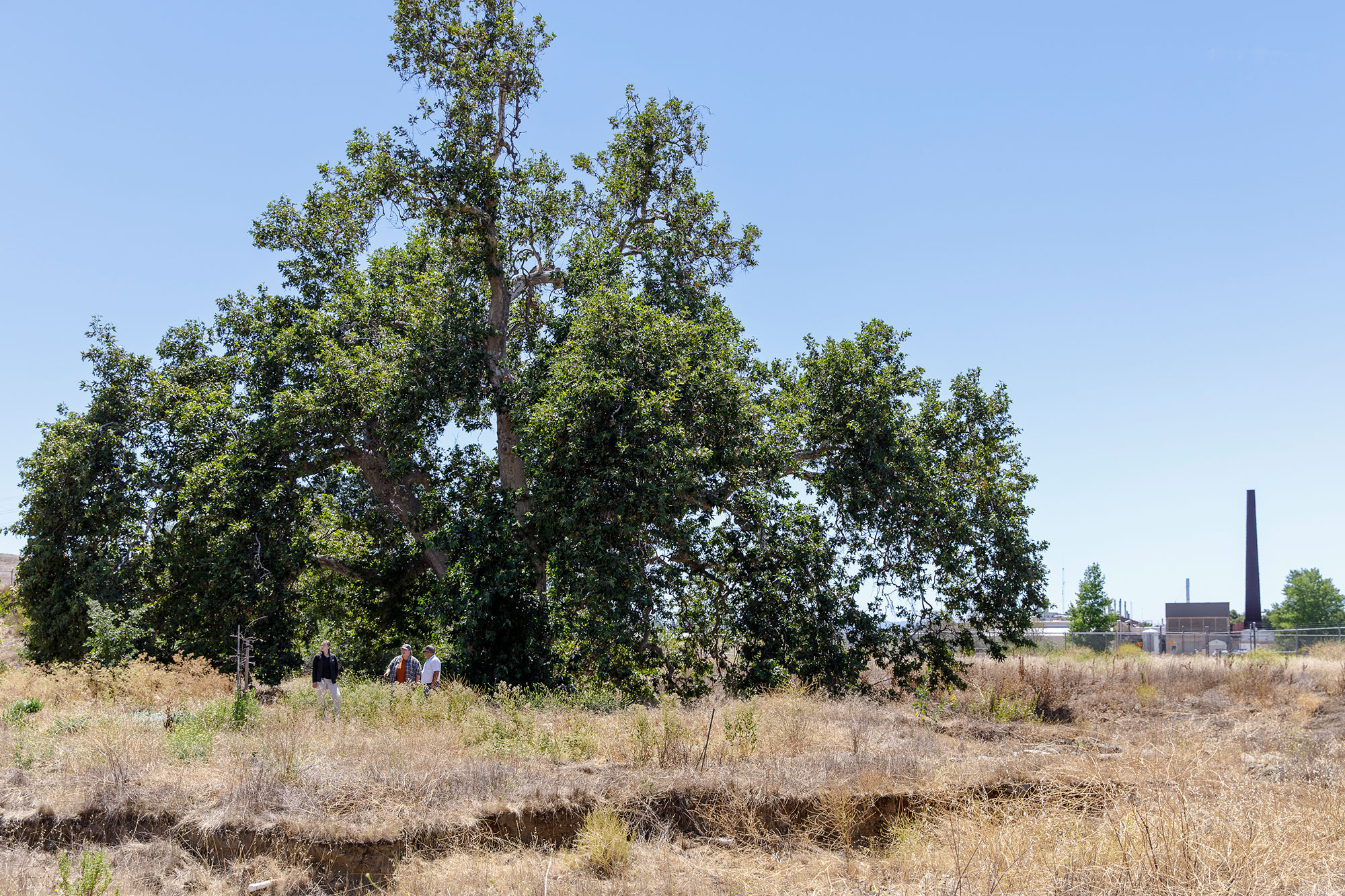
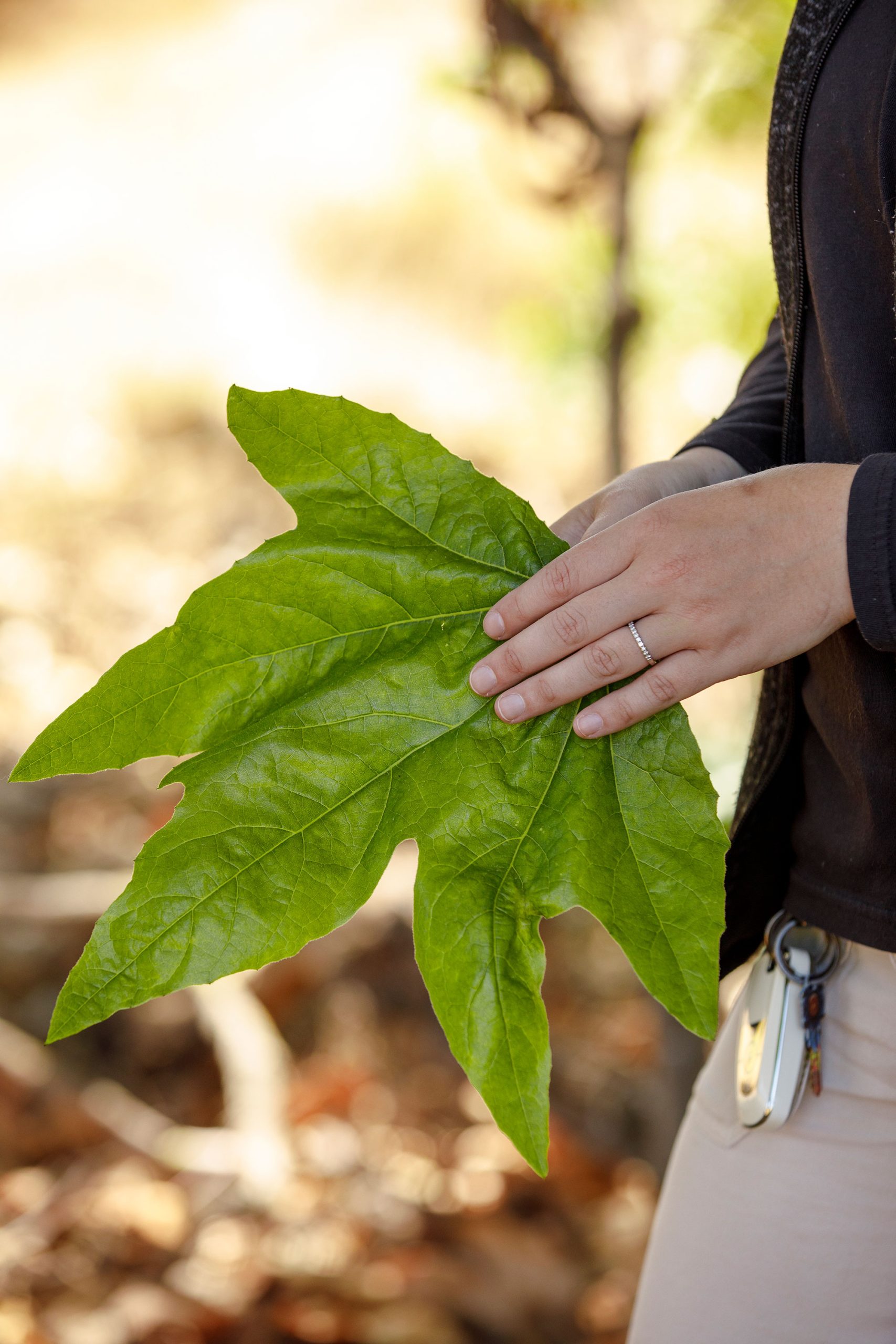
In 1776, America was declaring independence, California statehood was still 74 years away, and a tree on what is now Sandia’s Livermore site was likely entering its sapling years.
While Sandia California celebrates its 70th anniversary this year, this California sycamore on the site’s wildlife preserve may be celebrating a life as old as our nation.
“I haven’t seen a sycamore tree this mature in my lifetime,” said Rebekah Krupka, a certified arborist with SavATree contracted to perform tree risk assessments at the Livermore site. “If we’re accurate in our assessment of its age, it was a sapling before the United States was here as we know it.”
Arborists consider a variety of factors to estimate tree age — the trunk diameter, growing conditions such as proximity to water, and the tree’s overall structure, including display of the “crown” or upper canopy, to name a few. Based on these assessments, Krupka and her company estimate this sycamore is approximately 250 years old.
“At first glance, I was confident it was one of the oldest sycamore trees in California, particularly this species, a California sycamore,” she said. “It was incredible to see in person.”
The large tree has a circumference of 24.3 feet. Its crown has gone into a state of retrenchment, which happens in older trees when the upper canopy starts to break off and spread its crown wider to change its structure as a form of protection.
It’s rare for a tree this age to remain virtually untouched by civilization. However, with the sycamore in the site’s wildlife preserve, it benefits from a more natural lifestyle.
“It’s been protected for years,” said Sixto Rodriguez, operations and engineering lead for Sandia California’s Facilities Maintenance team. “Only a minimal amount of people can access the preserve and only during certain times of year.”
To protect and preserve
The wildlife preserve, comprising more than 100 acres, was officially established in 2004 when the U.S. Fish and Wildlife Service issued a biological opinion regarding protection of threatened species. The land is a habitat for California red-legged frogs and California tiger salamanders, and the long-standing sycamore plays a part in protecting these animals.
“The tree is very beneficial, and it provides cover over the arroyo that runs through campus,” said Alex Baker, who oversees environmental management of the site. “It provides good cover for the frogs and salamanders that are walking through — or hopping through — the arroyo. Usually when I survey this tree, there’s either a bird nesting or roosting in there. A lot of raptors like to hunt from it.”
Other animals benefit from the large sycamore too. A high-up cavity in the trunk may be a hiding spot for a fox or space underneath the tree may create a den for a badger.
“Lizards and other small reptiles will lay their eggs in the root system, which almost acts as a nursery,” Alex said. “Because California sycamores are native and because they get so big, they tend to provide a habitat for many different types of animals.”
The sturdy sycamore
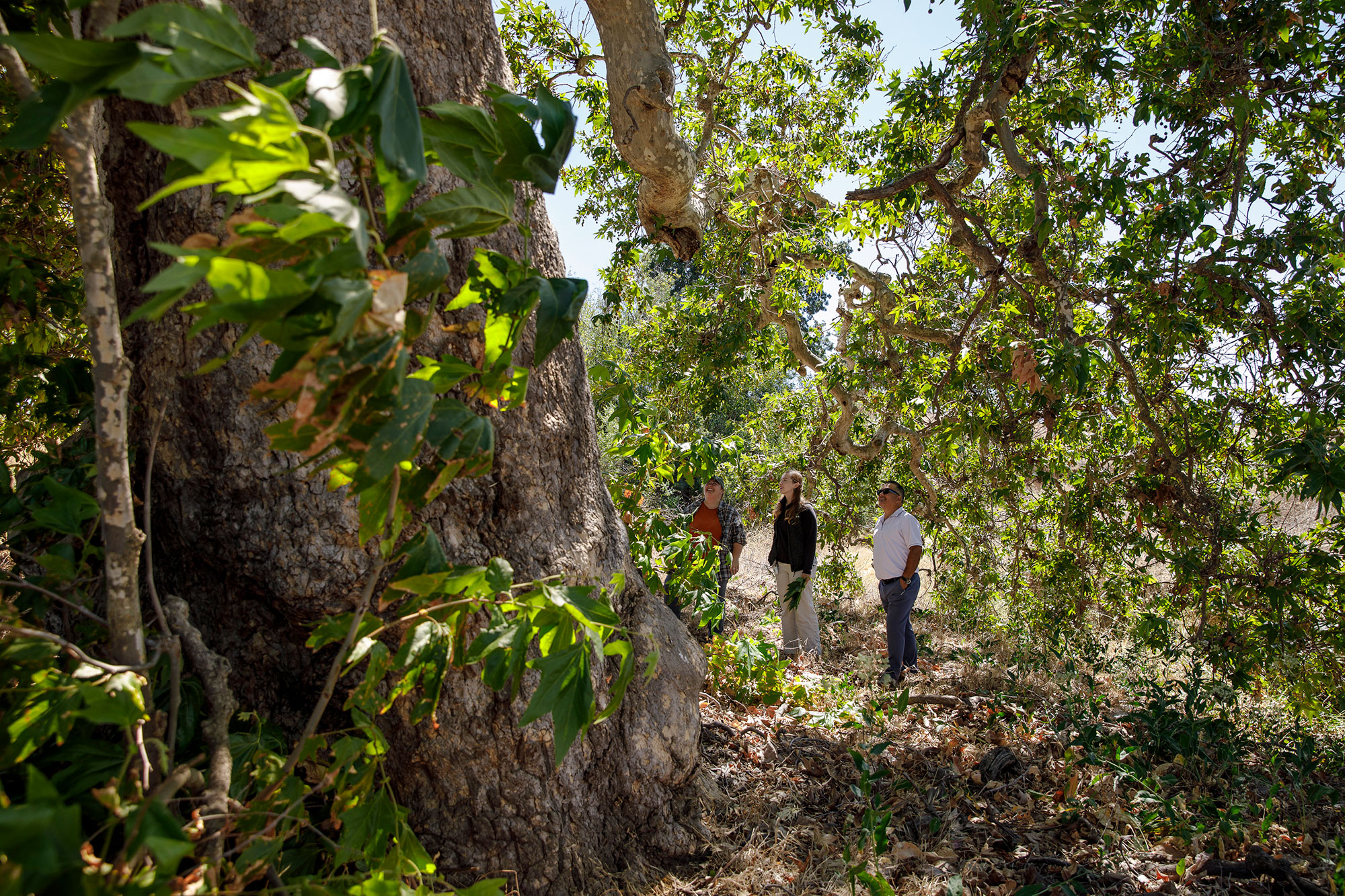
Sycamore trees in open areas can be roughly one-and-a-half times taller than their root systems, which are about three times wider than the outer branches. This sycamore rests about 30 feet from the arroyo, which is dry much of the year, so the roots may pull from groundwater. Arborist Krupka said the tree, which has no other sycamores next to it, likely had more access to water during its early establishment, giving it a strong start.
“Essentially, this particular tree decided to survive,” Krupka said.
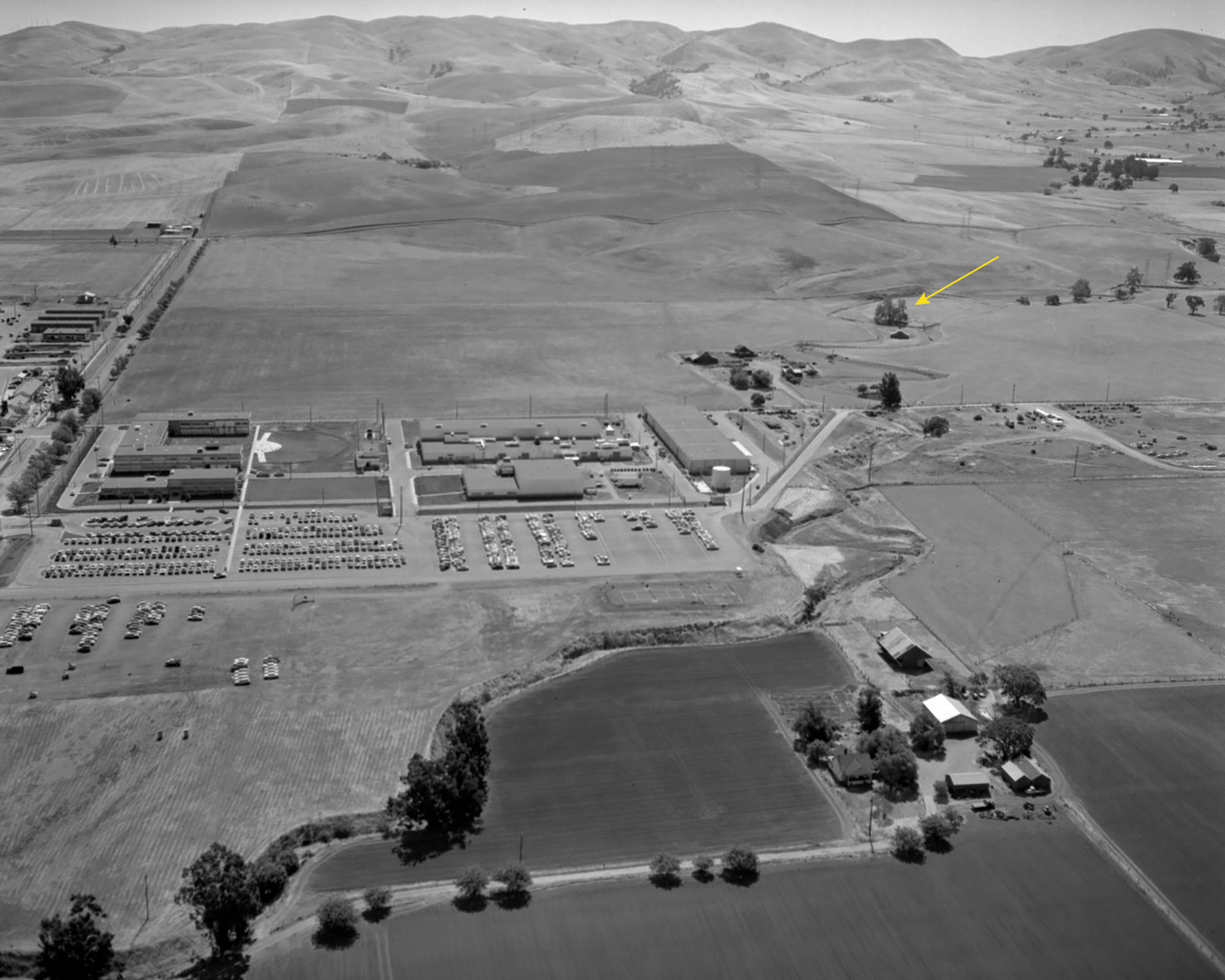
This significant sycamore, which can be seen on aerial photos of the California site from the 1950s, remains in good health. It shows no signs of borers or other damaging insects, and any wounds are compartmentalized well. The tree has a disease called anthracnose that can cause leaf loss and irregular growth patterns for sycamores — but fear not.
“Anthracnose is very common and something that’s widespread across California,” Krupka said. “It’s generally nothing to be concerned about, just something that commonly occurs in this species.”
Atmospheric rivers in 2022 and 2023 flooded the wildlife preserve, ripping out many plants with almost 5-foot-deep washouts. But the sycamore stood firm.
“Aside from the age, it’s also incredible to see a tree that’s been untouched. Trees in general are always being pruned and managed in some way,” Krupka said. “To see something this mature that has such a natural structure — a structure that trees are supposed to have — and to see it going through this natural growth moving toward the ground to protect itself as it ages is, to me, just incredible.”