
Sandia partners with DOE and Cummins to rev modern engine performance
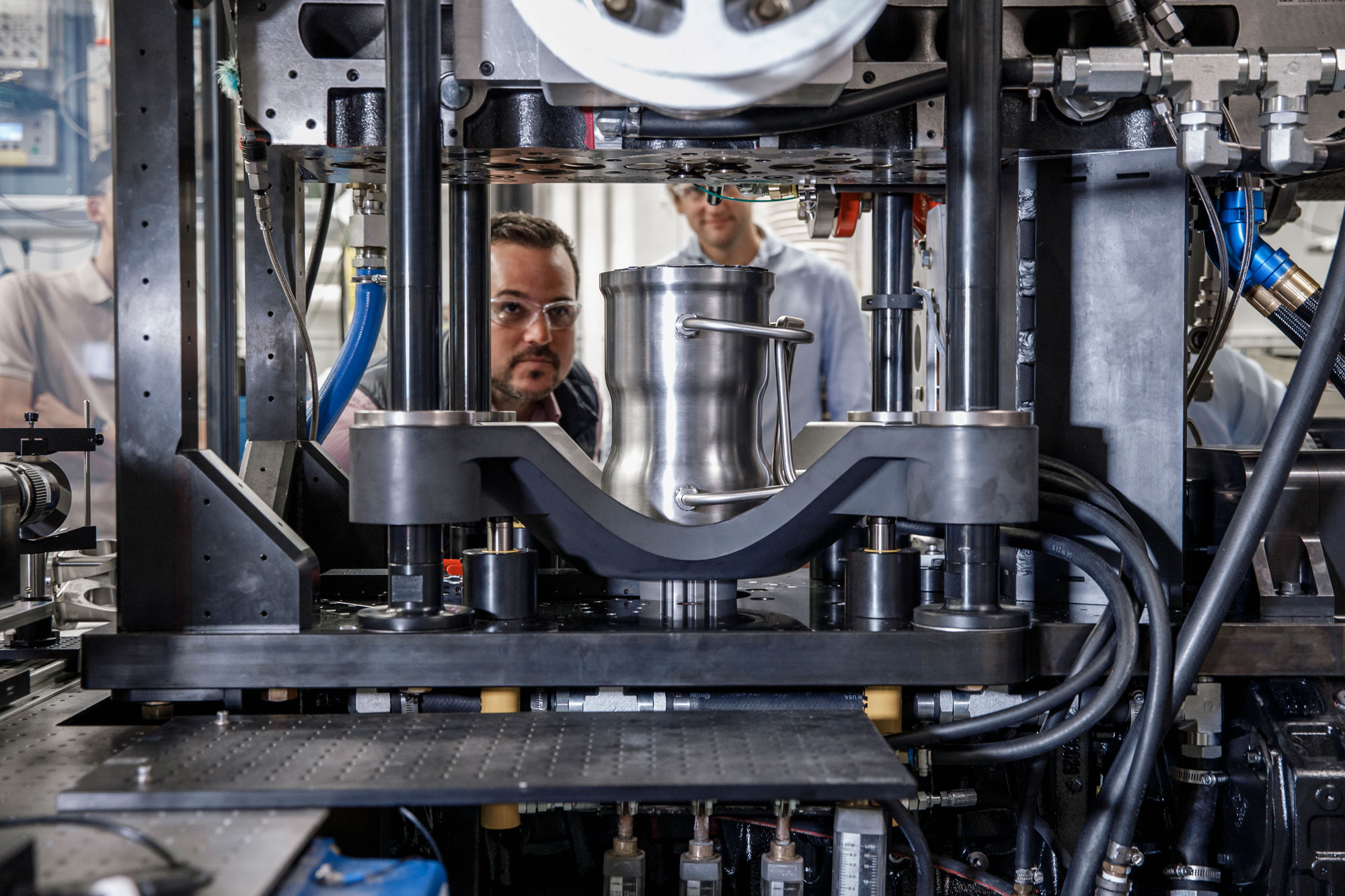
For decades, Sandia has been at the forefront of understanding in-cylinder combustion by using world-class engine research labs — notably, the optical engine laboratory at the Combustion Research Facility on the Livermore campus.
The ability to directly observe in-cylinder mixing and the ensuing combustion process has been essential to understanding engine operation and identifying ways to reduce emissions. The high-fidelity data produced in this laboratory space has served as global validation benchmarks for engine simulation tools. But one fact was inescapable: the equipment in the lab was more than half a century old.
“Engines have continuously evolved over the years as emissions regulations have become more stringent and the drive for efficiency has increased,” combustion researcher Ales Srna said. “The hardware might seem very similar, but engine configurations were upgraded to enable higher cylinder pressures and loads as well as fuels beyond diesel. Fuel injection technologies and other systems also continuously evolved. There were experiments we quite simply could not perform unless we upgraded the lab.”
Now, thanks to partnerships with the DOE Transportation Technologies Office and Cummins Inc., Sandia has a new heavy-duty optical engine laboratory based on the latest production hardware, offering advanced capabilities to improve modern engine performance.
Sandia’s first optical engine at the Combustion Research Facility was installed in 1979. It was a simple, single-cylinder engine with a port through which a camera could observe and record the combustion process. This was followed by a more advanced heavy-duty optical engine, commissioned in 1988. However, after decades of helping American engine makers improve their products, that lab was also approaching obsolescence.
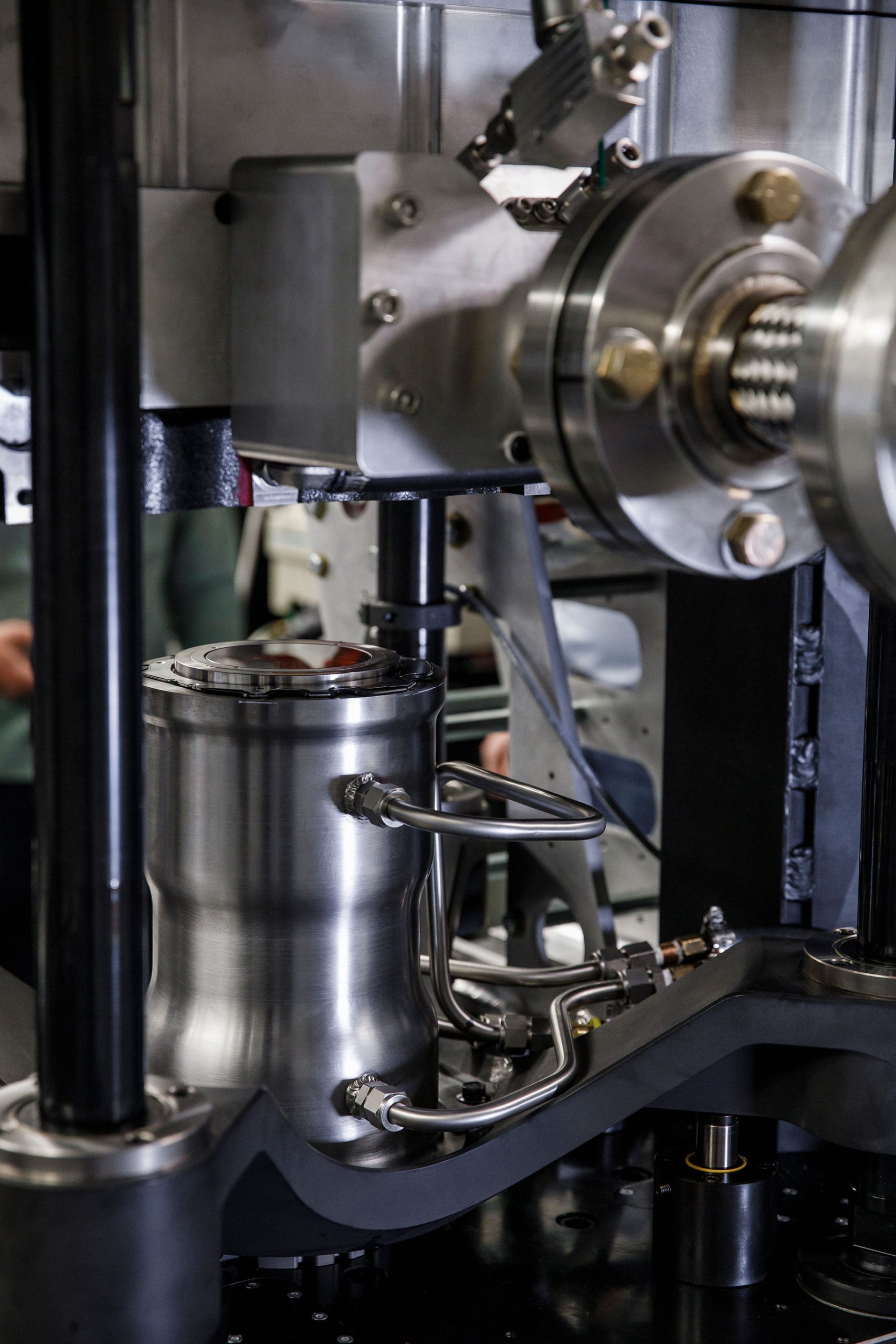
The new heavy-duty optical engine lab is exceptional at exploring the processes that form emissions inside modern engine combustion chambers. The flexibility built into the test rig design makes it relevant to a wide range of combustion concepts, including conventional diesel combustion and natural gas spark-ignited operation.
“We can continuously fire the engine the same way the engine would operate in the real world,” Ales said. “We observe the combustion processes with our optical diagnostics and then ensure that the same hardware behaves identically to production hardware, which previously was not possible. When you add our optical diagnostic capabilities, this lab becomes a very powerful tool for improving future engine efficiency and emissions.”
Moreover, the fueling system can be adapted for alternative fuels such as ethanol or hydrogen. The ability to see how the combustion process changes based on fuel pressure and the injector, igniter or engine configuration is key to understanding pathways for improving engine design and operating strategies. Companion laser-based imaging diagnostics further allow researchers to generate quantitative reference datasets that help other researchers and industry engineers calibrate their modeling tools.
This kind of insight allows Sandia to perform foundational research that works for any combustion engine and benefits all American vehicle makers by allowing them to incorporate basic, proven concepts into their proprietary engine designs.
A little help from our friends
The much-needed refit required the tireless work of Ales and other researchers: engineer Kyra Schmidt, who managed the overall laboratory design, optical engine component design and installation; subcontractor Rousch-Yates Engines, which led the mechanical design of the engine; heavy equipment manufacturer Cummins, who provided engine hardware and associated design information; and DOE’s Transportation Technologies Office, which provided funding support.
“Cummins has had a long working relationship with our department,” Ales said, noting that the company donated the hardware for the initial heavy-duty engine 40 years ago. “This is a long-standing collaboration. They are in the process of refreshing their engine platforms through the development of innovative concepts.”
The team, led by now-retired Sandia manager Paul Miles, approached the Transportation Technologies Office to make the case that updating the lab would benefit DOE missions focused on heavy-duty transportation. The office agreed, providing $1.6 million through the Off-Road, Rail, Marine and Aviation program.
Start up
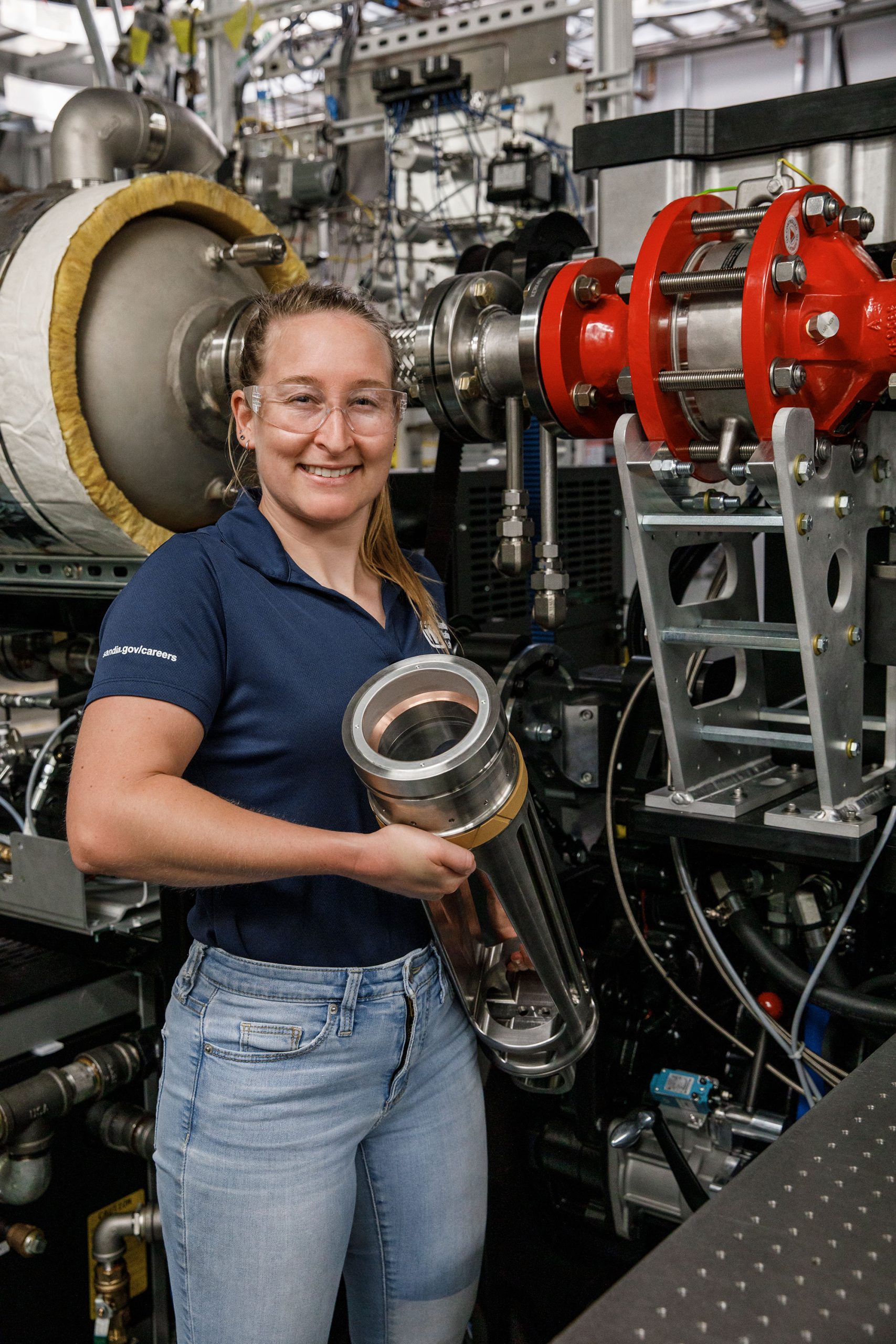
“The scope was pretty large,” Kyra said. “We started with a base, 6-cylinder production engine. We had to manage both the modification of a production engine into a single-cylinder configuration and the conversion of a metal engine into an optically accessible engine.”
They also had to redesign existing systems to provide engine oil, coolant and other necessities.
“We could not reuse a lot of the previous infrastructure that we had in place,” Kyra said. “Because of the increase in optical access, we had to reorient many of the main systems. The new engine runs at significantly higher peak pressures while also incorporating significantly greater optical accessibility. This drove major changes to laboratory infrastructure and the optical engine design.”
The team of scientists, engineers and Facilities workers had to rethink nearly every aspect of the lab, all within the same basic footprint.
“There is a balance between reusing what we can and engineering new solutions for what we cannot,” Kyra said. “That balance allows us to leverage past learning to efficiently install new hardware, so that new experiments can start as quickly as possible.”
It was about far more than simply laying out the space. She also had to think about how the engine would operate in a new configuration, with new requirements balanced by novel capabilities.
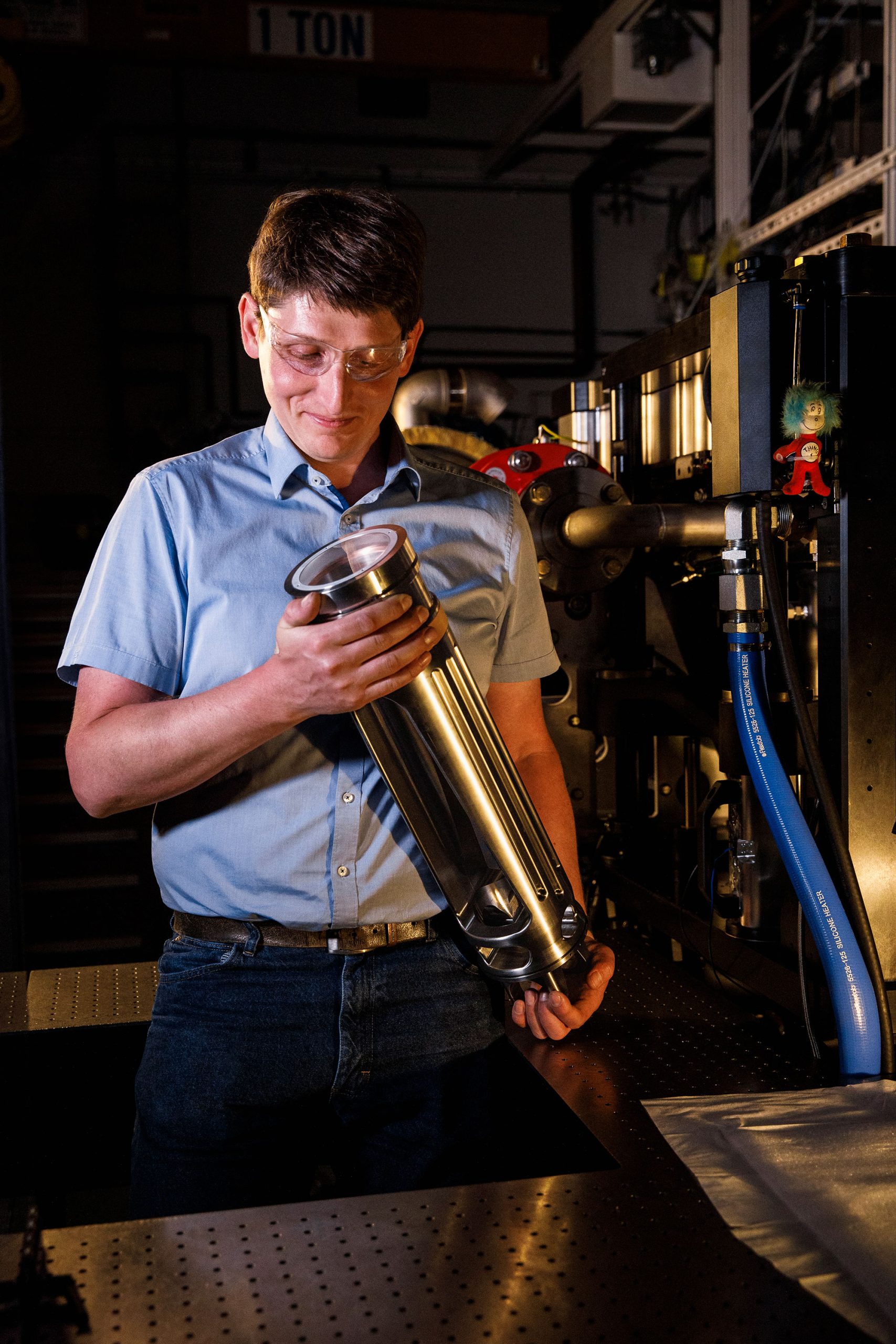
“In an optical engine, components that would normally be made of solid metal are replaced with glass windows,” she said. “This allows researchers to look through the piston itself to see the combustion event happening above. Replacing metal components with glass presents a variety of engineering challenges.”
The engine must also be modified so that it operates as similarly as possible to the production engine.
“One capability that we have is that the top of the piston is removable from the base,” Kyra said. “We can swap out the top part to investigate different bowl geometries or to achieve different compression ratios. This allows us to efficiently support a wide range of combustion research by facilitating quick switches between fueling methods or fuel types. We can take full advantage of the fuel-flexible base design from Cummins.”
Firing on all cylinders
Ales knows the lab is set up not only to help usher in the next several generations of combustion engines, but also to tackle problems no one has previously been able to study.
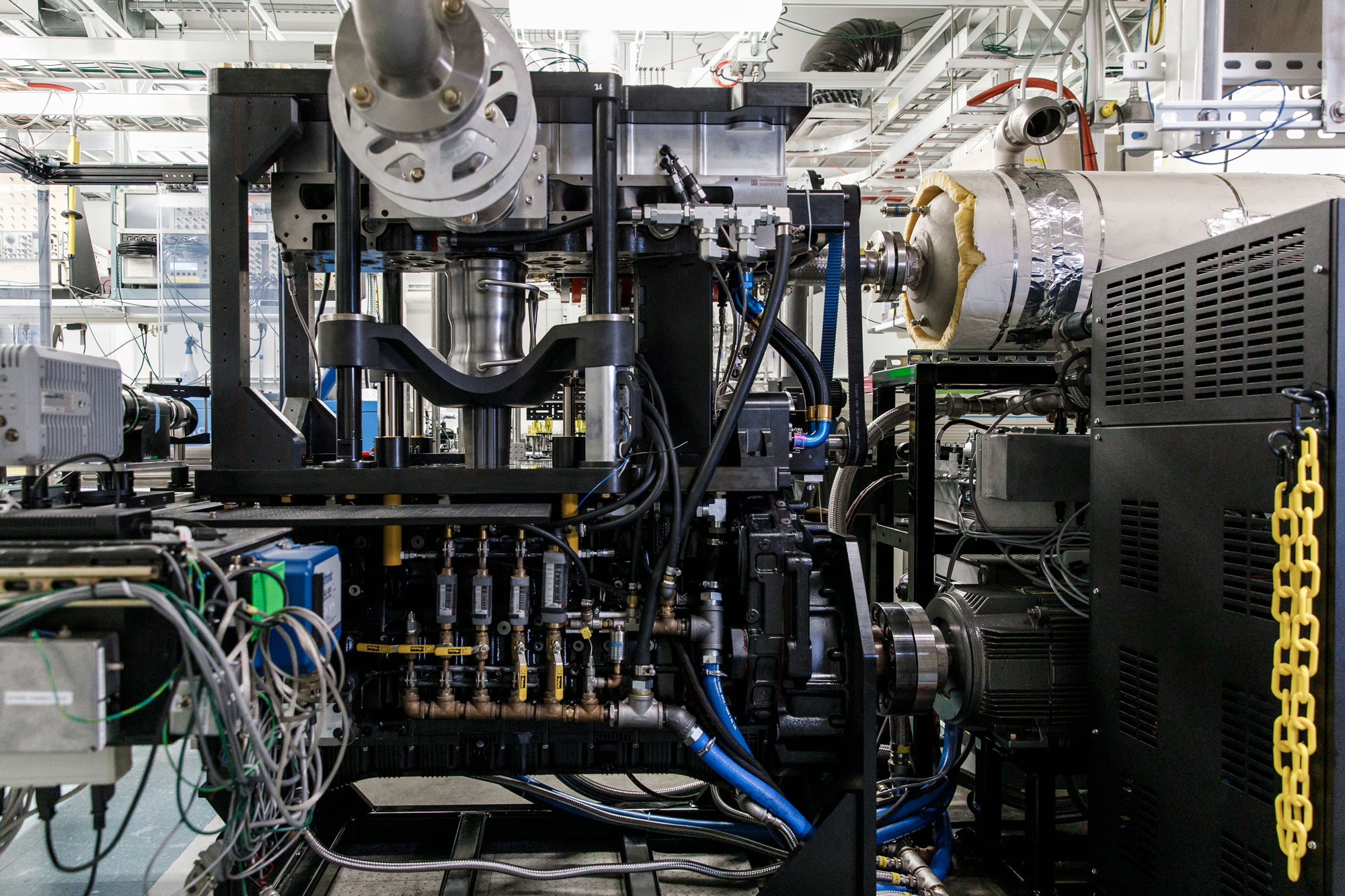
“We definitely designed it with flexibility in mind,” he said. “We can closely reproduce our partner’s hardware and then use our optical diagnostic capabilities to deliver insights into potential challenges, barriers or unknowns that they have. Alternatively, we can deliver validation data to them that they can use for their own workflows.”
The new setup paid dividends almost immediately. Sandia entered into a Cooperative Research and Development Agreement with Noble Thermodynamics Systems Inc. of Alameda, California. The company is exploring combustion concepts in which nitrogen is substituted with argon as the working fluid.
“This brings several advantages,” Ales said. “Engine efficiency can be significantly improved while simultaneously eliminating the formation of nitrogen oxides. The old engine would not have been suitable for this concept.”
Engine of the future
That study was just the first novel experiment made possible by the upgraded lab. New opportunities are also emerging beyond traditional vehicle applications. Growing investment in AI data centers and their associated power demands is increasing interest in advanced stationary engine concepts for on-site power generation, grid support and flexible operation. This promising new area for combustion research will benefit from lessons learned from this upgrade and lead to future test rigs tailored to power-generation engines.
“We’re really starting to work into the future here,” Ales said.
As for Kyra, the rebuild demonstrated one of Sandia’s core strengths — multidisciplinary expertise.
“I’ve loved working on it,” she said. “It has been challenging, but very rewarding. There is a wide network of folks who have shared their expertise to help bring this laboratory to life. I am fortunate to have had the opportunity to work with such a variety of talented people.”