
Labs’ longest-tenured employee reflects on career at Sandia California
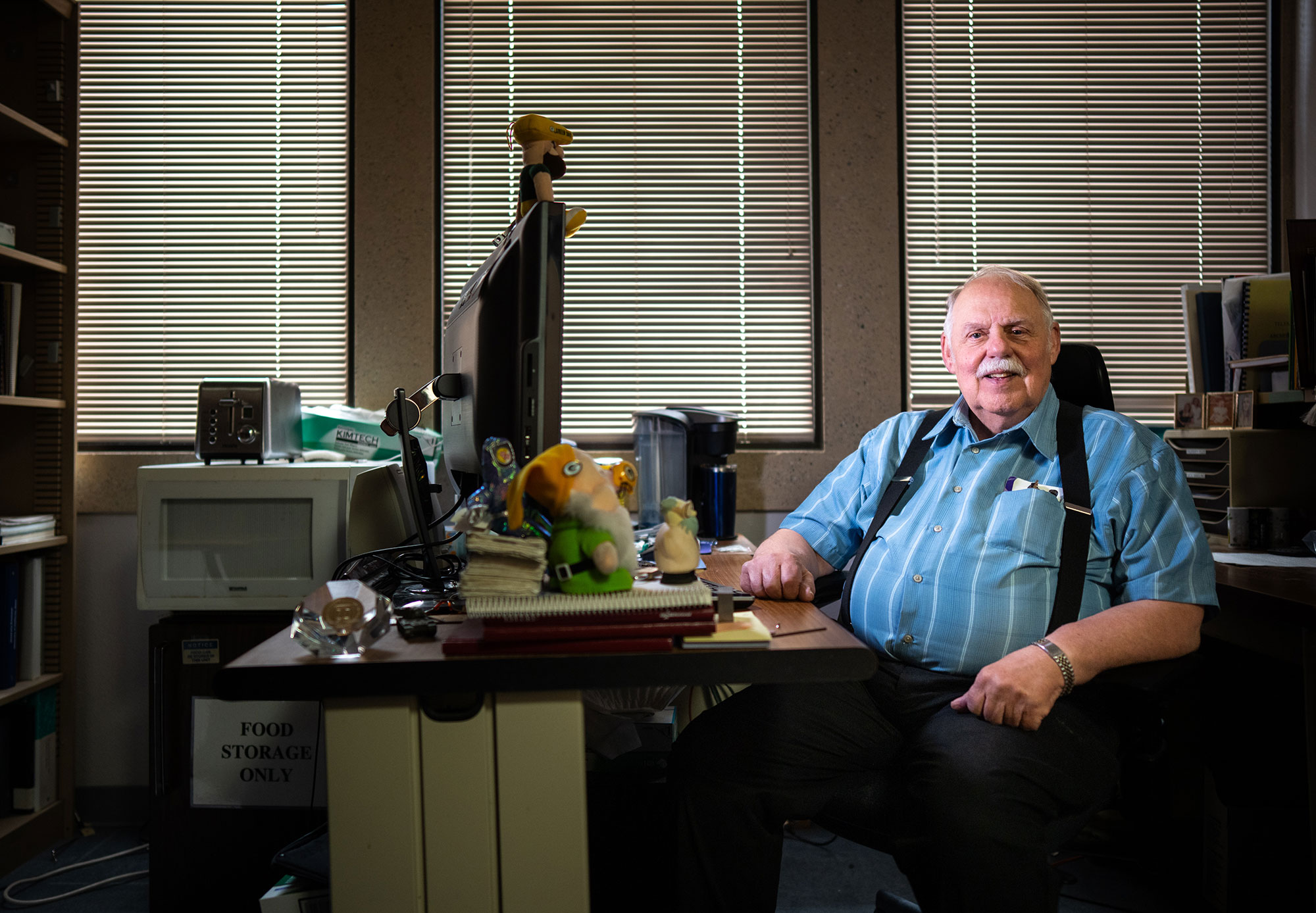
During nearly 57 years with Sandia, Gary Kirchner has worked with the first commercial astronauts, had one of the first minicomputers at the California site, traveled to the Marshall Islands and influenced his daughter to become a Sandian too.
“Sugar, Sugar” by The Archies was the No. 1 song and “Butch Cassidy and the Sundance Kid” was topping the box office on Oct. 2, 1969, when Gary started his Sandia career — earlier than any other employee still at the Labs.
“If nothing else, my path here has been extremely diverse,” said Gary, currently an electronics engineer for telemetry systems at the Livermore site.
Born and raised in Wisconsin, Gary went to Chicago after high school to earn an associate’s degree in electrical engineering from what is now DeVry University. Sandia representatives came to DeVry to interview graduating students, and he was one of five students hired. Four new hires, including Gary, came to Livermore, and the other went to Albuquerque.
“I’m the last one standing,” Gary said. “Most of them left after a couple years because their lives and family were back home.”
Settling into Sandia
Although not familiar with Livermore himself, Gary started a technician position working with R&D staff for materials research. One of the first people to occupy a building still in use, he began programming in Fortran on one of three minicomputers at Sandia California using narrow paper tape on a Teletype Model 33 ASR that ran at 10 characters per second.
“It would take almost an hour to compile the program and finally be able to execute it,” he said.
The other technician on the team was Orval Wallen, one of the original Sandians at the California site when it was established in 1956. They helped research how materials react at high temperature and high pressure.
“It was interesting,” said Gary, who added that among the three team members, “we had the entire building to ourselves.”
In the 1970s, Gary moved into the telemetry department. That work included tester development, system administration and operations of several Unix workstations for schematic capture and printed wiring board development. In the early 1980s, he also used a Unix machine to develop software for a solar heliostat installed on the hill in Livermore at the time.
Further into the 1980s, his telemetry tasks involved developing thermal cameras to survive in space for the Strategic Defense Initiative, colloquially known as Star Wars.
When that project ended, Gary used his telemetry programming skills to support a project starting in the mid-1990s called ARM-UAV, the Atmospheric Radiation Measurement-Unmanned Aerospace Vehicle program.
Telemetry tales
Funded by DOE, the ARM-UAV program focused on measuring atmospheric radiation data in collaboration with agencies that included NASA, other national labs and universities.
ARM-UAV took Gary to locations around the country for test flights, including Edwards Air Force Base in California, the DOE Cloud and Radiation Testbed facility in Oklahoma, and the Pacific Missile Range Facility near Sandia’s Kauai Test Facility in Hawaii for a month.
Working in Hawaii may have its perks, but Gary didn’t have much time for sightseeing.
“It was a good time, but it’s different when you’re on deployment,” he said. “The place sort of disappears. The nice aspect is you are singularly focused on doing your work out there.”
Gary’s contributions to ARM-UAV earned him a new job title of engineer. In the 2000s, he transitioned to be the lead telemetry staff member for a program called Aura based in Albuquerque.
The Aura lidar system was designed to fly on the Altus unmanned aerial vehicle and was used in successful ground field tests to determine the sensitivity of bioaerosol measurements.
The project also involved a manned aircraft called the Proteus, and two of the pilots were Mike Melvill and Brian Binnie, the world’s first and second commercial astronauts.
“Knowing the first civilian astronaut — or actually, both of them — is kind of cool,” Gary said.
When the unmanned aerial vehicle projects were winding down, Gary continued to work in telemetry for nuclear deterrence, which he has been doing for more than 20 years.
“For a ‘temporary assignment,’ that’s not bad,” he said.
Family and flexibility
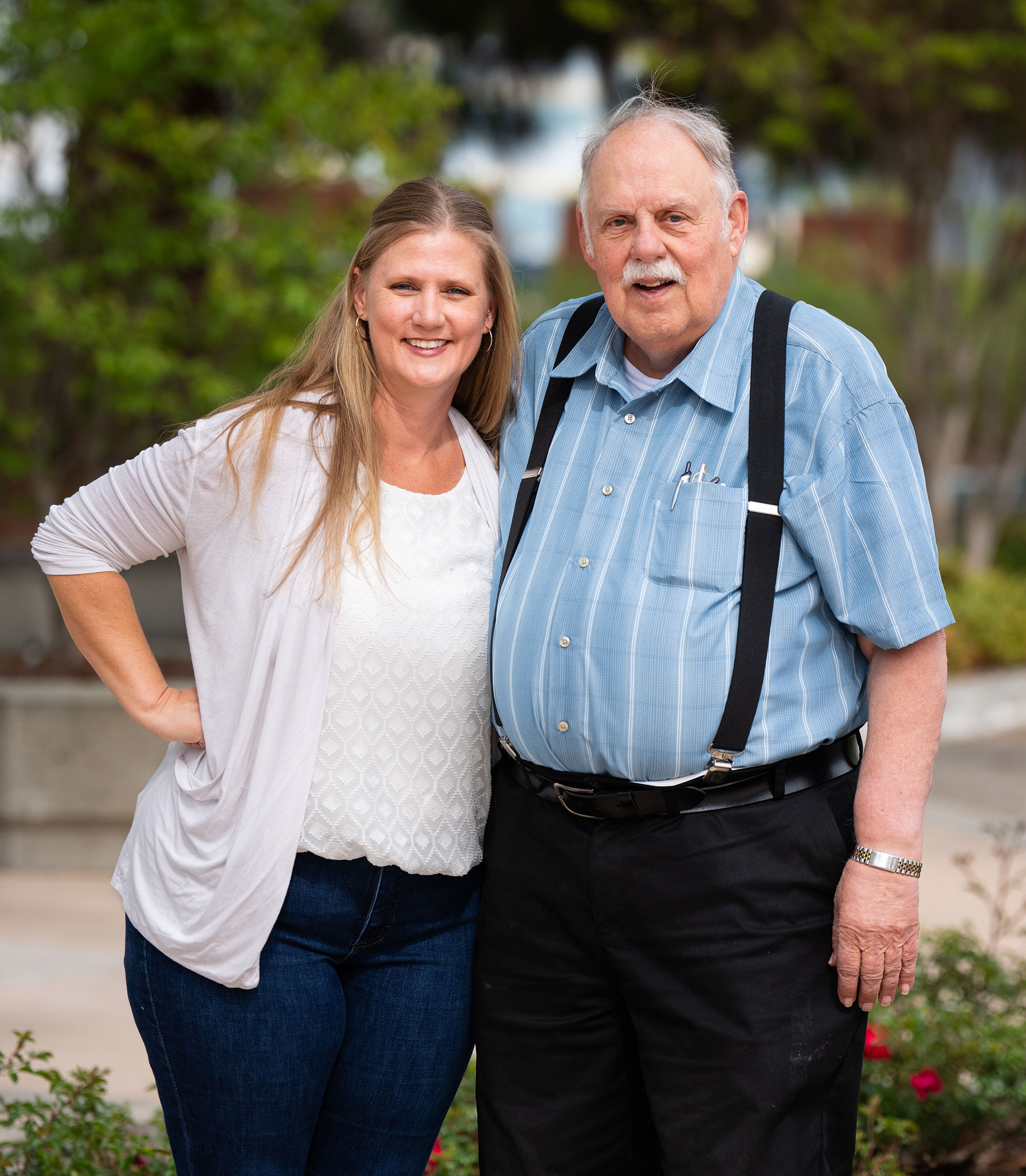
Aside from hanging out with astronauts or traveling to Kwajalein Atoll in the Marshall Islands for test flights, Gary is thankful for the flexibility Sandia has offered through the years. Being able to prioritize family outside the office has been key to a satisfying work-life balance — something his daughter, Hollie Moore, noticed as she was growing up that eventually swayed her to look for a job at Sandia.
“My dad was always able to be there,” Hollie said. “One of the main reasons for the appeal of Sandia was wanting to work somewhere that allowed you to be there for your family and your life.”
Hollie, now an information assurance specialist, has been with Sandia for 25 years. She remembers visiting the site with her dad for various versions of what is now Kids Day.
Hollie appreciates her dad’s history with the Labs and his status as the current longest-tenured employee.
“It’s a very neat achievement,” Hollie said. “It’s one thing to be number one at the California site, and it’s a whole other to be number one at all of Sandia. I think it’s pretty awesome.”
Gary said getting to interact with his daughter occasionally for work purposes is a bonus, and he’s proud to see where she’s taken her Sandia career.
The joy of the job
Through the better part of six decades, Gary has seen many changes at Sandia — everything from advancing technology to watching the California site grow in size.
He considers himself a “behind-the-scenes type,” making sure people have the resources and tools necessary to do their jobs. “That’s where I’m comfortable,” he said.
Experiencing the diverse opportunities of both the past and present keeps Gary engaged and excited about his career.
“That’s the rationale for sticking around — I am still enjoying it,” he said. “This is my hobby.”