
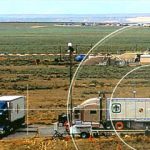
Successful crash test meets major milestone for nuclear deterrence program
Sandia and partners conducted a successful full-scale MGT crash test this summer, meeting a major NNSA milestone. The test involved using the Labs’ sled track and rockets to propel a tractor-trailer into the MGT prototype.
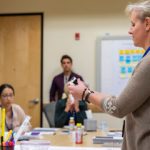
O’Hara named 2020 ‘Woman Worth Watching’
Sandia systems engineer Carrie O’Hara has been selected as a 2020 Women Worth Watching award winner by Profiles in Diversity Journal. The awards, in their 19th year, recognize dynamic professional women who are using their talents and influence to change our workplaces and our world.
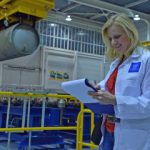
How to multitask when nuclear nonproliferation is on the line
New cognitive science research from Sandia shows that while maps can help you identify landmarks while being escorted, using one also limits situational awareness and knowledge of surroundings not on the map. This finding is one of several coming from a three-year project that paired cognitive scientists and nuclear safeguards experts to conduct human performance tests and develop recommendations for inspectors.
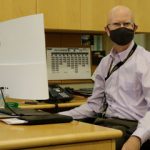
A year of change
Lab News sat down for a conversation with Associate Labs Director Andy McIlroy, head of the Integrated Security Solutions Division, as he starts his second year in that role following a year permanently marked by a new reality for Sandia and the nation.

Rose Gottemoeller: The importance of science diplomacy
Rose Gottemoeller spoke to Sandians in a video conference on July 28 in honor of the 25th anniversary of the Labs’ Cooperative Monitoring Center. The talk was part of Sandia’s National Security Speakers Series.
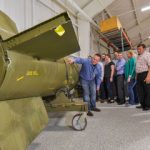
Weapon Intern Program graduates 25th class
Sandia’s Weapon Intern Program has graduated 25 classes in 22 years. The program was created in 1998 to accelerate the learning process and transfer decades of knowledge and experience in all phases of the nuclear weapon lifecycle, from experienced weaponeers to the new generation of stockpile stewards.
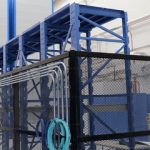
Expanding testing capacity for Sandia weapons modernization programs
The Sandia Programs Engineering and Assembly Research facility, or SPEAR, is the newest facility in nuclear weapons systems engineering at Sandia’s California site, expanding the Labs’ capacity to assemble and electrically test nuclear weapons components and systems.
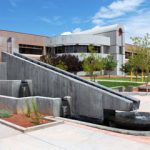
Building Sandia: Home of the MESA Complex
Part three in the Building Sandia architecture series explores the Microsystems and Engineering Sciences Applications Complex, or MESA, which is set apart aesthetically and functionally from other buildings and sites at the Labs.
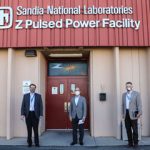
DOE Under Secretary visits Sandia
The Honorable Mark Wesley Menezes, DOE under secretary of energy, visited Sandia’s Albuquerque campus on July 8 to tour facilities and attend briefings showcasing the Labs’ energy program and other national security contributions. He was accompanied
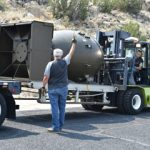
Fat Man sent to Nevada atomic museum
Sandia, DoD and DTRA have moved a Manhattan Project Fat Man weapon shell from 1945 from the Labs' Manzano Mountain storage area to the National Atomic Testing Museum in Las Vegas, Nevada. The weapon is part of an exhibit marking the 75th anniversary of the Trinity nuclear test.