
Microwave-based method to upcycle old lithium-ion cathodes
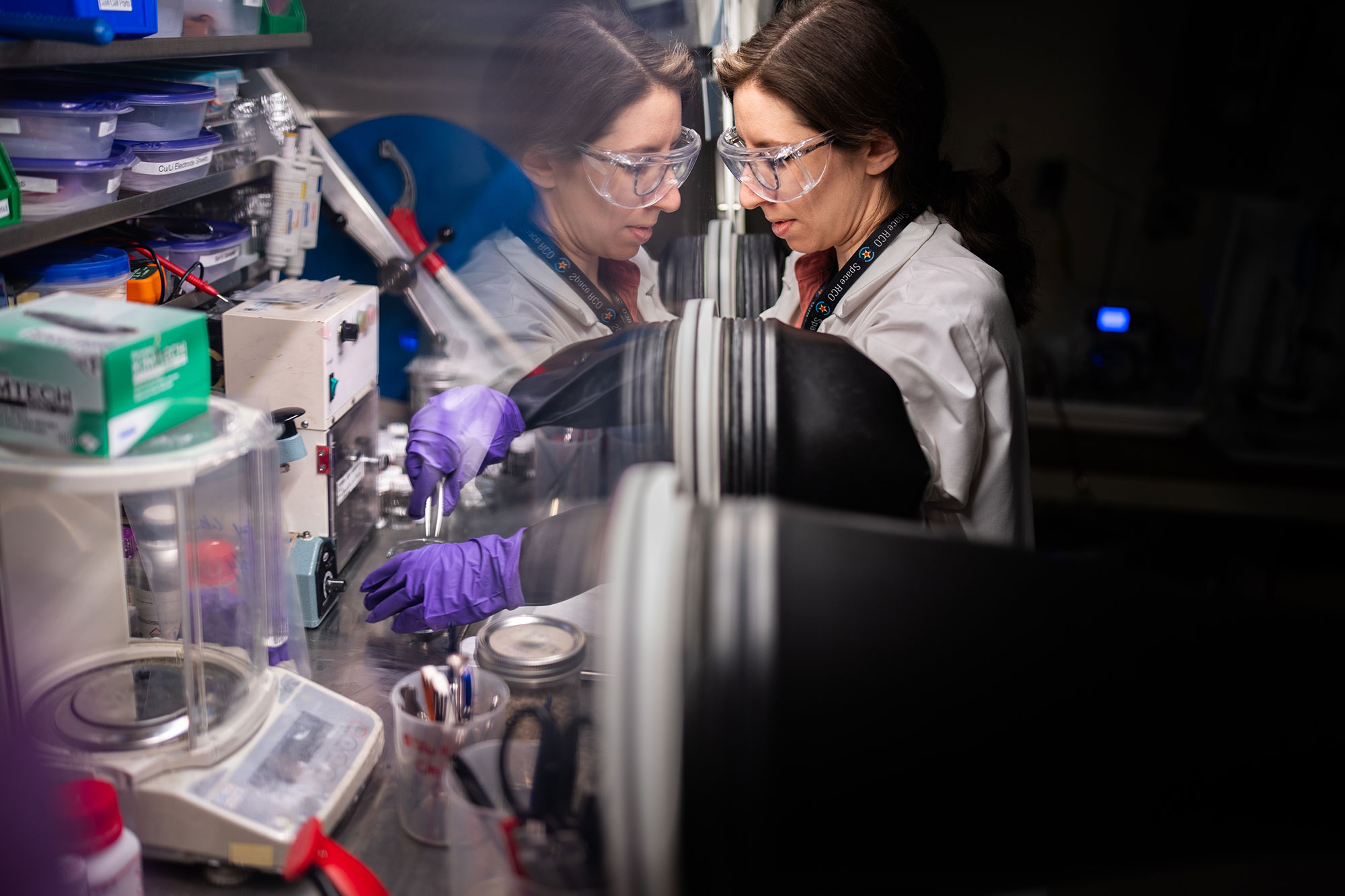
Instead of letting old lithium-ion batteries pile up as waste, Sandia researchers have developed a microwave-based process to recover and remake their cathodes, potentially turning spent batteries into a new domestic source of critical materials.
Lithium-ion batteries power everything from phones and electric vehicles to grid-scale energy storage and earbuds, but their cathodes — the part of batteries denoted by a plus sign — are expensive to make and rely on minerals sourced from a limited number of countries, including lithium and cobalt. The Democratic Republic of the Congo, for example, is responsible for mining about 70% of the world’s cobalt.
Sandia’s new method does more than recycle those cathodes: It upcycles them, transforming spent battery material into new cathodes that better match current industry needs while using less time and being more affordable than conventional high-temperature approaches.
“Cobalt is a critical material for almost all consumer electronics,” said Clare Davis-Wheeler Chin, a Sandia nanomaterials chemist and an inventor of the method. “Since there’s only one main source of cobalt, it would be very easy for the cobalt supply chain to just disappear. We’re about to have an abundance of old EV batteries that are either going to go to the landfill or that we can mine to develop a domestic supply.”
Opening cathodes in a microwave
In a battery, the cathode is the positive electrode, where lithium ions meet electrons from outside the battery.
Using a microwave reactor — similar in size and power usage to a household microwave oven but more adjustable — and a large positively charged ion, the researchers can open old cathode powder into tiny layers called nanosheets. The large positively charged ion is akin to the active ingredient in hair conditioner.
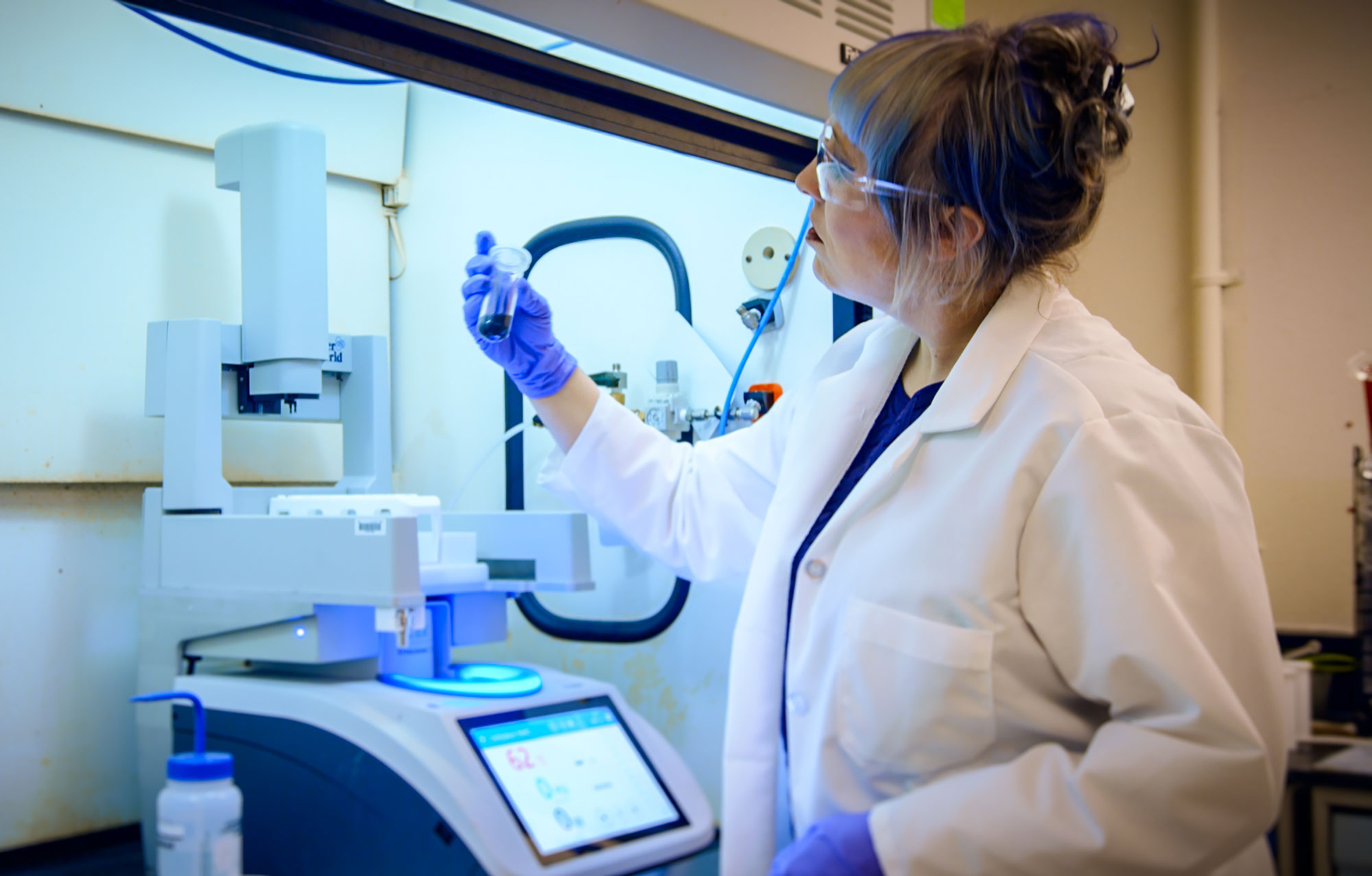
Microwaves are very efficient at heating water, Clare said. Additionally, the uneven heating that can be frustrating when warming leftovers turns out to be beneficial when breaking down cathode materials.
The microwave method cut the time needed to turn powdered lithium cobalt oxide, the most common cathode material from old lithium-ion batteries, into nanosheets from seven days to two hours, Clare said.
Kirsten Jones, a former Sandia intern and doctoral student at the University of New Orleans, was involved in developing the microwave method. The new method turns 95% of the material into nanosheets, compared with 60% previously.
Of course, batteries aren’t designed to be taken apart and mined, so there was significant work involved in getting cathodes out of old batteries and into a usable powder. That turned out to be more of a challenge than anticipated, said Kevin Leung, a Sandia computational materials scientist who led the Laboratory Directed Research and Development research team. This disassembly work was led by materials scientist Bryan Wygant using expertise from Sandia’s Battery Abuse Testing Laboratory.
Other methods for upcycling old
lithium-ion battery cathodes are being explored, especially at Argonne National Laboratory’s ReCell Center, Clare said.
“There are other DOE labs working on battery cathode recycling,” Kevin added. “We just have a different way of doing it. ReCell’s way of tweaking the cathode composition is pretty much the same way industry makes the cathode material in the first place, which involves putting everything in an oven and heating it to a high temperature. Our approach will enable low-temperature processes that avoid using so much energy.”
Swapping out cobalt for nickel
Why nanosheets?
“When you have nanosheets, ion exchange can access the entire sheet and you can maximize the amount of critical materials that can be exchanged,” said Aliya Lapp, a Sandia electrochemist with expertise in galvanic ion exchange.
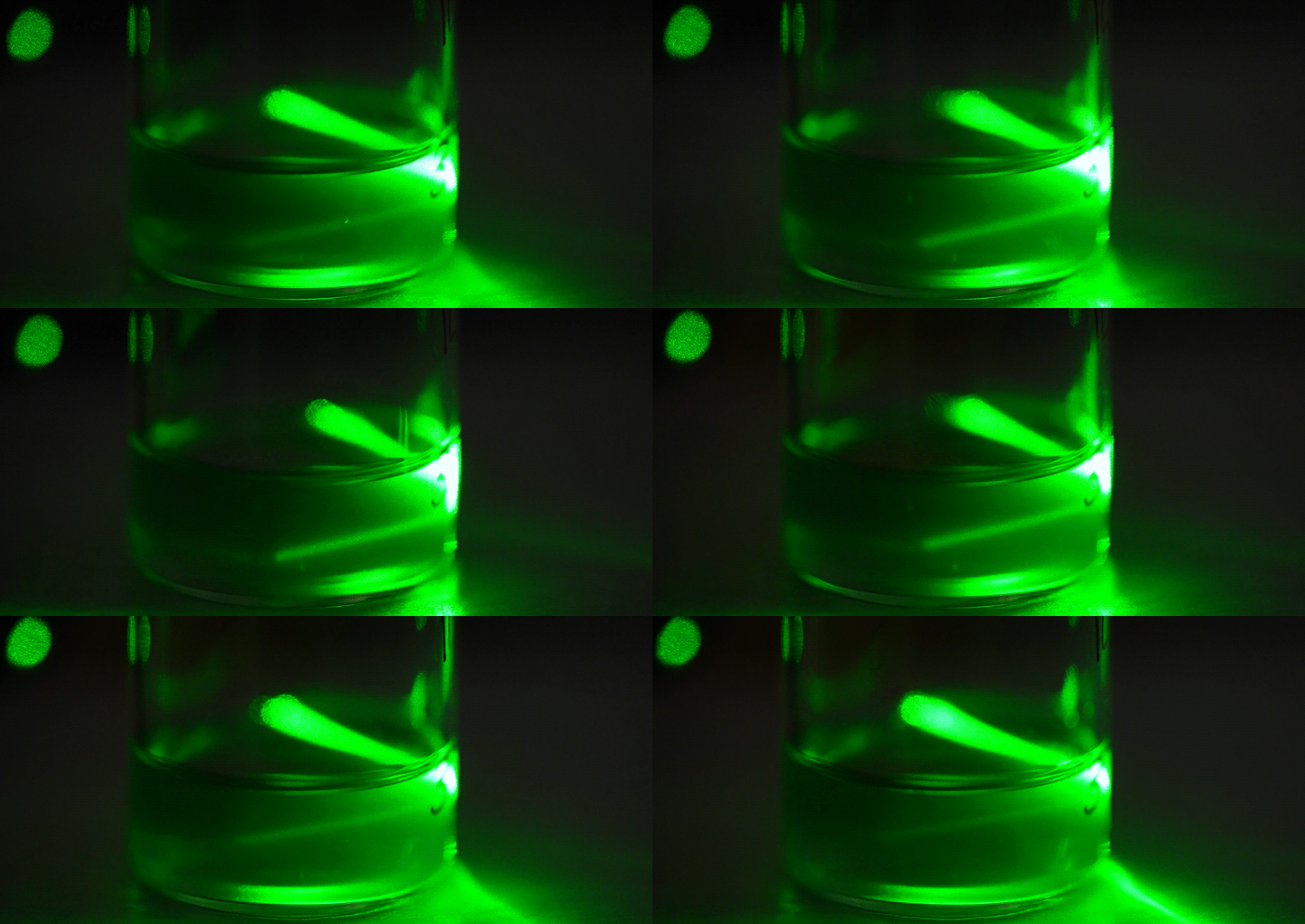
That matters because nanosheets are easier to work with, allowing scientists to swap metal ions within the material to keep up with industry trends, Clare said. For example, the auto industry has found better cathode performance after substituting some of the expensive cobalt with cheaper nickel, Kevin said.
“This is important because by the time we’re recycling one of these cathodes, 10 to 15 years have passed since it was made, and industry trends can change dramatically in that time,” Aliya said. “This ensures that the cathodes we produce match current trends.”
Additionally, the nanosheet method automatically fixes microscopic defects in the cathode material created over years of use and even removes impurities, Clare said. Existing methods of cathode recycling cannot “heal” these defects without many additional steps.
The cobalt removed from the
nickel-substituted cathode can then be captured and used in an additional cathode, effectively producing two new cathodes from one old one, Aliya said.
Anastasia Ilgen, a Sandia geochemist, developed a metal organic framework-based method to selectively capture the swapped cobalt from the reaction mixture.
In fall 2022, Kevin conducted computer simulations to see whether exchanging metal ions would even be possible. The density functional theory calculations showed that the swap would not be spontaneous but wasn’t too unfavorable or too slow, he said.
Then the team led by Candace Chan, a professor at Arizona State University, conducted proof-of-concept ion-exchange experiments. Using several methods, they showed they were able to swap out about one-ninth of the cobalt for nickel. Aliya joined the project later and provided guidance on ion exchange as well as on the most feasible and economically viable paths for upcycling cathodes.
Technology development underway
In spring 2025, Clare and Kevin participated in the DOE’s Energy I-Corps training program to further develop their microwave “mining” method into a technology. As part of the program, they interviewed 80 industry leaders in battery recycling to better understand industry challenges and the market environment, Clare said.
Aliya is working on improving the ion exchange in addition to a technoeconomic analysis of the method. A key challenge is ensuring that the cathodes created from mining old batteries are cheaper than importing new cathodes or cathode materials from other countries, she said. Preliminary analysis using an economic modeling tool developed by Argonne suggests that this method has the potential to increase cathode recycling profits by at least 30% compared to state-of-the-art recycling methods, she added.
The technology was submitted to the R&D 100 Awards this year. The team has filed two patents on the technology and is actively seeking industry partners for cooperative research agreements, licensing and Technology Commercialization Fund proposals.
“This method could also be extended to other types of battery cathodes such as sodium-ion batteries or zinc-ion batteries,” Aliya said. “As long as the cathode material is a layered intercalation compound, our method will work. This is a fantastic technology with a lot of potential.”
The researchers are continuing to refine the process, including improving the ion exchange and studying the economics of the approach. Still, the early results suggest old batteries could become more than waste. With further development, they could become a valuable domestic resource for the next generation of energy storage technologies.
The research was funded by Sandia’s LDRD program. The technology development was supported by the Energy I-Corps program.