
When a bright fireball streaked across the Alaska sky last spring, the usual tools scientists rely on to track such events — cameras and satellites — did not provide a detailed picture.
But the meteoroid left behind something else: low-frequency sound waves that traveled hundreds of miles and were captured by a dense network of earthquake and volcano-monitoring sensors on the ground.
Using those signals, a Sandia-led team of researchers, students and citizen scientists reconstructed the object’s path through the atmosphere, where it broke apart and where debris likely fell.
In a study published in the Journal of Geophysical Research: Planets, the team showed how low-frequency sound waves, faint ground vibrations, weather radar data and publicly shared videos can be combined to reconstruct a fireball’s path even when optical coverage is sparse or incomplete.
That matters for planetary defense because fast, reliable reconstruction after an atmospheric entry event can help scientists determine what happened, where debris may have fallen, its origin and whether there are any potential hazard implications. The research, funded by the Defense Threat Reduction Agency, is part of a broader effort to improve post-event assessments of objects entering Earth’s atmosphere, including both natural fireballs and space debris.
A signal that didn’t look like an earthquake
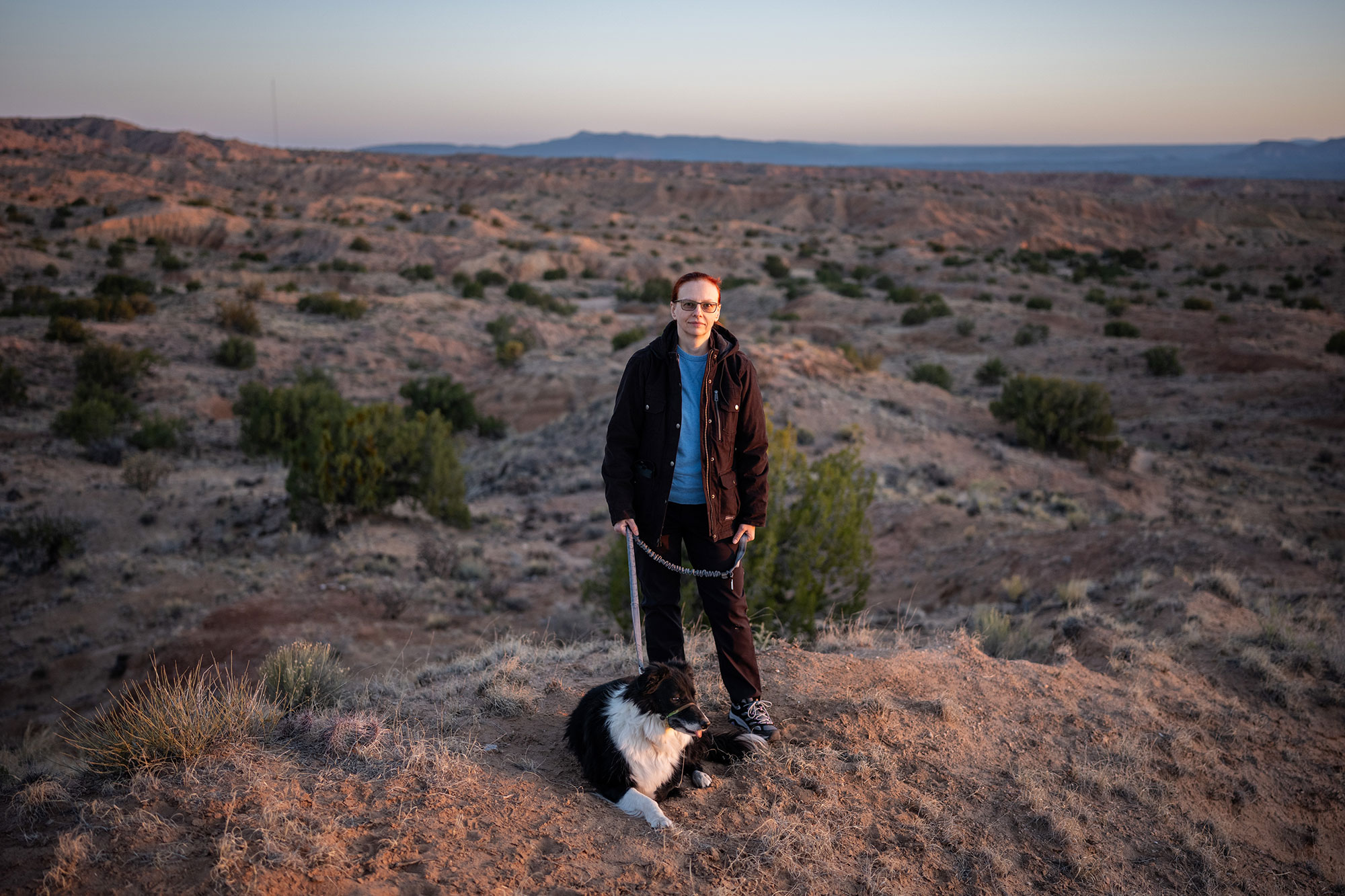
The investigation began the same day as the fireball itself. Logan Scamfer, then a research assistant at the University of Alaska Fairbanks, started looking into the signals appearing in the region’s seismic data. An analyst from the Alaska Volcano Observatory shared recordings of an unusual acoustic signal that appeared among the usual seismic data the sensors record.
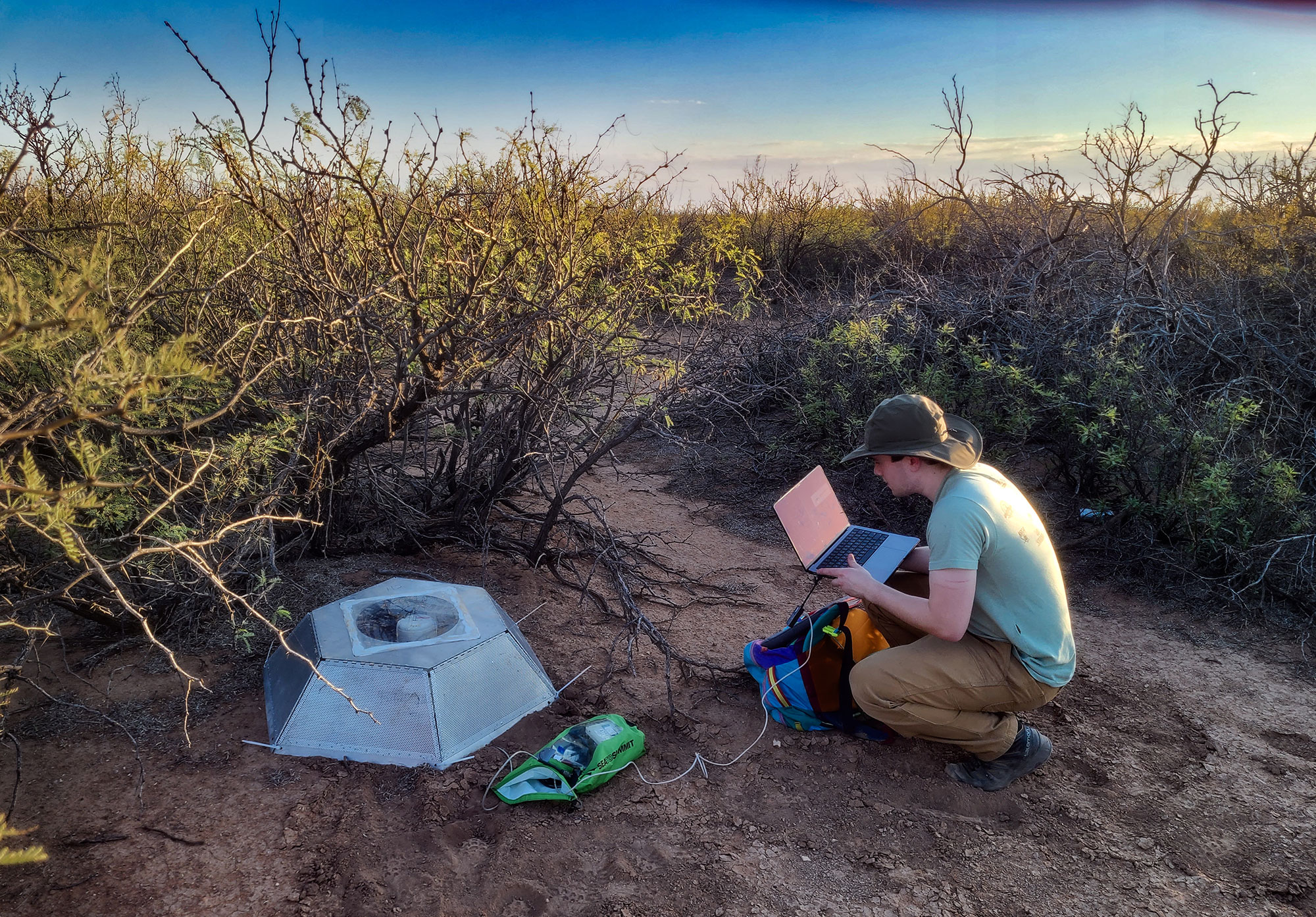
Logan started pulling up more stations across the region, and the same signal kept appearing. He then checked data from a sensor array south of Anchorage and found a clear N-wave, a shape often associated with decayed shock waves. He began to suspect the signals came from a meteor.
By late afternoon, news reports began circulating about a fireball seen over Alaska, confirming his initial suspicion about the source of the signals.
About a month later, Logan arrived at Sandia for his summer internship with physicist Elizabeth Silber, whose research focuses on using infrasound, a low-frequency sound too deep for people to hear, and seismic data to study meteors and other fast-moving objects in the atmosphere. Because this fireball wasn’t clearly detected by satellites or all-sky cameras, the pair decided to explore whether infrasound and seismic signals could be used to learn more.
“I had already planned to intern at Sandia, and I knew Elizabeth was an expert in meteor science, specifically when it comes to seismoacoustic signals from fireballs,” Logan said. “I shared my findings on this event with her, and it eventually became the main focus of my internship.”
He and Elizabeth started by looking for every seismic and acoustic signal they could find.
Elizabeth said the challenge — and the opportunity — was that this was not a planned measurement campaign with cameras and sensors already positioned in advance. The team had to rebuild the fireball’s flight from whatever data existed.
Elizabeth’s previous work recording and characterizing the infrasound and seismic waves generated by NASA’s OSIRIS-REx capsule reentry in a large, highly instrumented 2023 study helped inform the team’s study of the Alaska fireball.
“Listening” for a fireball
When a meteoroid flashes across the sky, it generates a powerful shock wave similar to a sonic boom but produced high in the sky and often along a long path. As the shock wave spreads, it can turn into infrasound. Some of that energy might also transfer into the ground. When the pressure waves reach the ground, they can create tiny vibrations that register on earthquake sensors.
“Alaska is exceptionally well-instrumented with infrasound and seismic stations because these systems are widely used for monitoring earthquakes and volcanic activity,” Elizabeth said. “That infrastructure also records the pressure waves and coupled ground motion produced when a meteoroid generates shock waves during hypersonic entry.”
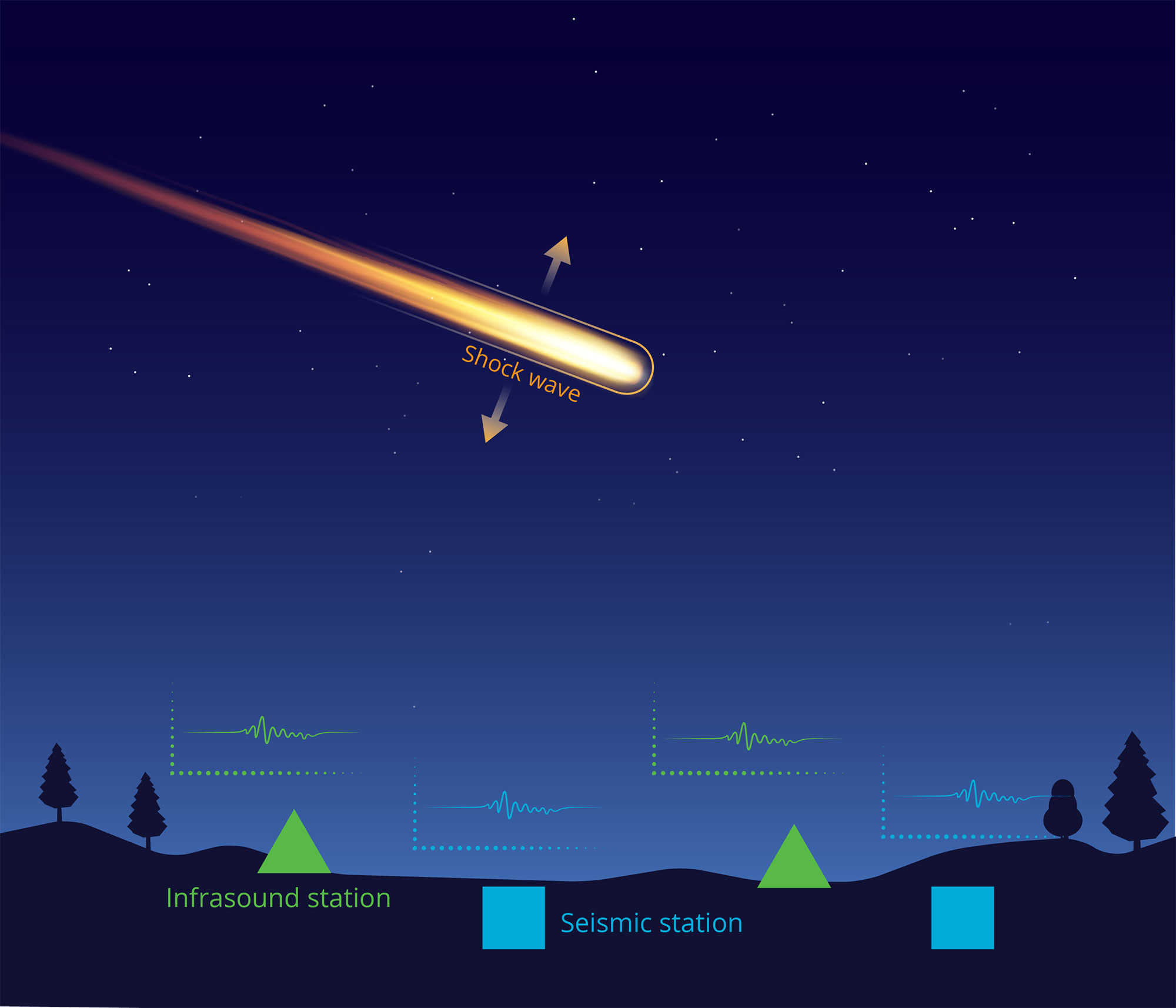
In total, 57 instruments picked up the Alaska fireball, including 37 seismic stations, 16 infrasound sensors and four infrasound sensor arrays. Some detected the event from about 360 miles away. That broad sensor footprint gave the team enough data to begin reconstructing the fireball’s path, even without the kind of optical record scientists would normally hope to have.
Using those ground recordings, the team rebuilt the fireball’s flight path, identified where it broke up and narrowed down where the debris likely fell. They shared the approximate location with a colleague at NASA, who used Doppler weather radar to search for and find the signature of falling debris. The radar doesn’t typically “see” the luminous fireball itself, Elizabeth said. Instead, in some cases, it can detect radio waves bouncing off the debris cloud as pieces fall.
The team then compared its sensor-based reconstruction with observations from dashcam and security camera videos shared by citizen scientists. They used calibration images of the night sky to help determine viewing geometry from the videos. Together, those independently gathered clues helped the researchers test and refine their reconstruction.
Combining the ground-sensor data, radar clues and video analysis, the team estimated the meteoroid entered Earth’s atmosphere at a shallow angle of about 19 degrees and traveled roughly 50,000 to 56,000 mph — fast enough to cross the United States in roughly three minutes. The team also estimated the event released energy equivalent to about 38 tons of TNT.
Reconstructing the flight path allowed researchers to estimate the object’s orbit around the sun before it hit Earth’s atmosphere, suggesting it likely came from the main asteroid belt. That is where many rocky objects in the solar system originate, making it a plausible source for this kind of meteoroid.
To the team’s knowledge, this was the first time scientists were able to locate signatures of meteorite debris on radar based only on guidance from seismoacoustic data. That distinction points to a promising new way to narrow down debris fall zones after future events, especially in places where visual observations are limited.
“My internship has been great, and I’ve been lucky to learn so many new things while being here,” Logan said. “Learning more about meteor science, as well as getting hands-on experience with infrasound propagation modeling, has both advanced my skill set and opened up new interests that I didn’t know I had.”
Faster answers
Because the event occurred in daylight and at high latitude, it was difficult to capture clearly with traditional high fidelity optical systems. The study showed that infrasound and seismic data can help fill those gaps, giving scientists a practical way to reconstruct fireballs after the fact.
“For planetary defense, infrasound and seismic data provide rapid, accurate post-event characterization,” Elizabeth said. “These reconstructions strengthen the ability to assess what happened, where and with what potential hazard implications soon after an event occurs.”