
Sandians build tiny robots to inspect pipes
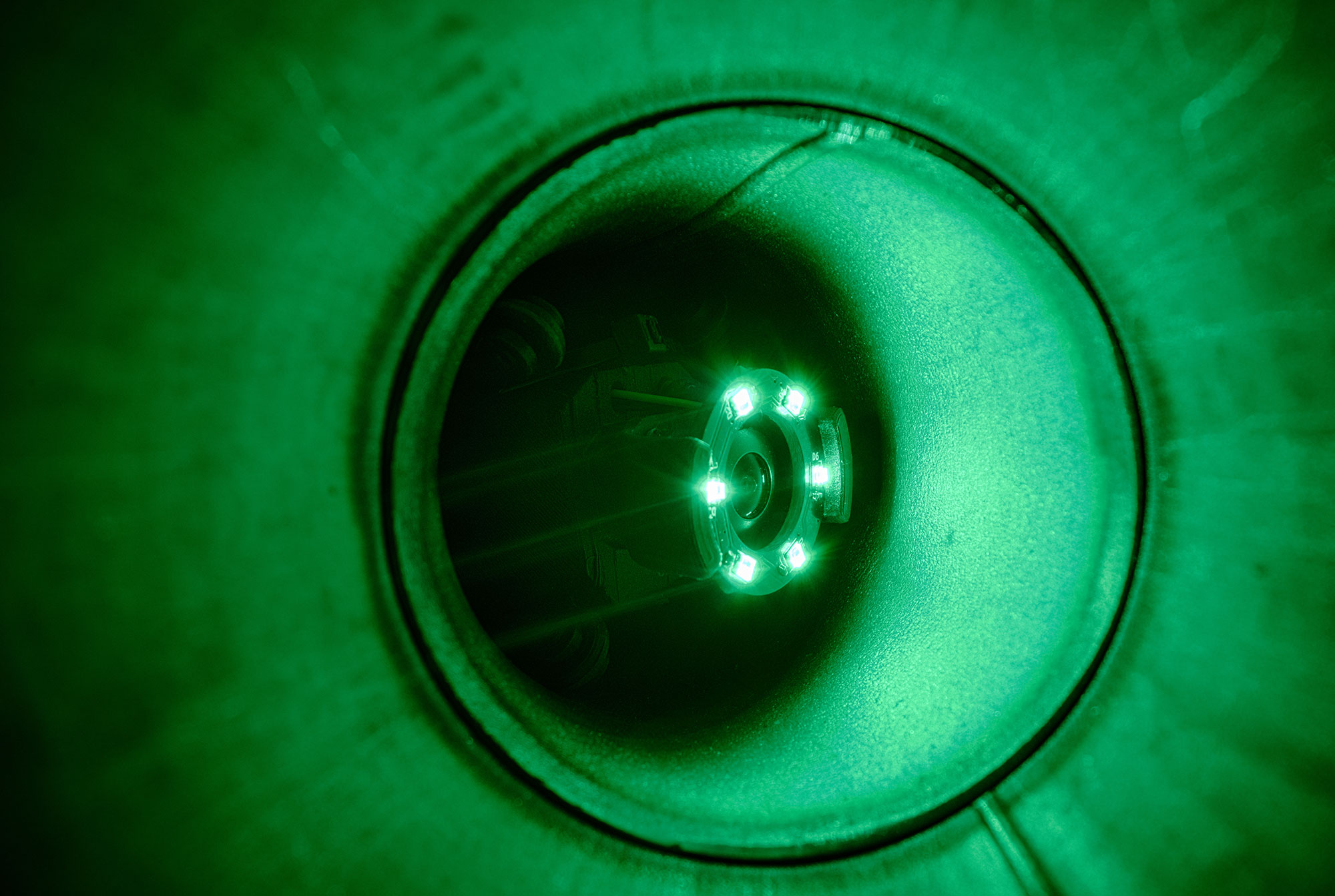
How do you inspect underground pipes that carry contaminated waste from the inside out? It’s a question the Hanford Site in Washington state has faced as it works to clean up the waste left by decades of nuclear production.
With no easy solution, Hanford turned to the national labs.
Sandia, and a tiny robot, have come to the rescue.
The Hanford Site pipe network
Hanford is a decommissioned nuclear production complex managed by the DOE. Located on the Columbia River, it was established in 1943 as part of the Manhattan Project and housed the world’s first full-scale plutonium production reactor. The plutonium produced at the site was used in the first atomic bomb.
What’s left at Hanford is radioactive waste in underground storage tanks that are connected by a network of pipes. These pipes are designed to transfer waste from one tank to another, but the pipes are decades old and must be inspected to ensure they are in good condition.
That presents an interesting challenge.
Challenging project
The pipes at Hanford are hard to access. They are underground, run hundreds of feet in various directions, are double-walled and measure as little as 2 inches in diameter.
Digging up these pipes for a visual inspection isn’t realistic or cost-effective. It also can’t ensure that pipes aren’t corroding from the inside out.
While sending tiny cameras inside the pipes might seem like the obvious solution, earlier attempts had limited success.
Traditional “push” cameras used for visual inspection could travel only about 10 feet at a time and were unable to maneuver tight 90-degree bends.
The team also tried volumetric inspections using ultrasound, but the conventional probes are often too bulky to navigate through smaller pipes with tight bends.
That is where Sandia and its well-established microrobotic expertise came in.
Tiny solution
A Sandia team led by mechanical engineer Steve Buerger believes the solution is a tiny robot designed to propel itself through the pipes.
Sandia is considered an early pioneer of microrobotics, even lending nine of its robots to the Smithsonian to highlight its contribution to the field.
“When we saw this need, we thought this is an area we can leverage some of those past works, do something unique and really help with a very big problem,” Steve said. “Sandia has made a lot of strides in making systems that are very small but still large enough to do real physical work.”
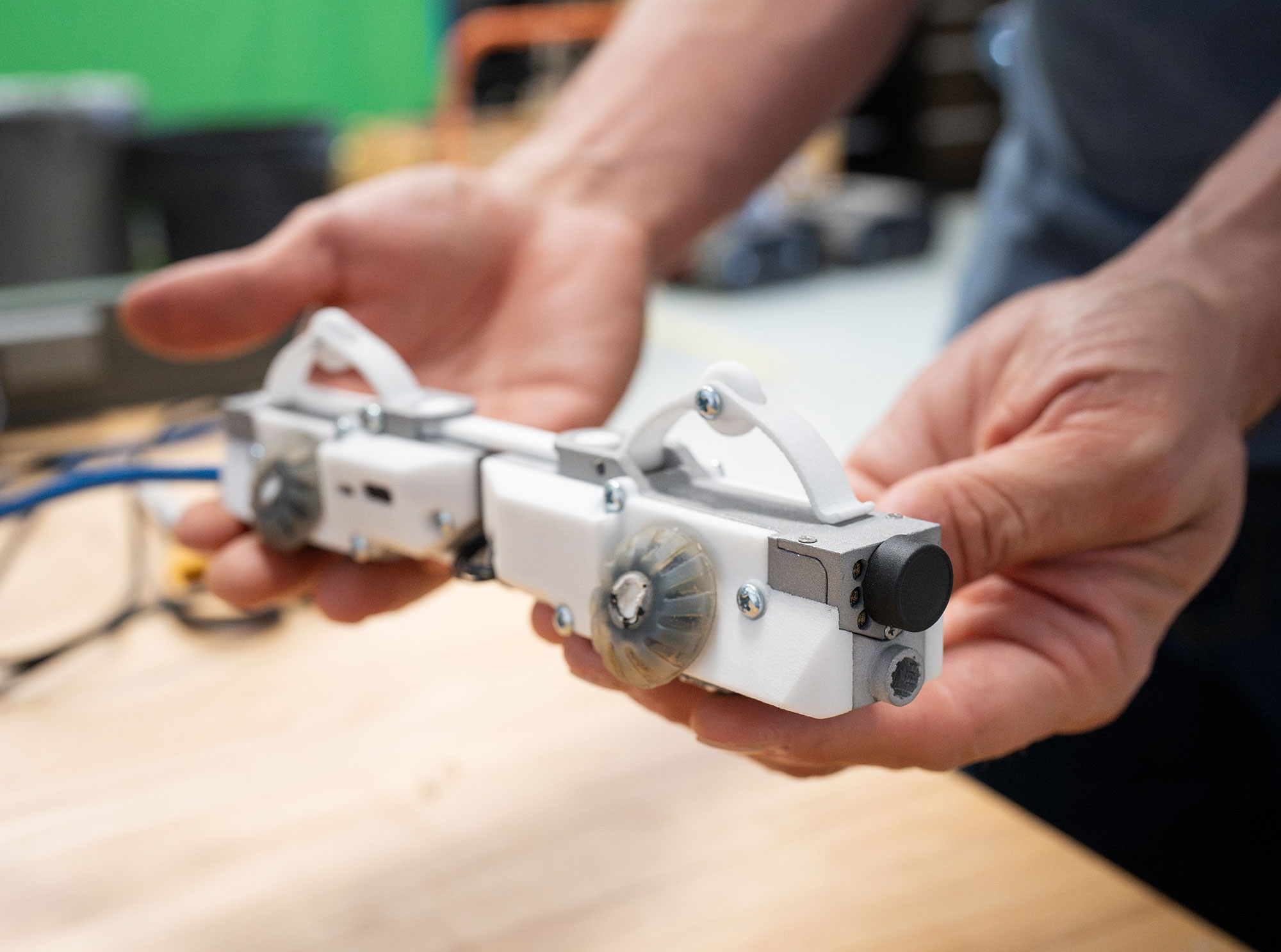
Steve and his team, which includes Daniel McArthur, Derya Tansel, Clint Hobart and Josh Ortiz, came up with a robot called SPIINE, which stands for Self-Propelled Interior Inspector for Non-destructive-testing Examination.
The robot is tiny in stature, measuring only 2 inches by 8 inches, but mighty in its abilities.
It has a multi-axis body, adaptive wheels, steering capabilities and a high-resolution camera with adjustable LED lighting. Its motors are powerful enough to not only transport itself but carry a payload, such as an ultrasonic or electromagnetic field probe to measure pipe thickness. Operators control it with a standard video game controller.
“Our initial target is just being able to get eyes in the pipe,” Daniel said. “The goal is to be able to inspect for corrosion or other types of damage like cracks or anything that would raise a concern.”
With few access points in the Hanford pipe network and hundreds of feet of pipe with multiple 90-degree turns to navigate, this robot had to do what other devices couldn’t.
“We wanted a flexible body to let the pipe sort of guide the robot,” Steve said. “It’s really designed to conform to those pipe walls, roll in the pipe and steer and reorient itself if needed. It must handle a lot of things like T-joints and even making decisions on which way to go.”
Years of work
The SPIINE robot has undergone several updates and revisions since the project began more than two years ago. Getting it just right has not been easy.
“One of the first challenges was tires. We’re using elastomeric or stretchy materials for things like the wheels,” Steve said. “We had to do a lot of experimentation with different compounds to figure out what would interface best with pipe walls.”
They also had to consider the tiny motors and the big mission.
“We had to figure out what would do best at transmitting power efficiently,” Steve said. “Remember, you have really limited forces from those small motors. The robot must be able to move itself along and pull payloads.”
The robot must also overcome obstacles protruding from the pipe walls and navigate loose matter such as liquid sludge or caked deposits.
Then there are the hundreds of feet it must travel in one trip. SPIINE is designed to use a single cable that can transmit power and data to and from the robot while also bearing mechanical loads. It’s also designed to allow multiple robots or propulsion modules to be tied together in a series and additional payloads to be attached.
“There was a strong sort of experimental piece there that went with this,” Steve said. “We had to tackle the idea of being able to propel the robot at multiple points along the cable. When you’re dealing with very long distances and a cable in between with multiple bends, there’s something called the capstan effect where basically, the more bends you go around, the more you build up force required to drag a cable. With multiple bends, it gets really bad, really fast.”
Think about a hose getting wrapped around a tree or another object. You pull, but the harder you pull, the more it tightens, requiring greater force to free it. If you have multiple robots propelling the cable between the wraps, you reduce that effect. The team believes it’s solved that issue.
Challenges ahead
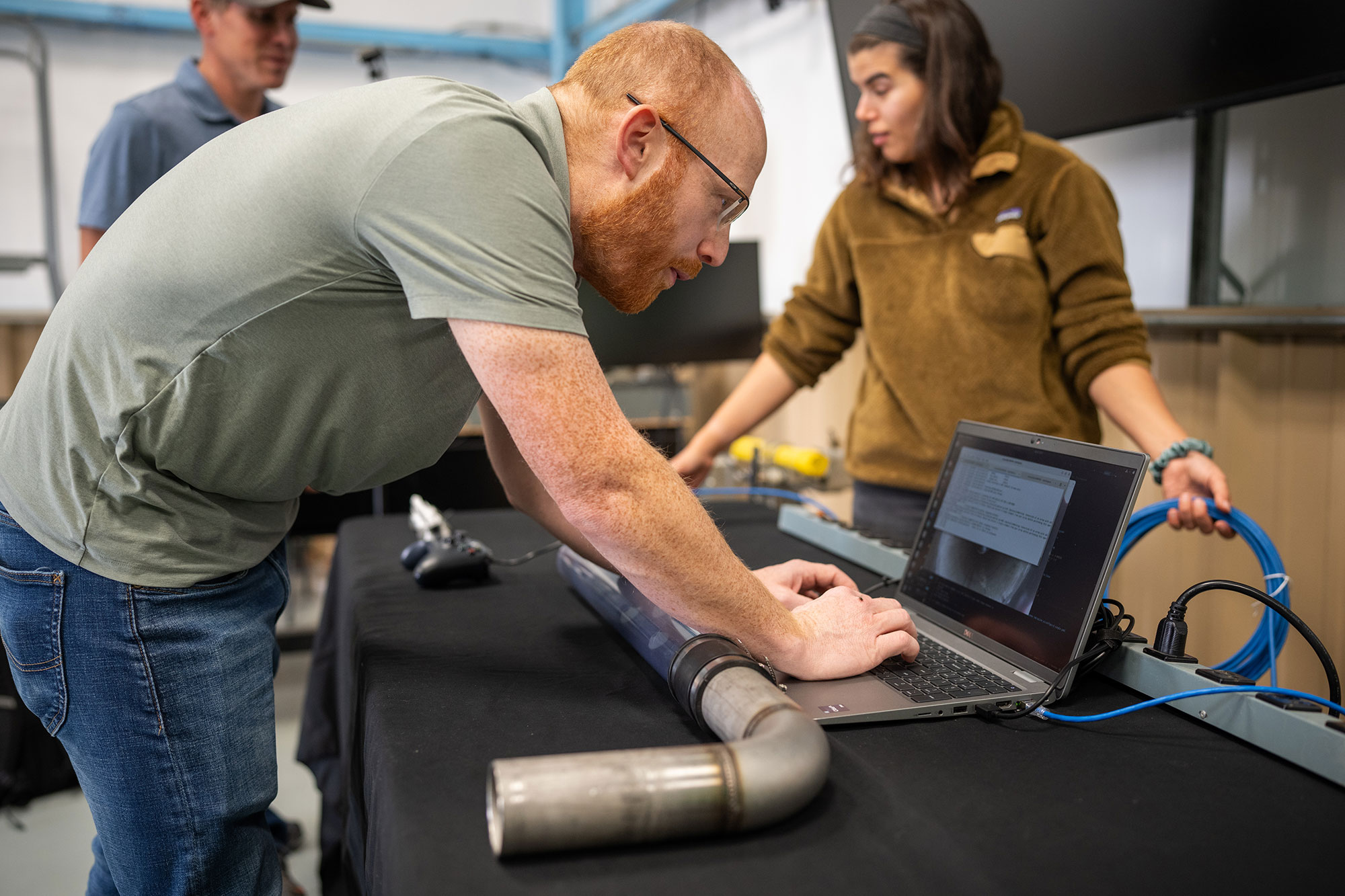
The next step is to test the robot in the real world. Tests at Sandia have been successful but seeing SPIINE at work at Hanford site could reveal new challenges.
The team already knows of some issues it will have to tackle.
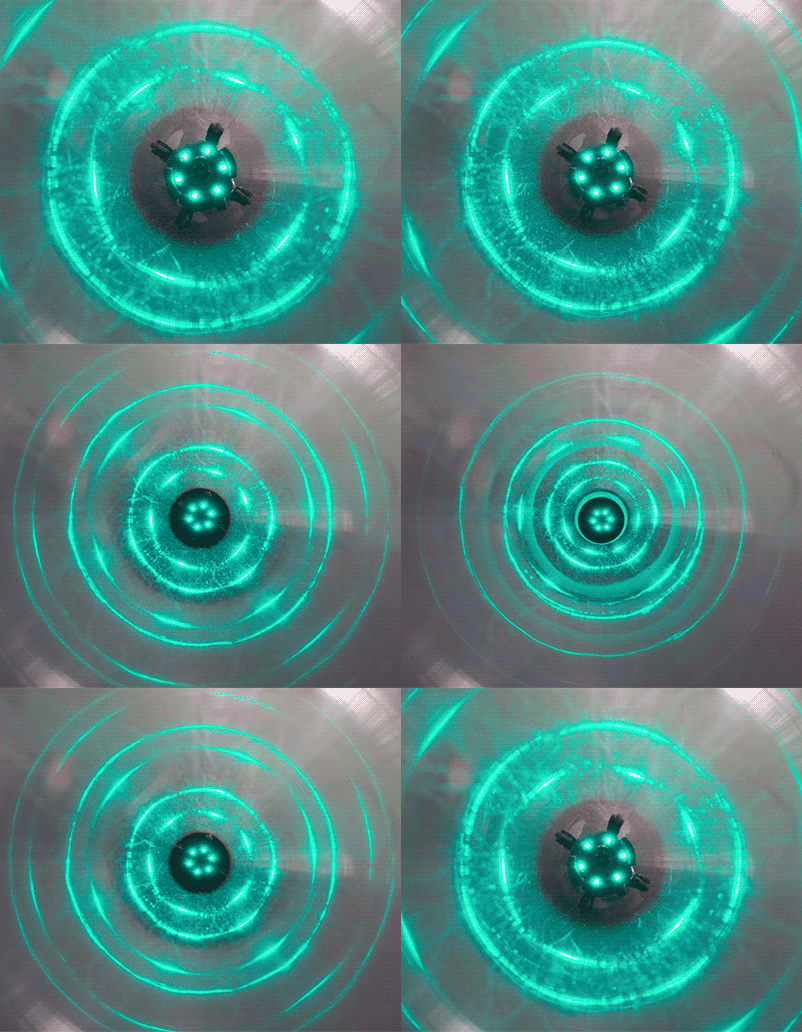
Those include developing a self-cleaning function that would enable the robot to wipe its camera lens or clean a dirty pipe wall. The team is also working on a built-in, fail-safe recovery system in case the robot becomes stuck or disabled. Researchers are also exploring the idea of designing microscale ultrasonic sensors that would fit on the robot because conventional sensors don’t fit through a 90-degree turn.
For the team, this is an important project to perfect.
“We are helping to keep the environment clean, so it’s the mission that is really satisfying,” Steve said.
“One of the most rewarding parts of being a robotics engineer is using technology to help keep people out of harm’s way. SPIINE is a great example of that,” Daniel said. “The DOE Office of Environmental Management faces an enormous challenge in addressing the environmental legacy from decades of nuclear weapons development and government-sponsored nuclear energy research. If our work can help inform critical inspections, reduce uncertainty and minimize risk to workers, then we are contributing to something much larger than the robot itself. That is the kind of impact that makes this work so fulfilling.”
Getting to work with robots is also a plus.
“It’s exciting to build something that can get to spaces that nobody can get to and solve real problems,” Steve said. “It’s also fun to see how far you can push the technology to go small and still be useful at a meaningful scale.”