
Knowledge management rolls out practices for preserving essential expertise
When a seasoned employee walks out the door, what happens to the knowledge they have gained throughout their career? Often, that knowledge either leaves with them or is buried deep within the organization. According to the McKinsey Global Institute, the average worker then spends an estimated 25% of their workweek searching for hard-to-find information — that’s 10 hours.
Sandians are well acquainted with this problem, and leadership wants to change it.
“When personnel announce they are leaving, it results in a mad rush to document their knowledge before it is lost,” solid mechanics manager Jason Petti said. “Even when knowledge is retained, it can take up to six months for personnel to get access.”
Sandia leadership identified a Labswide knowledge management capability that decreases time searching and increases time producing.
Knowledge management is the “how” behind capturing, organizing, sharing and reusing an organization’s collective knowledge. It mitigates the risk of losing crucial organizational information by ensuring knowledge is documented and easily retrievable within the flow of work.
The challenge Sandia faced was how to develop a knowledge management methodology that works for the entire Labs while also accounting for various differences.
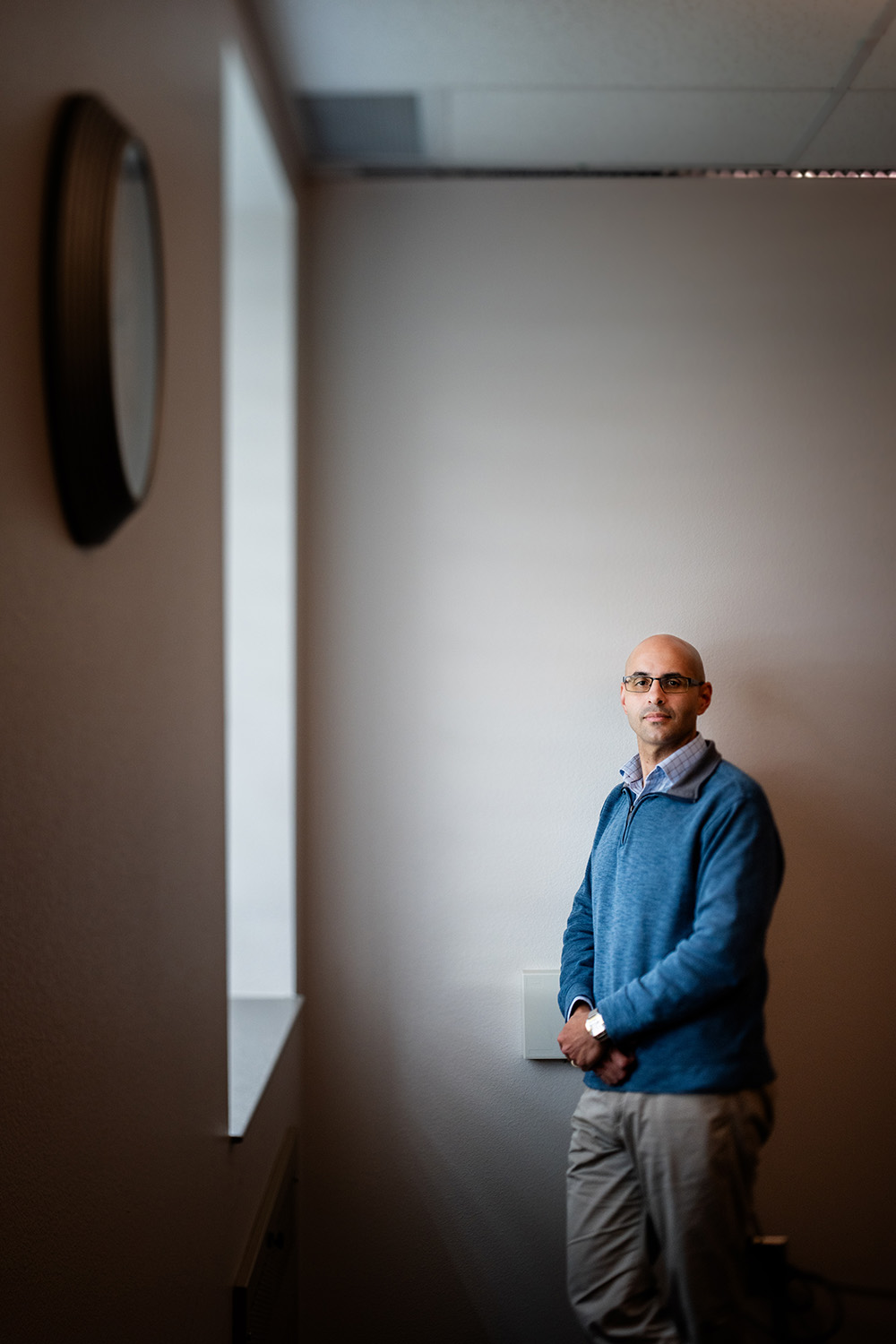
Senior manager Andrew Dowd leads Sandia’s newly established Knowledge Management Office. With past business experience working with Fortune 50 companies, Andrew understands how knowledge management transforms organizations.
“Our goal is to adopt a program applied throughout the entire Labs with enough flexibility built in to capture the unique knowledge every Sandia organization possesses,” Andrew said.
Andrew and his team developed an 18-month pilot program to make this goal a reality. They selected Structural Mechanics Research and Applications as a pilot. The team worked closely with the organization to identify opportunities for enhancing and testing knowledge management capabilities. A core part of their effort is helping personnel identify knowledge management practices they already use but may not recognize.
“Many Sandians have excellent knowledge management capabilities already, but it’s very much ad hoc,” Andrew said. “We’ve developed a methodology that will pull everything together so we can have that mindset at a tactical level.”
The team identified mentoring as a strong knowledge management capability that many organizations already implement. Solid mechanics engineer Henry Duong borrowed from his Navy background, where mentorship was integral, to improve his experience with knowledge transfer at Sandia.
Drawing from his experience at sea, he recognized the importance of building trust with early-career engineers, meeting them where they are at and ensuring they felt comfortable reaching out to him. Through consistent meetings, Henry actively mentored his fellow Sandians, focusing on coding, design aspects and collaborative problem-solving. His approach not only filled the gaps that he experienced as a new hire 28 years ago, but also created a supportive learning culture where knowledge was shared openly in a two-way mentoring relationship.
As a result of his efforts, Henry realized that real-time knowledge transfer has decreases the time it takes to onboard new engineers.
“I have seen onboarding reduced from three years to as little as six months,” Henry said. “As a result, our engineers are able to take on clients much faster.”
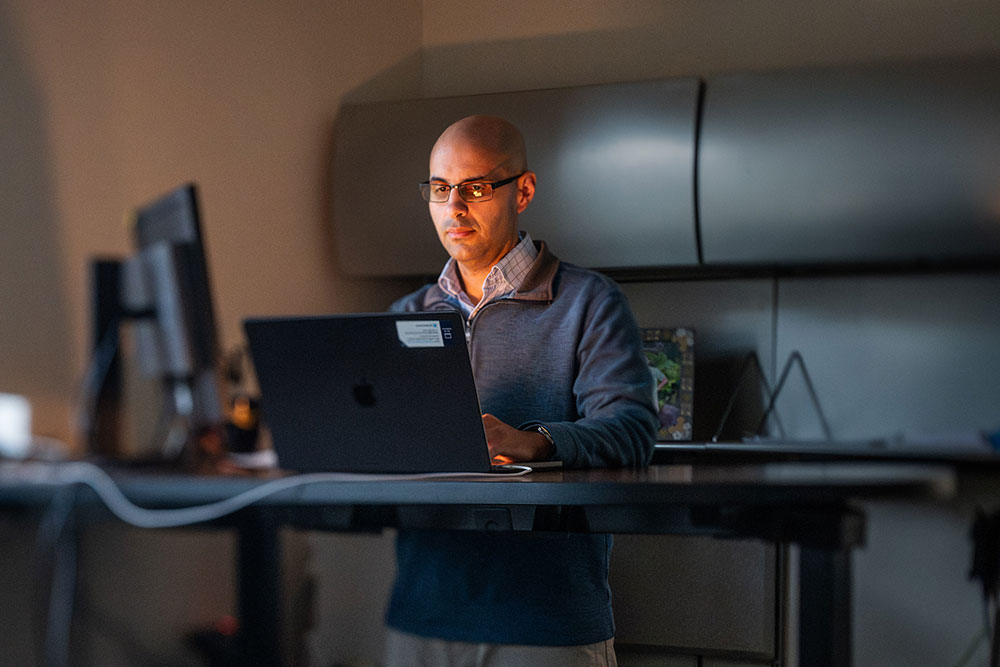
The knowledge management team helped the Structural Mechanics Research and Applications group recognize how knowledge it already possesses can add value in unexpected ways. One program took advantage of previously documented calculations, models and lessons learned, then applied them to its experiments. Their work reduced the group’s experimentation schedule by 12 days — saving $500,000 per experiment and an estimated $6 million during the year.
“What successful KM comes down to is finding out what works for the organization, capturing that information and making it findable,” Andrew said. “Each organization is different.”
He stressed that increasing findability does not always mean adopting new programs. It can be as simple as maximizing tools employees are already using and applying them to other areas.
For instance, the organizers of a 2017 Sandia Fracture Mechanics seminar series knew they wanted to preserve information shared during the event. Event organizer and engineer David Reedy adopted simple digital tools to build on that knowledge.
“We developed a wiki for Sandians where they can access links and content in this area,” David said. “The wiki allows us to evolve content, creating a living document to share the latest knowledge.”
Although the pilot program is currently focused on a few organizations, knowledge management is already impacting other divisions through collaborative partnerships. For example, David shared his knowledge with colleague Jason Dugger, who used the information to develop a new technique for neutron generator design work. Application of the technique increased part storage time from six to 14 days, reduced process time from 10 to eight hours and allowed for better data collection.
“Before, we were using an inferior technique that used qualitative data. We now have the ability to collect more quantitative data,” Jason said.
Still, despite all the opportunities it offers, Andrew and his partners know there is one key component that makes or breaks a successful knowledge management program: employee engagement. Andrew emphasized that employee participation is paramount to the success of an effective program.
“By engaging employees, we seek to demystify KM and encourage them to become active participants,” Andrew said. “The ultimate goal is to embed these practices into workers’ everyday work so that it becomes automatic.”
For those who want to become knowledge management champions in their own areas of expertise, Sandians can contact knowledgemanagement@sandia.gov.