

The DOE Office of Science has awarded $10 million to a Sandia-led team of scientists for a bold new initiative aimed at transforming how industry and research tackle one of the most persistent challenges in advanced technology: material fatigue, or the process of how materials wear out over time. This initiative is part of a broader national push to leverage AI for Science, a key pillar of the Genesis Mission to accelerate the productivity of American research and development and solve complex engineering problems that once seemed impossible.
The project titled, Microstructure Insights through Reliable/Interpretable AI and Guided Experiments, or MIRAGE, aims to combine advanced AI, high performance scientific computing and experiments to understand how material fatigue originates and evolves, and how materials can heal themselves. The idea is to empower materials scientists with interpretable models that overcome the complexities of material behavior to formulate and validate new strategies for tougher, more resilient materials.
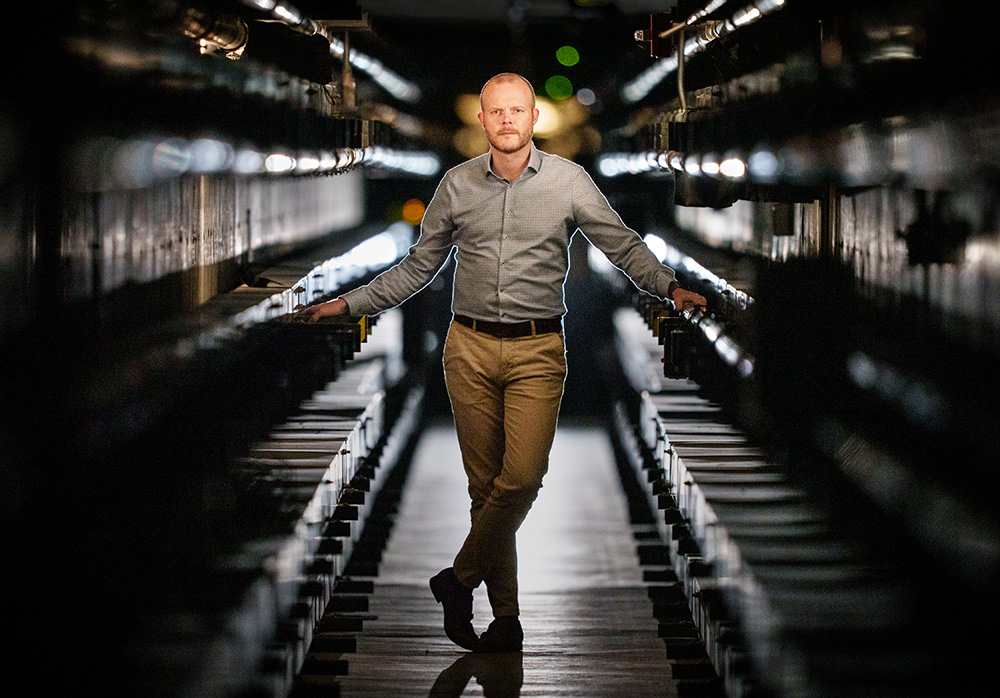
“Material fatigue has long been viewed as an irreversible countdown to failure, impacting everything from aircraft engines to the microelectronics in our pockets,” said Rémi Dingreville, Sandia scientist and MIRAGE principal investigator. “But we are at an inflection point. By fusing experimental data with multiscale simulations, we are creating a shared ‘fingerprint’ of how materials age.
“With MIRAGE, we are harnessing the predictive power of AI — combined with deep physical insights from those simulations and experiments — to explore entirely new pathways for materials to resist damage or even heal themselves.”
MIRAGE represents a new way of working together on a large scale across different fields, which is essential for the modern era of discovery. The project brings together experts from multiple DOE national laboratories, including Sandia, Los Alamos, Lawrence Livermore, Argonne and Lawrence Berkeley, and universities such as University of Southern California. This collaboration ensures that foundational research in the physical sciences can be rapidly translated into the resilient materials required for national security and energy dominance. The project is supported by DOE’s Office of Science, through the Scientific Discovery through Advanced Computing partnership program, co-funded by Advanced Scientific Computing Research and Basic Energy Sciences.
“This isn’t just an advance in materials science,” Rémi said. “It’s an opportunity to modernize how we practice science itself, moving beyond human trial-and-error to solve the most challenging problems found in so many scientific domains found across the nuclear security enterprise.”