
Raptor perches help Sandia California solve wildlife issues in a natural way
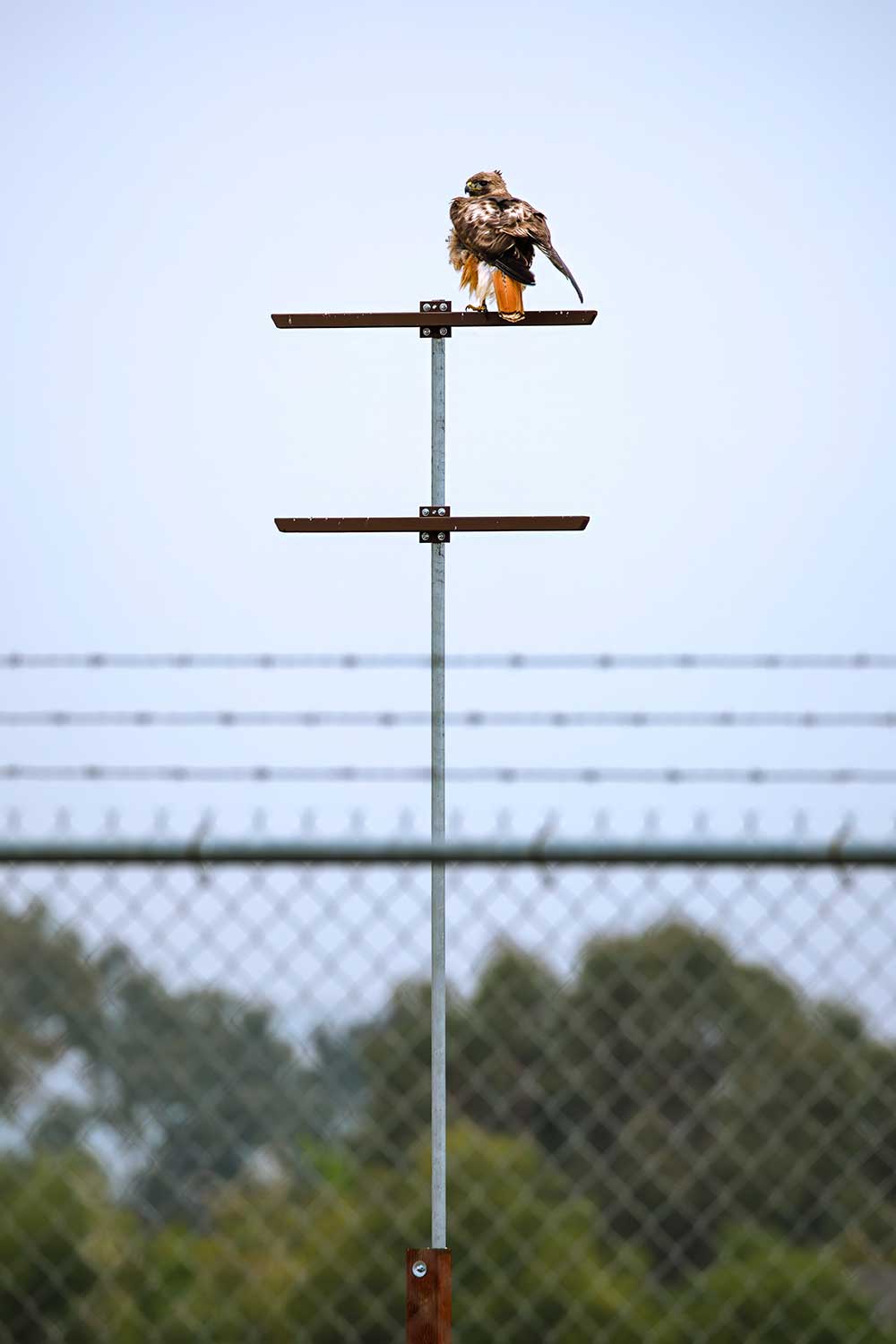
Sandia California’s Site Operations team is adding birds of prey to its workforce.
They may not wear badges, but local raptors are joining Sandia for a specific mission — to help control the site’s rodent population with natural ecosystem dynamics by hunting from new raptor perches throughout the site.
“We’ve had ground squirrels and, more recently, mice destroying wiring in people’s cars, and mice in buildings have chewed through fiberoptic cables,” Site Operations Director Craig Taylor said. “I’m 150% behind encouraging this natural process. It’s cost-effective, people enjoy watching the raptors and — most importantly — it works. This is a great investment in controlling the rodent population in a natural way.”
In addition to tearing up wiring, the high rodent population has also been chewing roots and killing plants on the site’s new landscape improvements. Over the past year, the state of California has seen a “huge rodent population boom” of squirrels and voles, and Sandia is no exception, according to the site’s ecology program lead, Alex Baker.
“I’m excited for a healthier ecosystem balance for the site,” she said. “The perches are a really good example of human-wildlife conflict resolution and provide an alternative to poison or traps.”
Blending in with the environment, the brown poles stand 18 feet tall with a top wooden perch and a secondary perch 2 feet below. Sandia’s Facilities team finished perch installation in early April in time for the primary raptor nesting season.
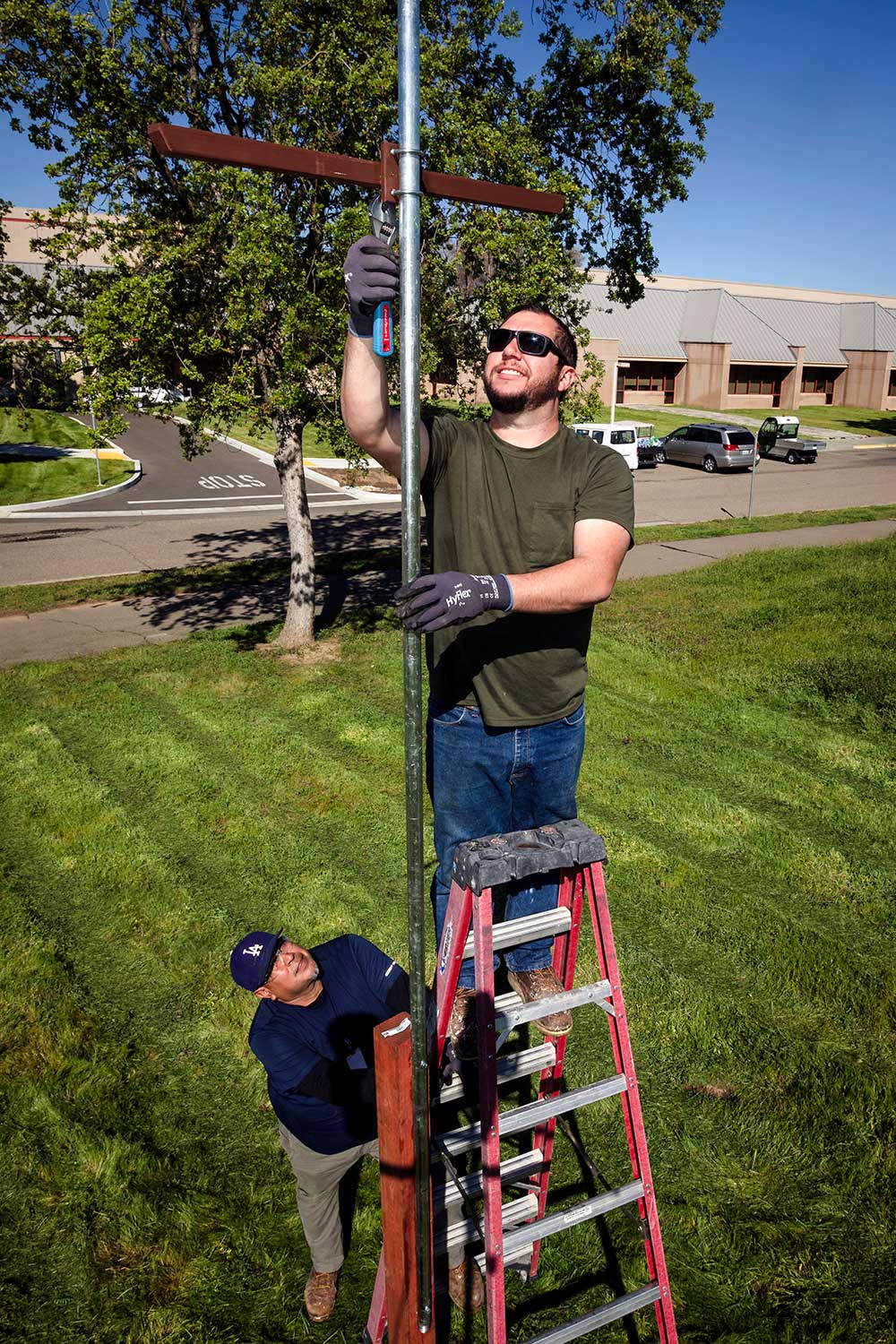
“We invested so much in the beautiful new landscaping on site, and these rodents have destroyed thousands of plants in a matter of months,” said Sixto Rodriguez, operations and engineering lead for Facilities Maintenance. “Having this process take place will help alleviate all of those lost plants and help with the aesthetic view of the site.”
It takes a village
Alex and Sixto brought this operational idea to Sandia California’s Interdisciplinary Team, comprised of experts who help workforce members evaluate risks and requirements for planned or proposed work.
“As the raptor perches are a unique way to solve the rodent problem, IDT is a unique way to solve problems with proposed work on-site,” said Alex Long, who is part of the core Interdisciplinary Team.
Interdisciplinary Team meetings bring together experts from Environment, Safety & Health; Security; Facilities; Operations Integration; Procurement; Information Technology; Mission Partners; Logistics; and Communications. Whether workforce members are planning construction work or just have a conceptual idea in mind, the Interdisciplinary Team serves as a one-stop shop in identifying resources and actions to mitigate risks and assure compliance with regulations.
“I definitely enjoyed the IDT meeting,” Alex Baker said. “It was good to have people from a variety of areas included in the planning.”
During the meeting, she discussed how birds of prey can be effective for a site. A pair of red-tailed hawks can consume about 1,000 ground squirrels in a mating season, and a roosting barn owl family can consume about 3,000 ground squirrels a year. Sandia’s Livermore site doesn’t have many natural places for raptors to rest their wings while hunting, so the perches will allow them to forage the grasslands more successfully.
The call of the wild
Once they received the greenlight, the Facilities team ordered perches and began prepping 16 locations for installation. The perches generally last 15 to 20 years and require minimal annual maintenance.
“I love that we can provide a safe perching zone for nature’s pest control superheroes,” Sixto said.
Most of the perches are located along the perimeter of campus to take advantage of the grasslands. A few have been situated closer to buildings such as the area near the Micro and Nano Technologies Laboratory where rodent concentrations are higher and there are fewer spots for raptors to perch.
The perches were strategically placed at least 50 feet away from a wildlife preserve on the south end of the site. Protected species like the California red-legged frog and tiger salamanders rely on active ground squirrel burrows for their habitats.
“We have the responsibility to protect them,” Alex Baker said, adding that Sandia follows rules from external agencies such as the U.S. Fish and Wildlife Service.
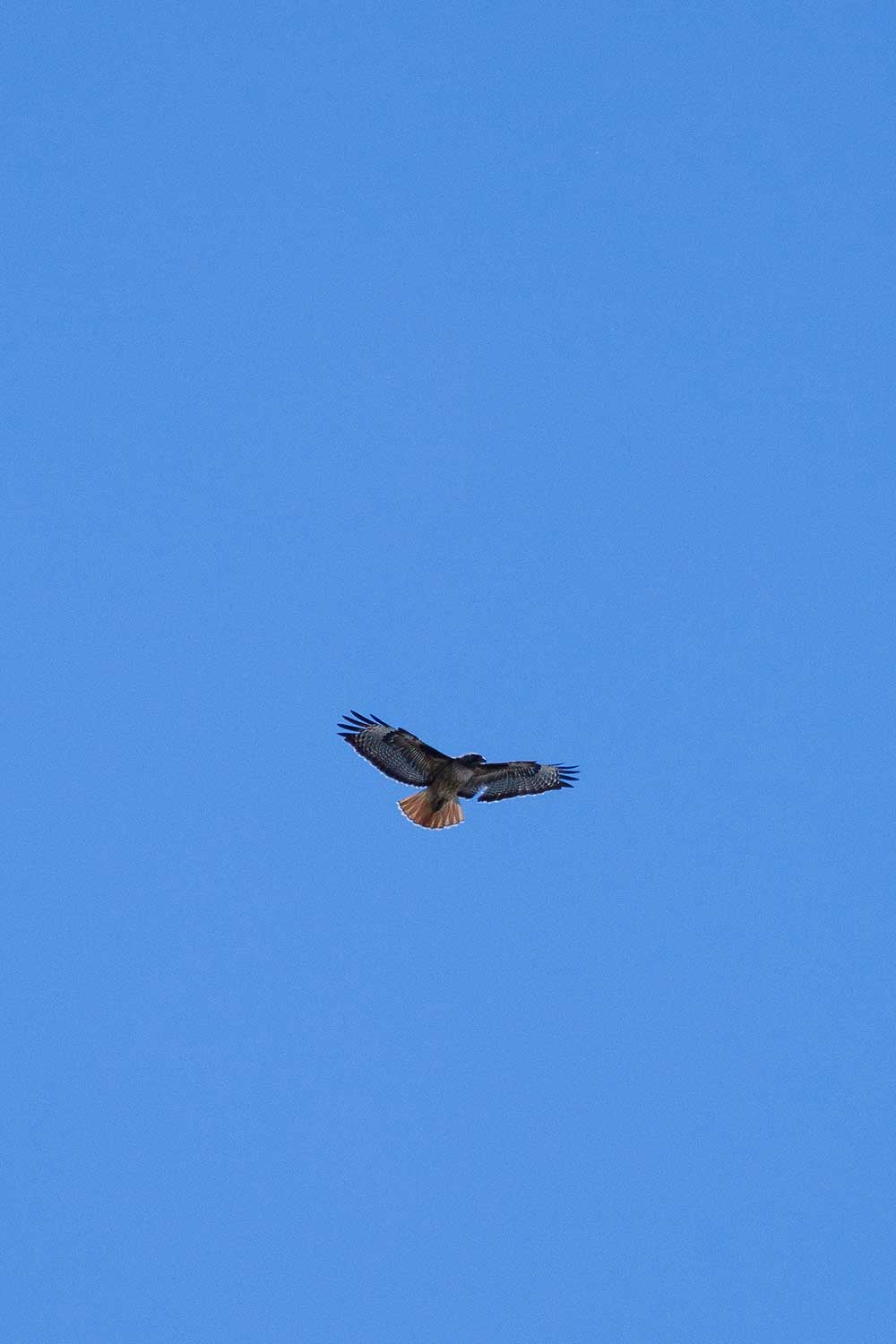
In addition to barn owls and red-tailed hawks, other birds of prey that might be seen on-site include great horned owls, white-tailed kites, ferruginous hawks and Swainson’s hawks, which nested on campus a few years ago.
“Having the perches now, we might actually get to see the raptors better than when they’re flying high,” she said. “When people are out walking around campus, they’ll be able to see a little bit more nature, which is always good in my opinion.”